Fossil Gallery
Each collection is separated chronologically by time period. Every collection is paired with a piece of paleoart reconstructing the environment the plants and animals lived in.
Each Fossil features its scientific name in Latin, length in millimeters, the age of the fossil (Lower, Middle, Late), Geologic Formation, State/Province, and Country.
Paleozoic Era: Cambrian Period
(539 to 486 million years ago)
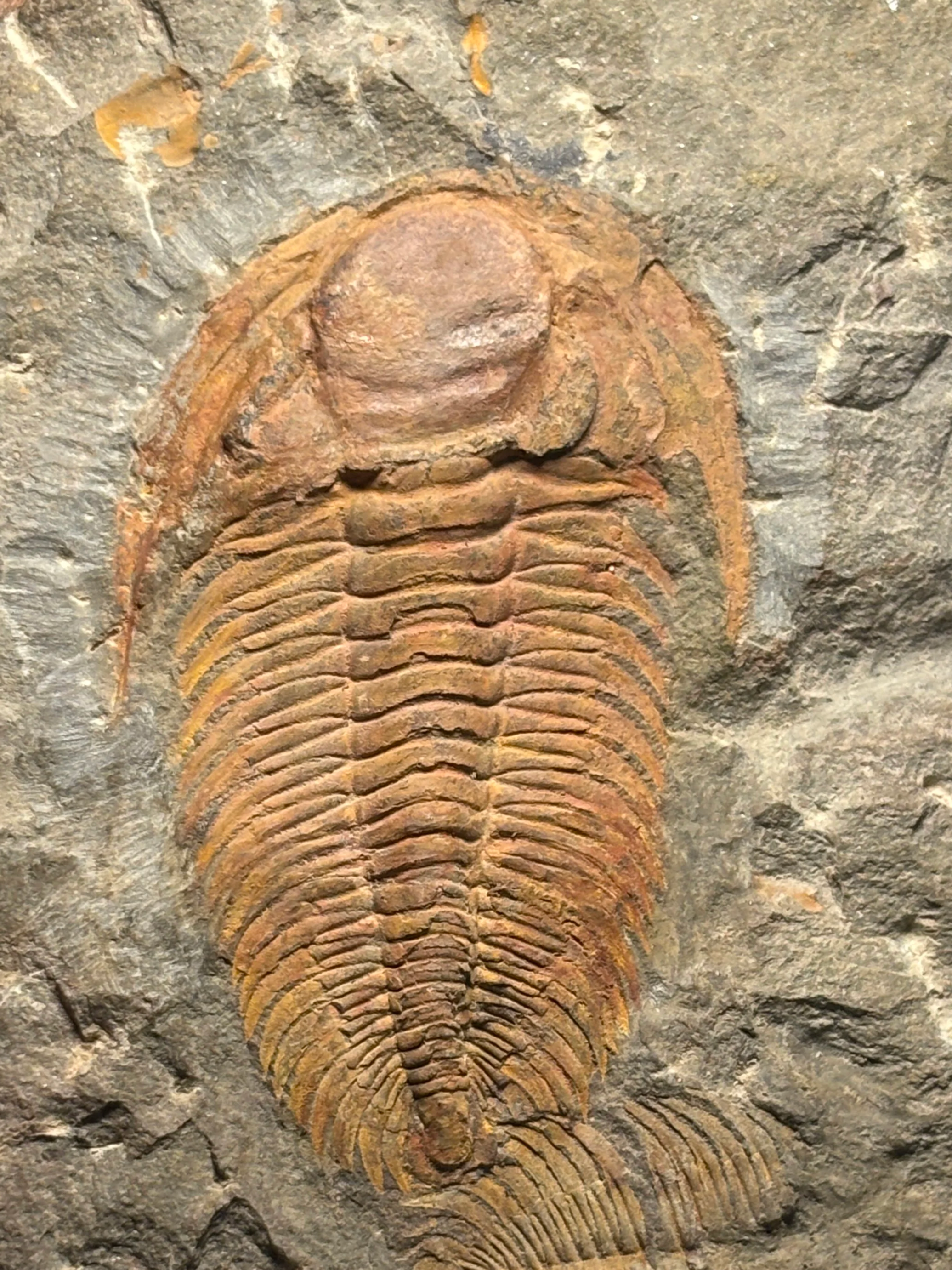
Acadoparadoxides sp, Jbel Wawrmast Formation, Morocco, 56mm
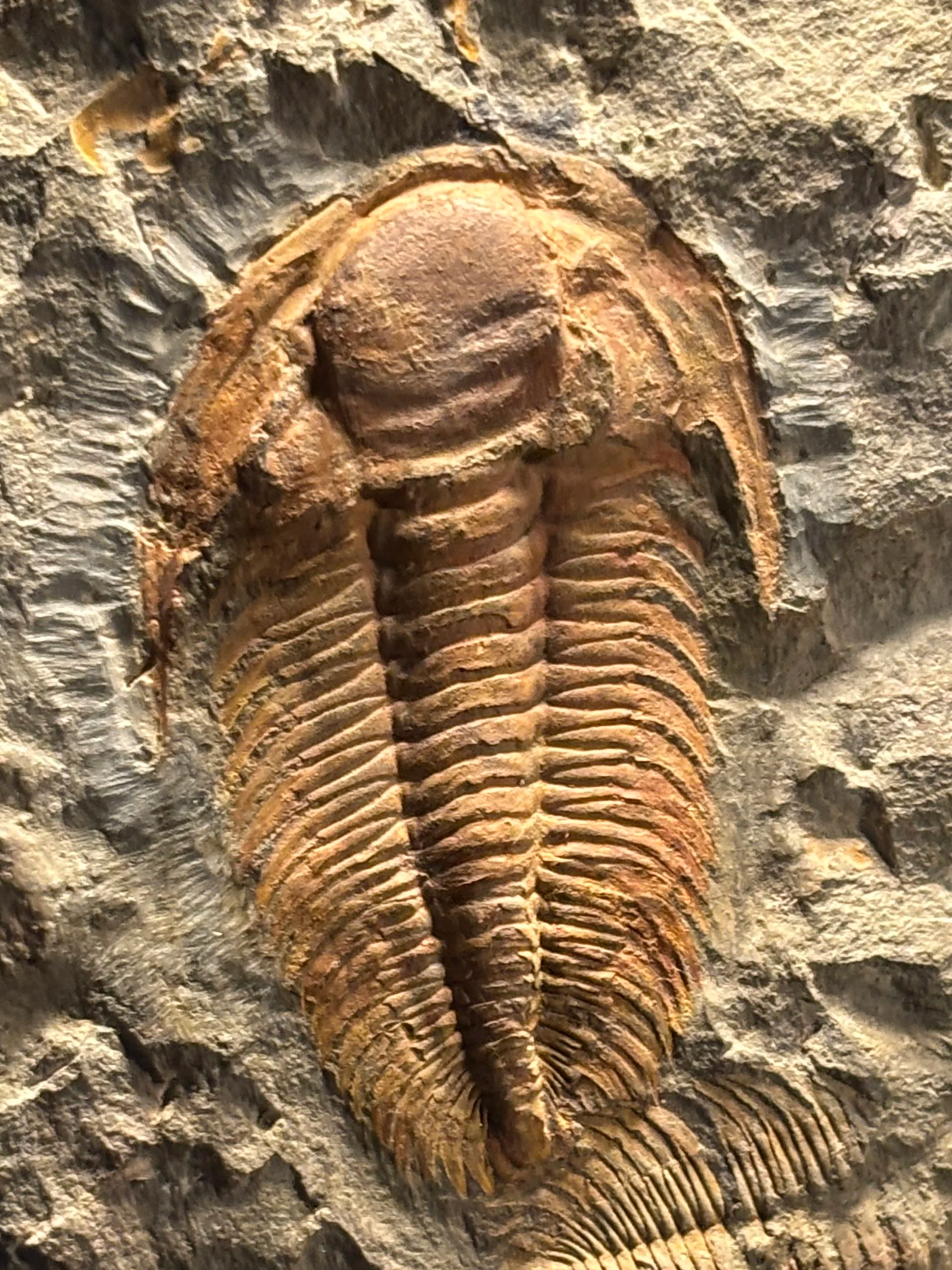
Middle Cambrian- 513 to 501 million years ago: famous for the Cambrian explosion of biodiversity
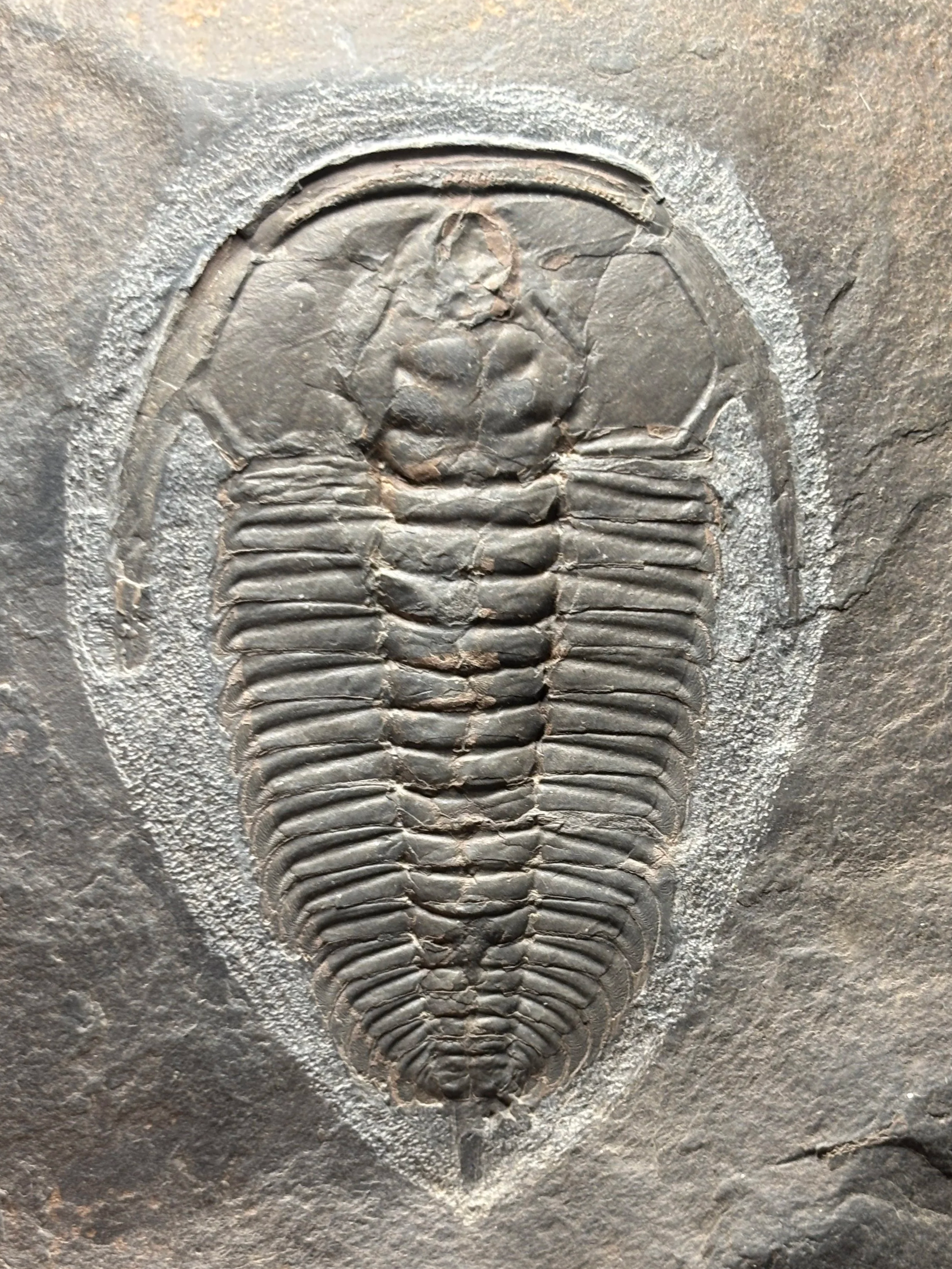
Redlichia chinensis, Lower Cambrian, Kaili Formation, Miaobanpo section, 69mm
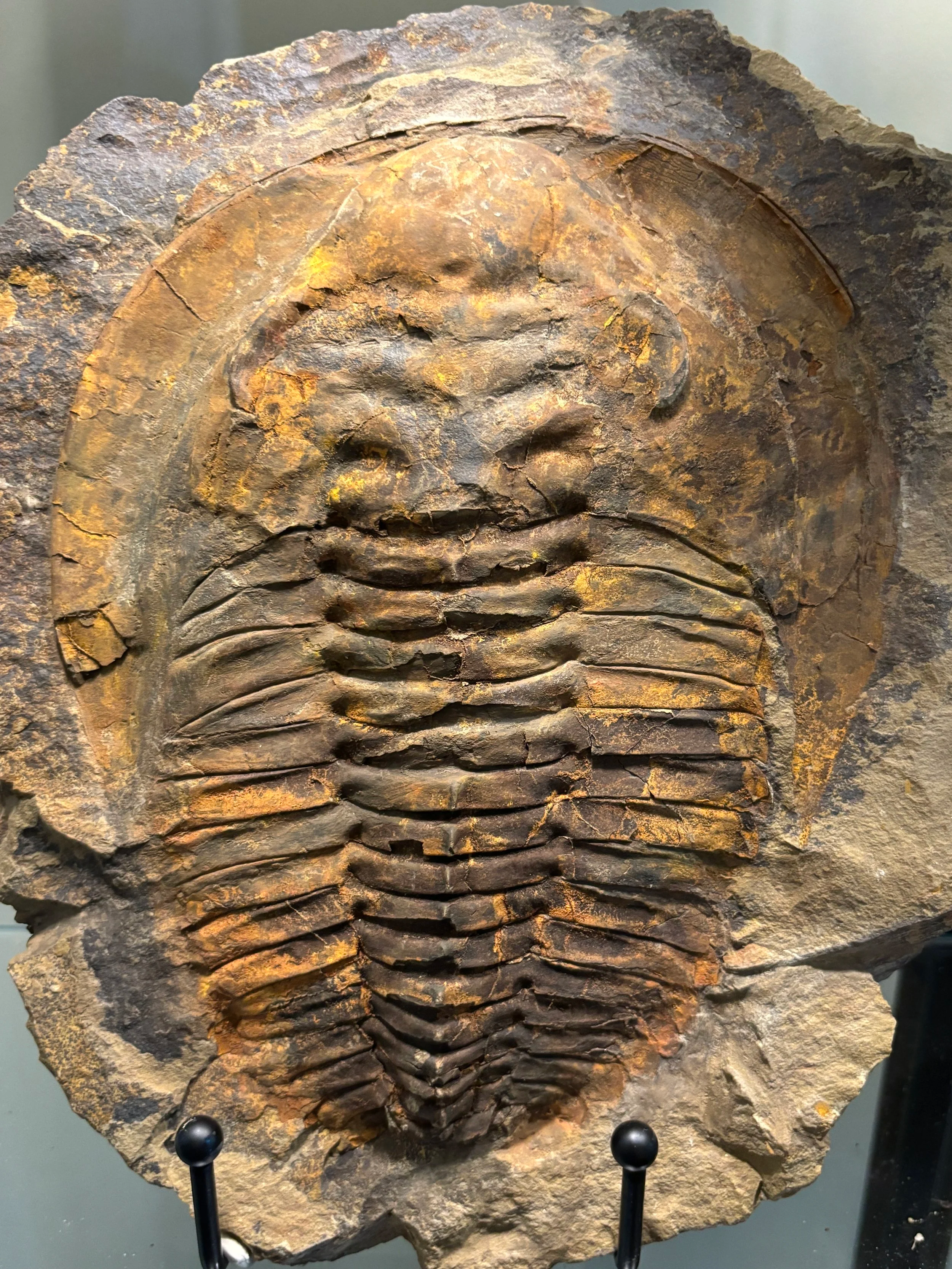
Cambropallas telesto, Middle Cambrian, Jbel Wawrmast Formation, Morocco, 188mm
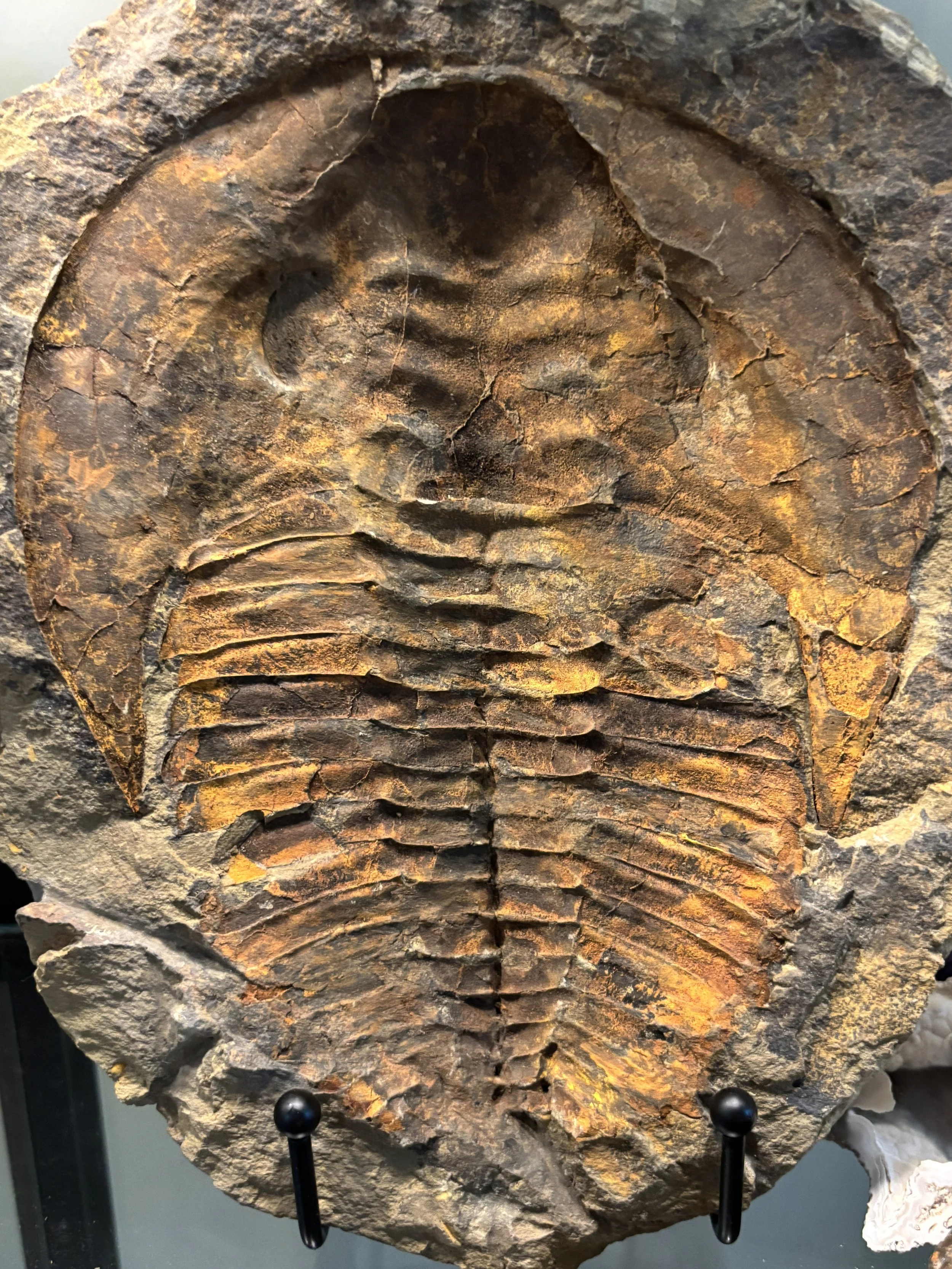
negative half, 187mm
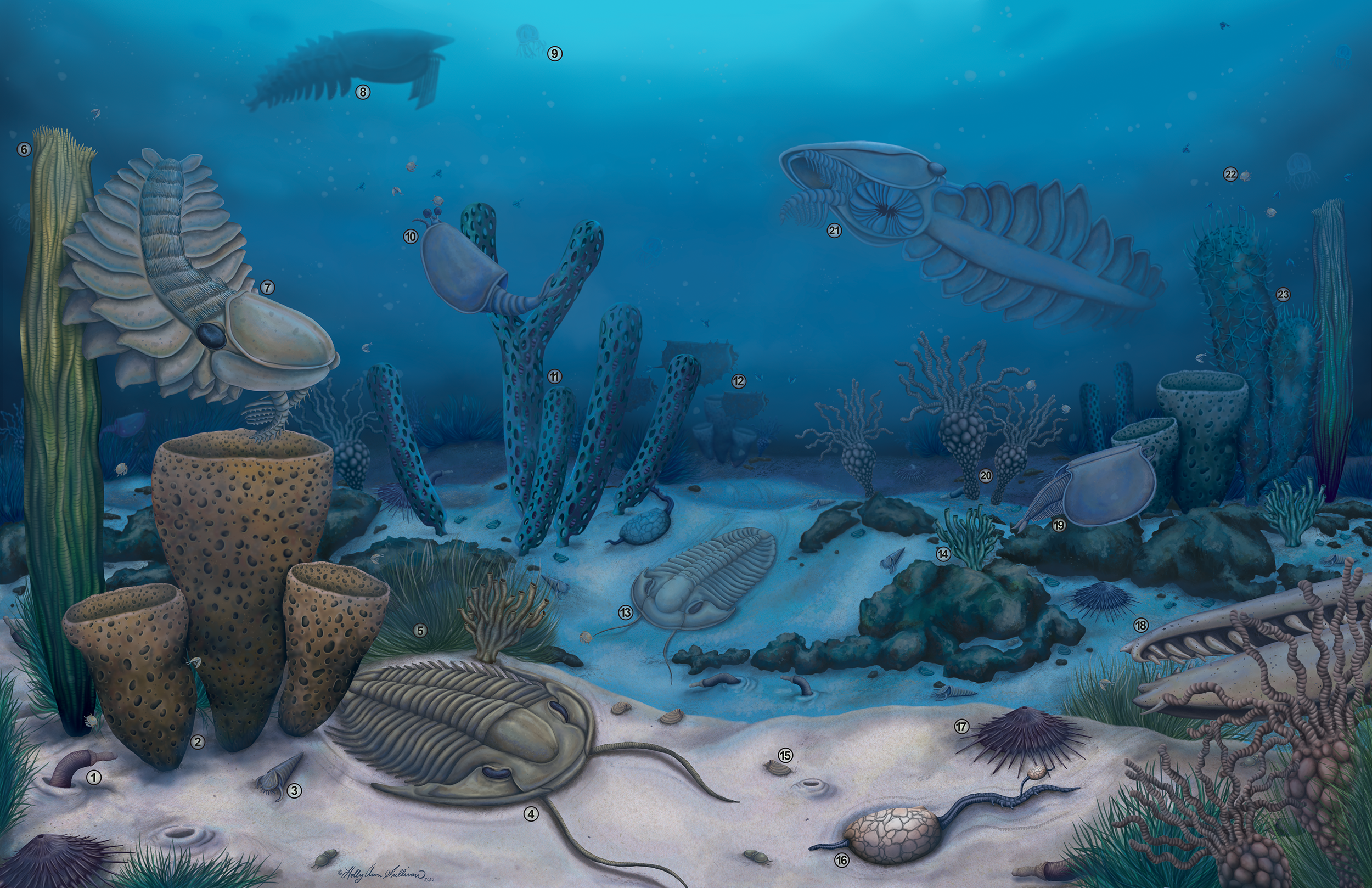
By Stephen Pates, et al. 2021. The diverse radiodont fauna from the Marjum Formation of Utah, USA (Cambrian: Drumian) PeerJ 9:e10509 https://doi.org/10.7717/peerj.10509, CC BY 4.0, https://commons.wikimedia.org/w/index.php?curid=132480638
Paleozoic Era: Ordovician Period
(485 to 444 million years ago)
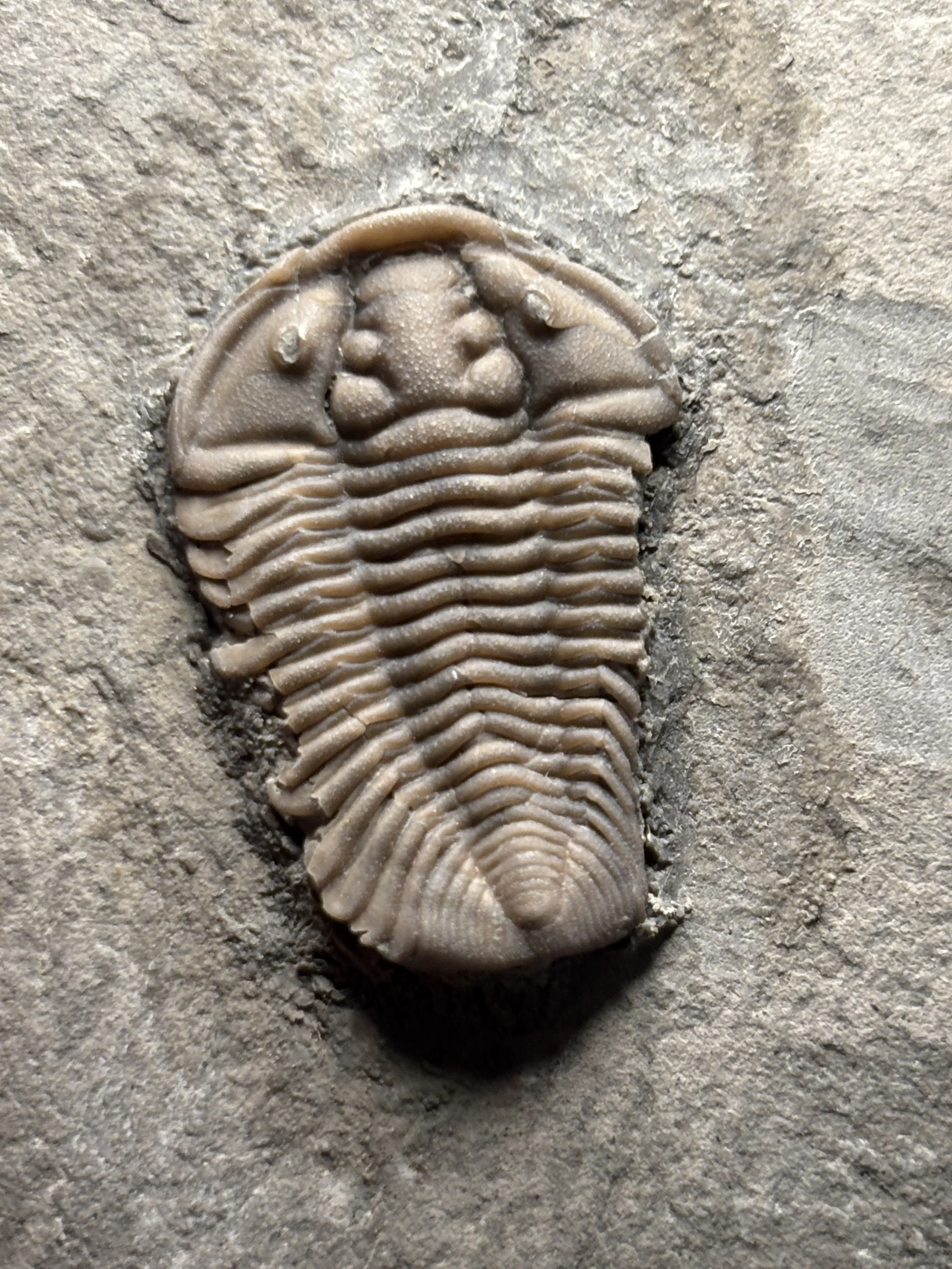
31mm Flexicalymene sp. Middle Ordovician, Bobcaygeon Formation, Ontario, Canada
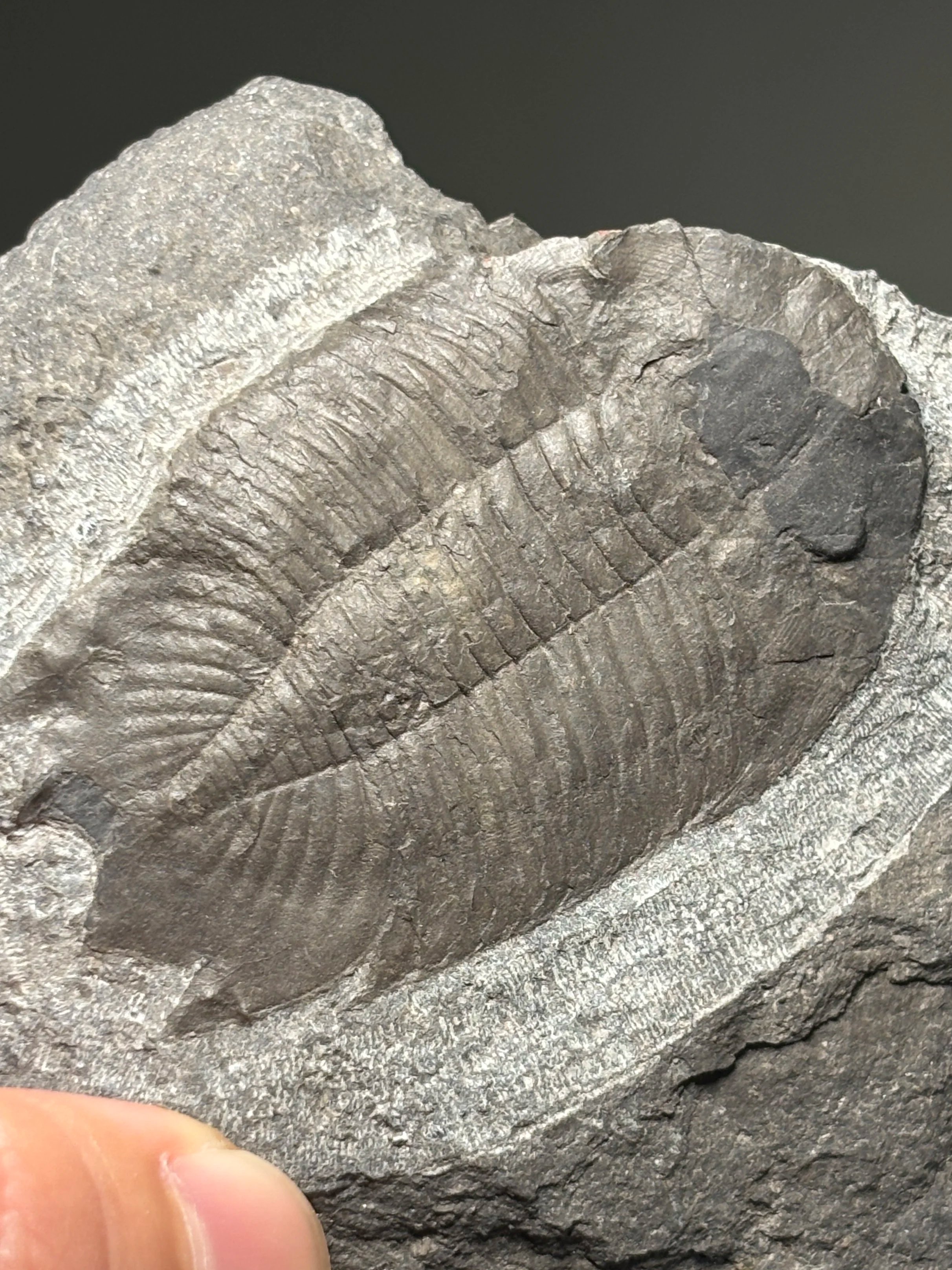
59mm Hungioides sp. Middle Ordovician, Shizipu Formation, Guizhou, China
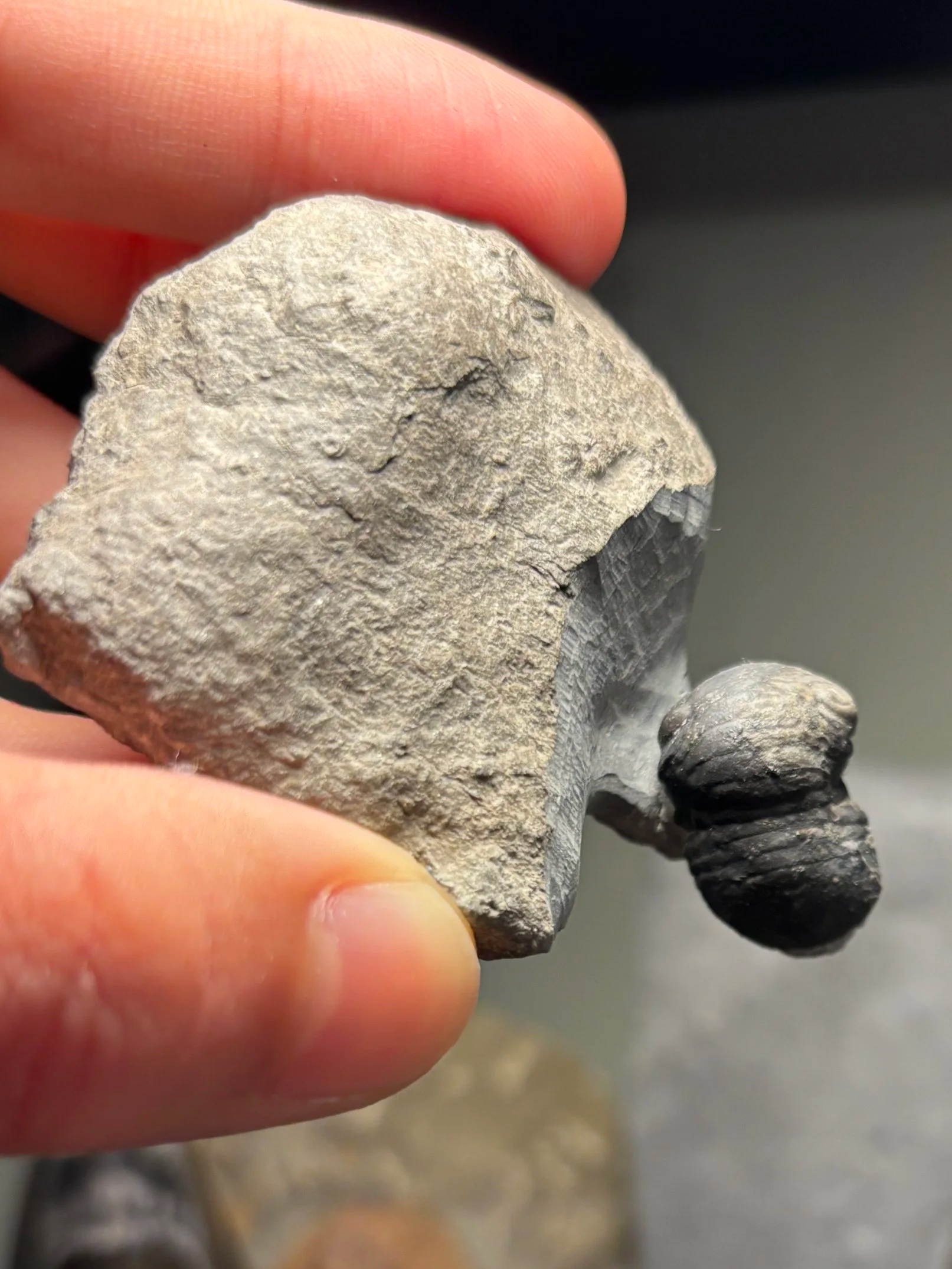
21mm Middle Ordovician Nileus sp. unknown locale, China
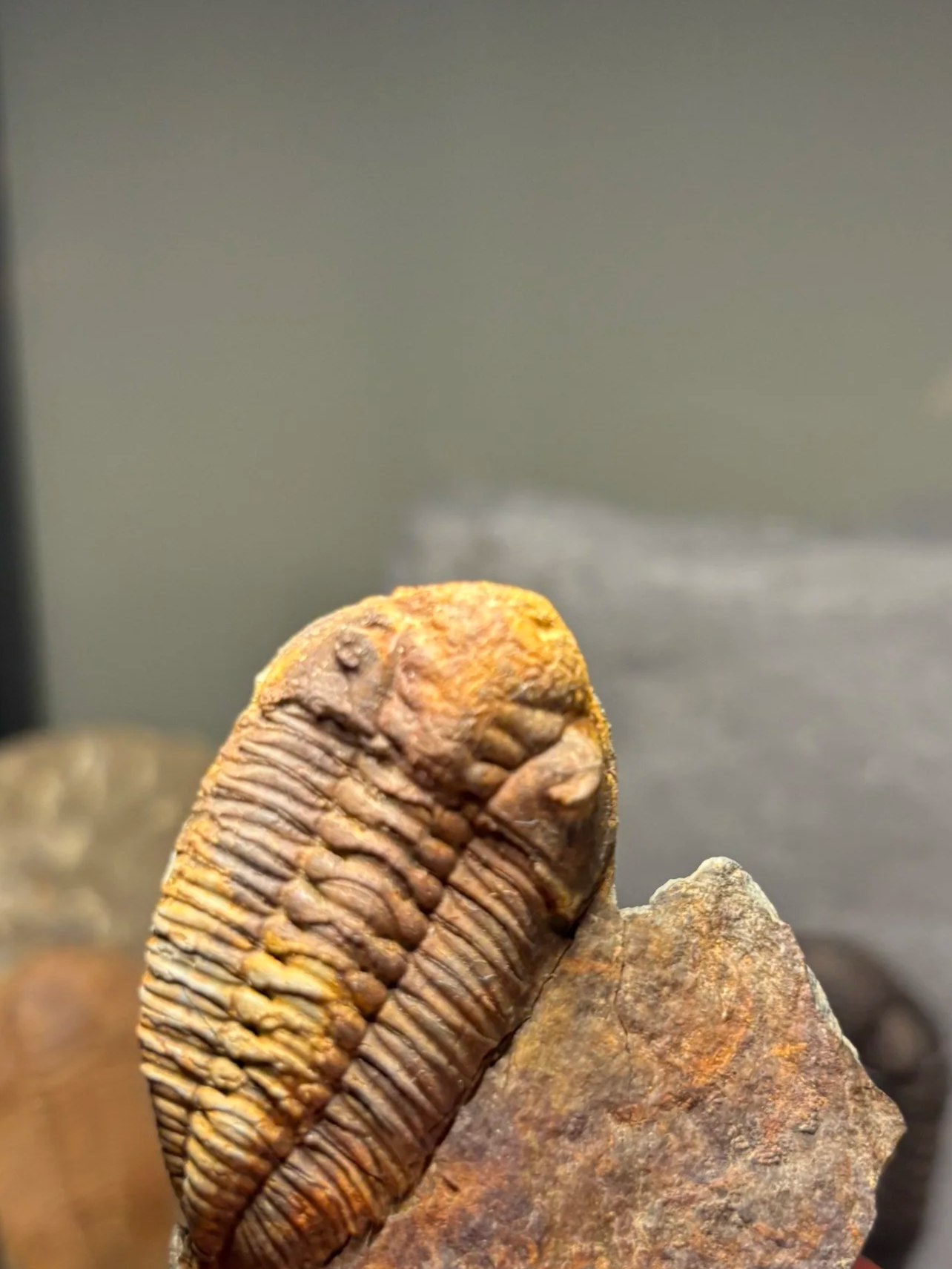
52mm Eodalmanitina macrophtalma, Middle Ordovician, Darrivilien Stage, St Aubin des Chateaux, Loire, France
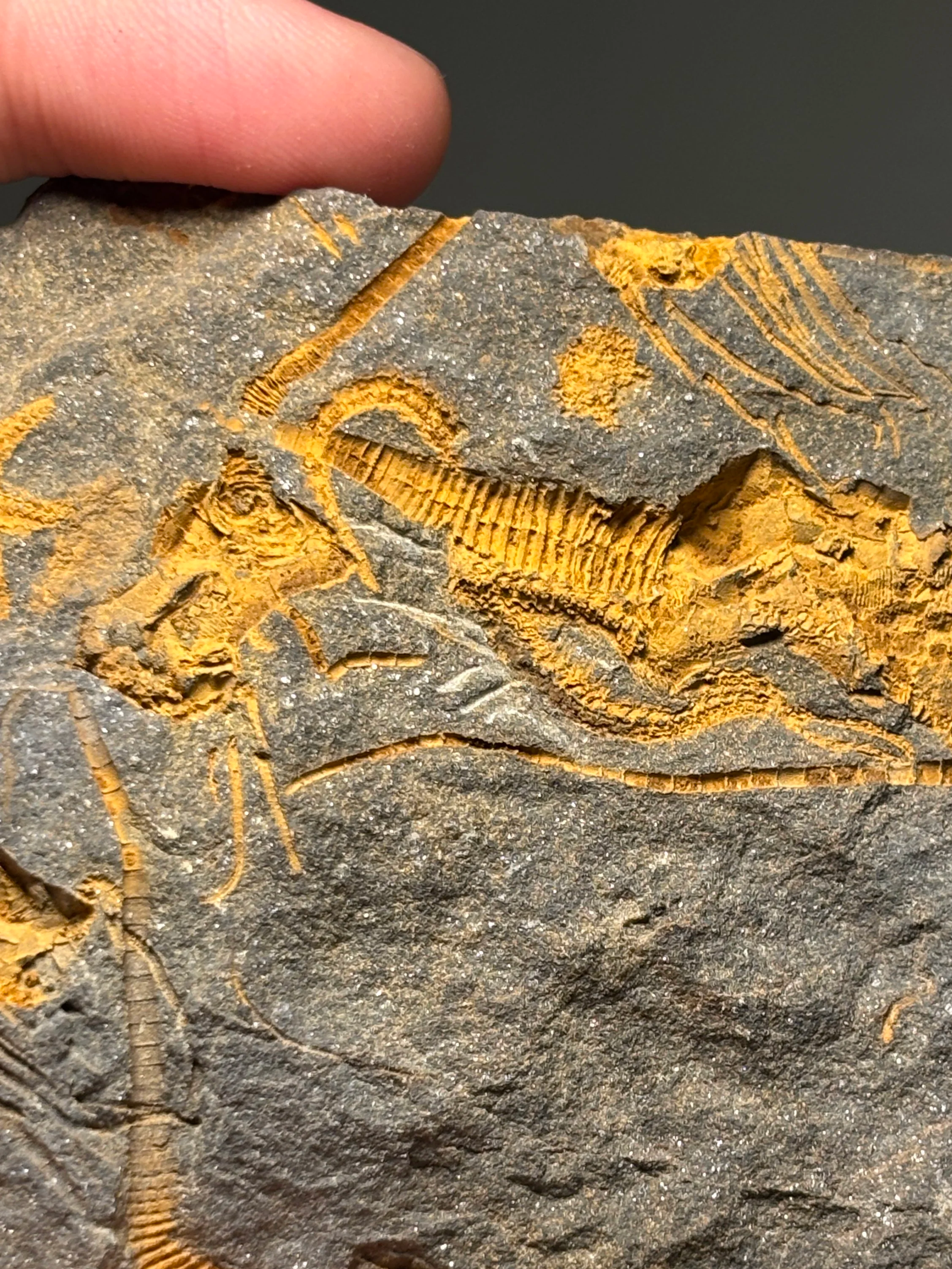
Unidentified Carpoids
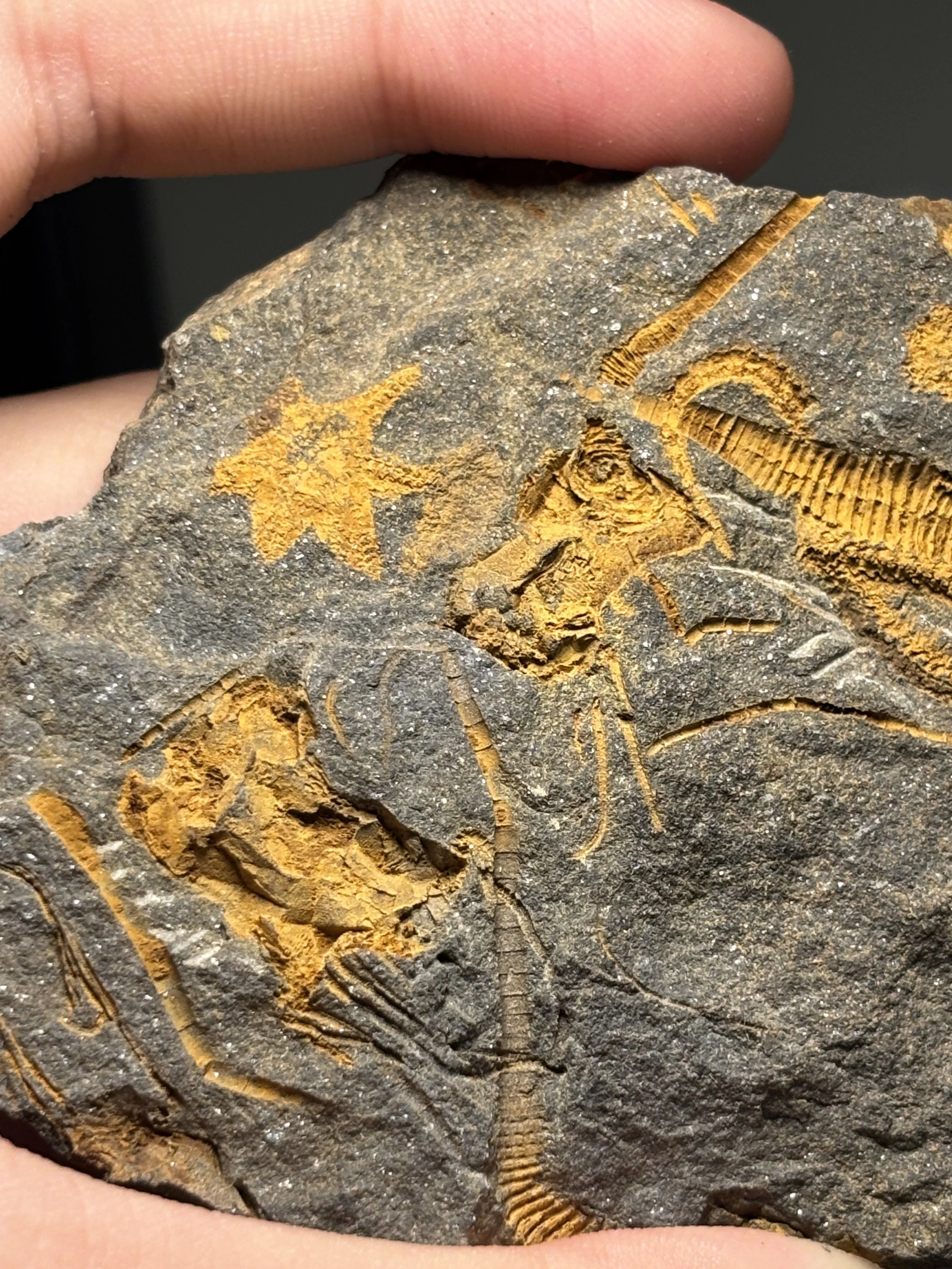
Unidentified Carpoids, Ordovician: Lower/Middle Caradoc Stage, Lower Ktaoua Formation, El Kaid Rami, Morocco
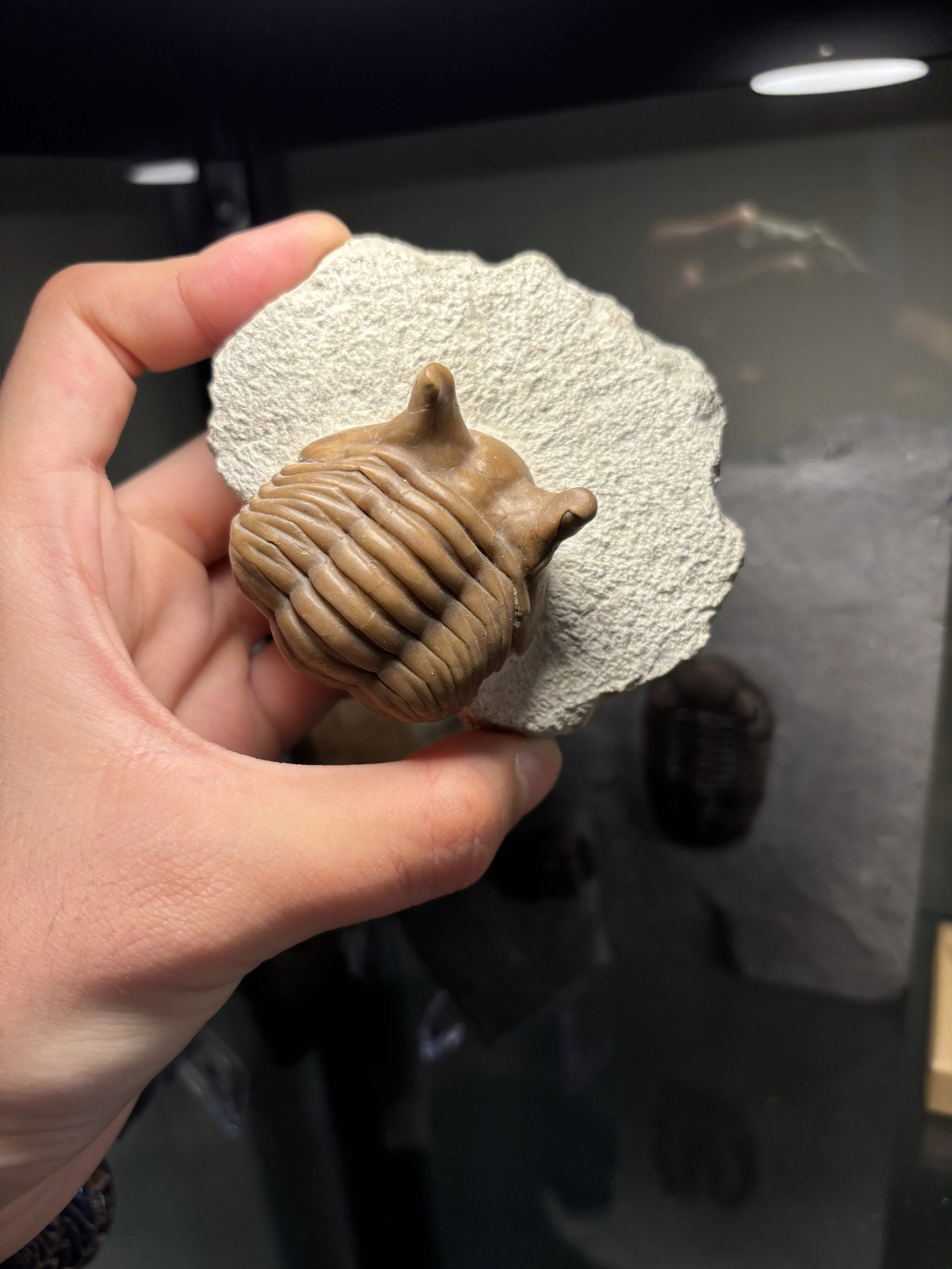
Asaphus punctatus
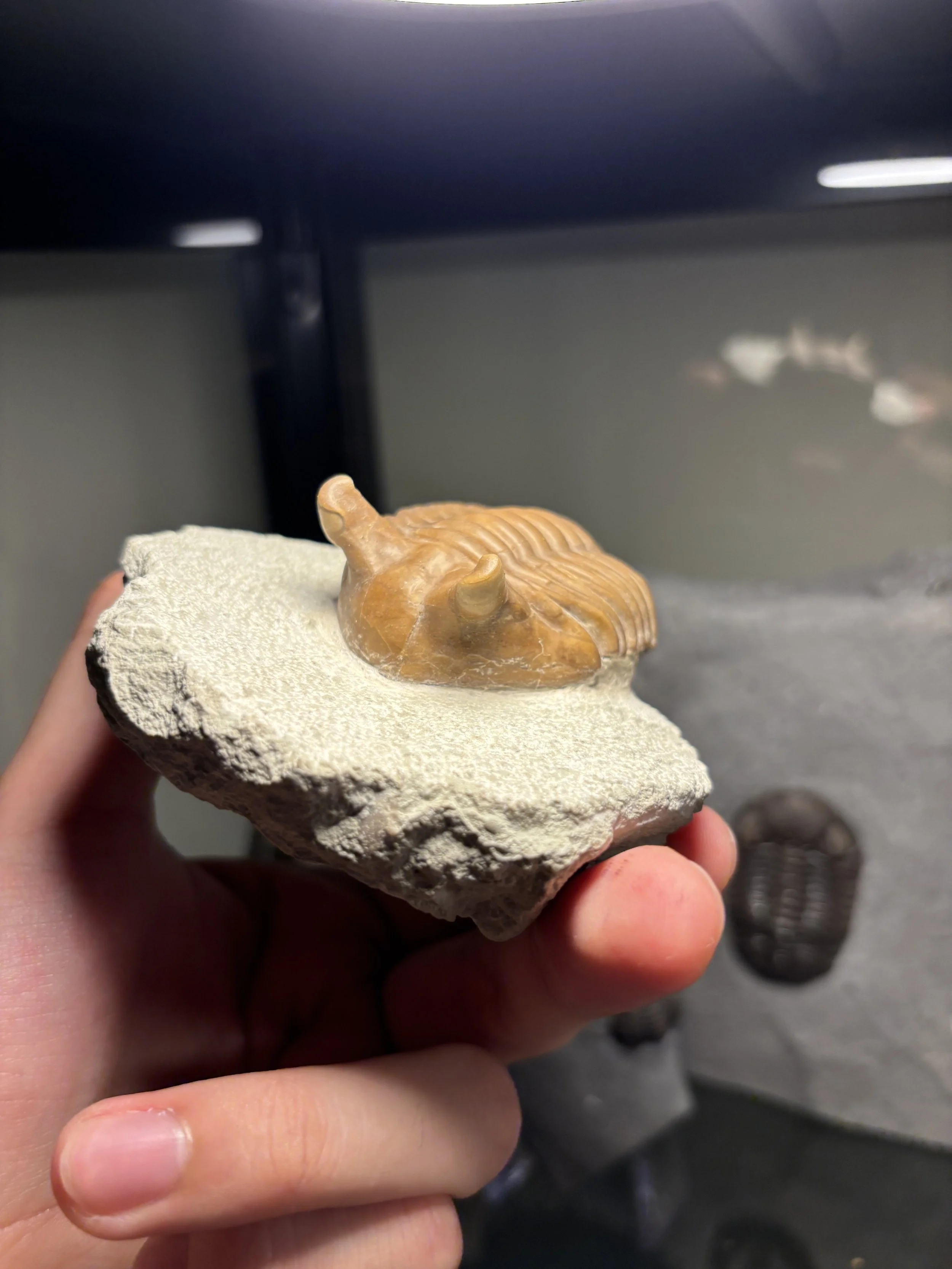
76mm Asaphus punctatus, Middle Ordovician, Asery Horizon, Lomokha Quarry, St. Petersburg region, Russia,
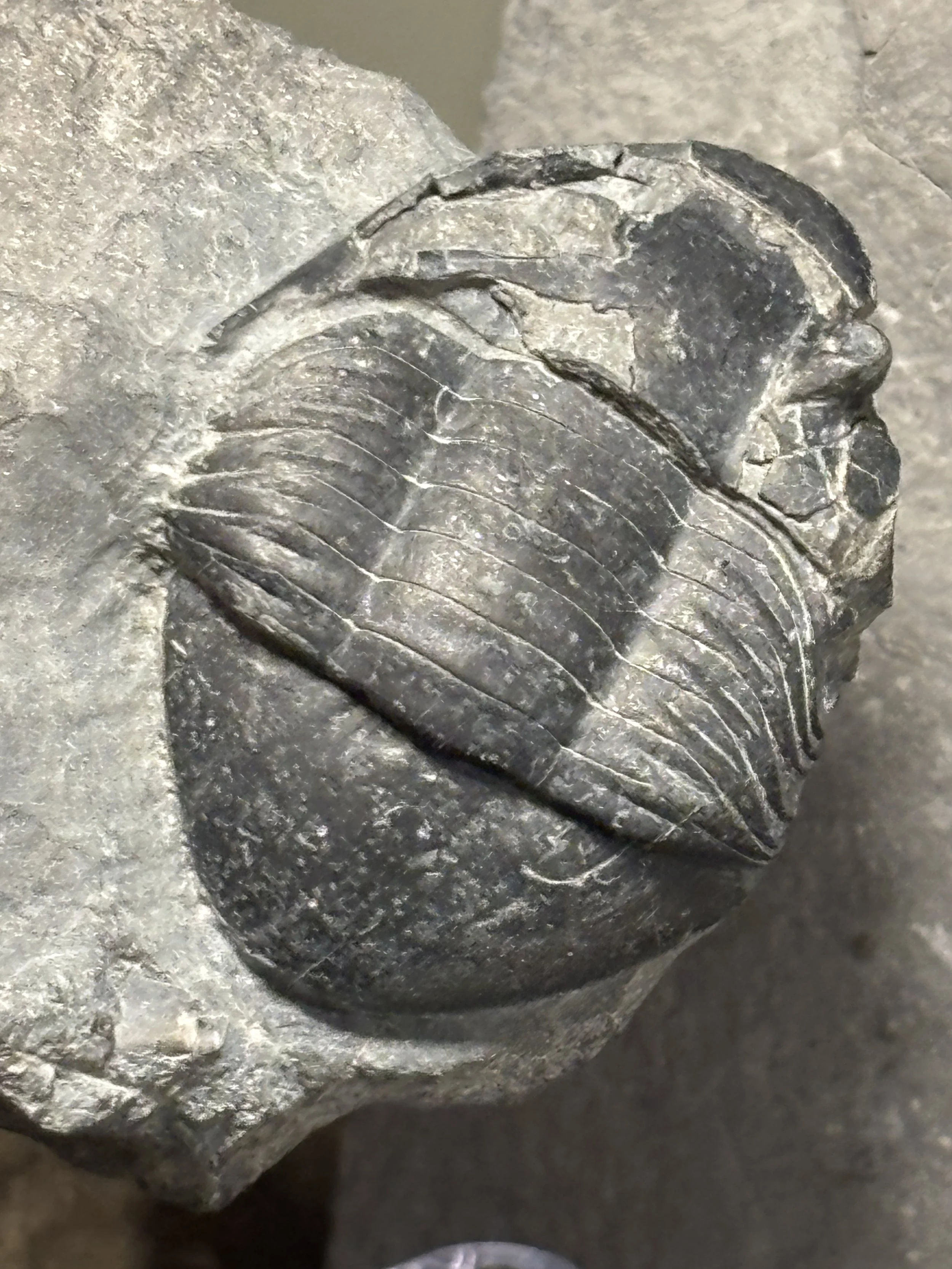
43mm Liomegalaspides hupeiensis, Upper Ordovician Dawan Formation Yichuan, Hubei, China
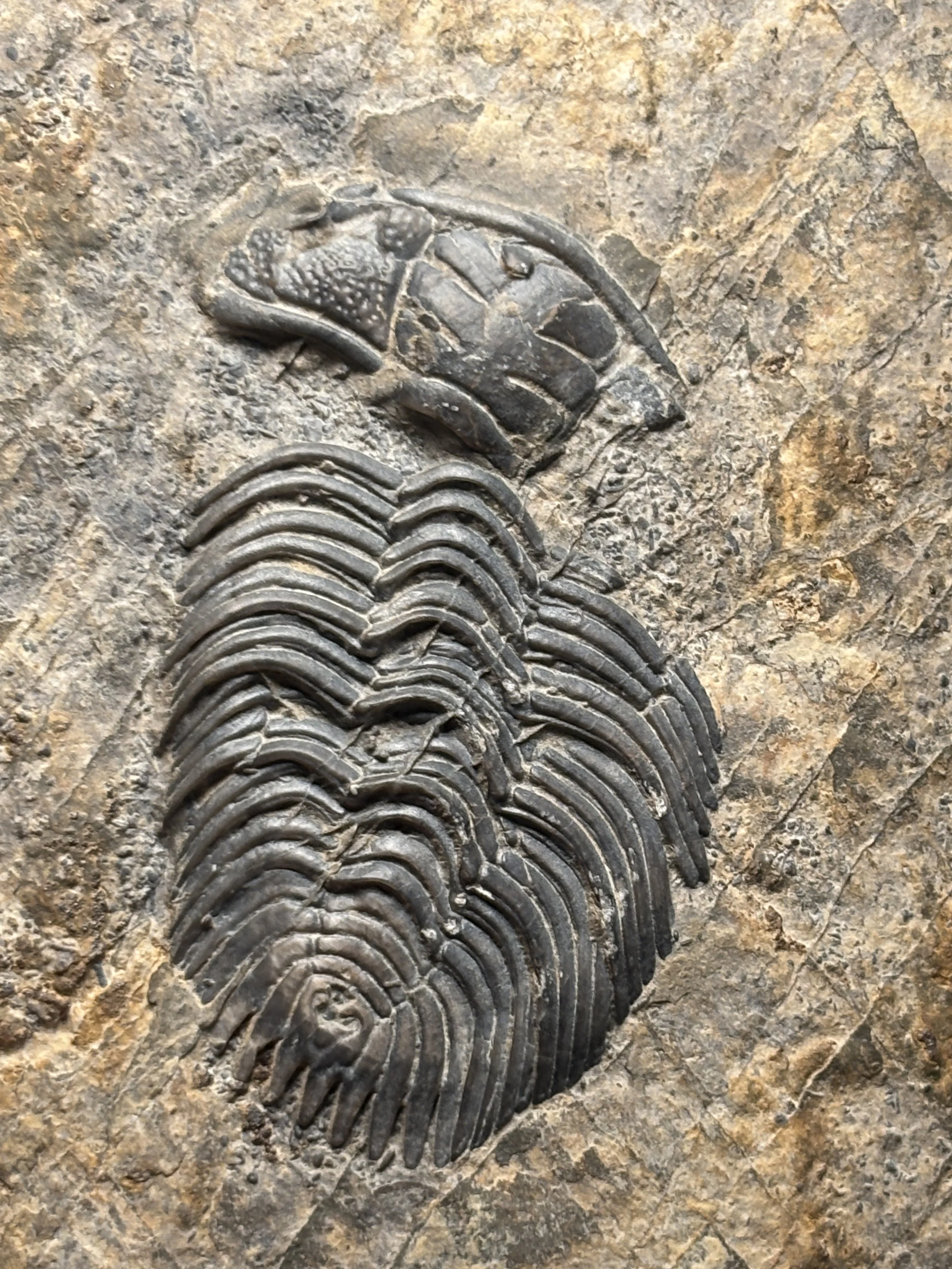
55mm Liexiaspis zhengjiaensis, Early Ordovician, Yinchufu Formation, Tremadoc layers, Yongshun, Hunan, China
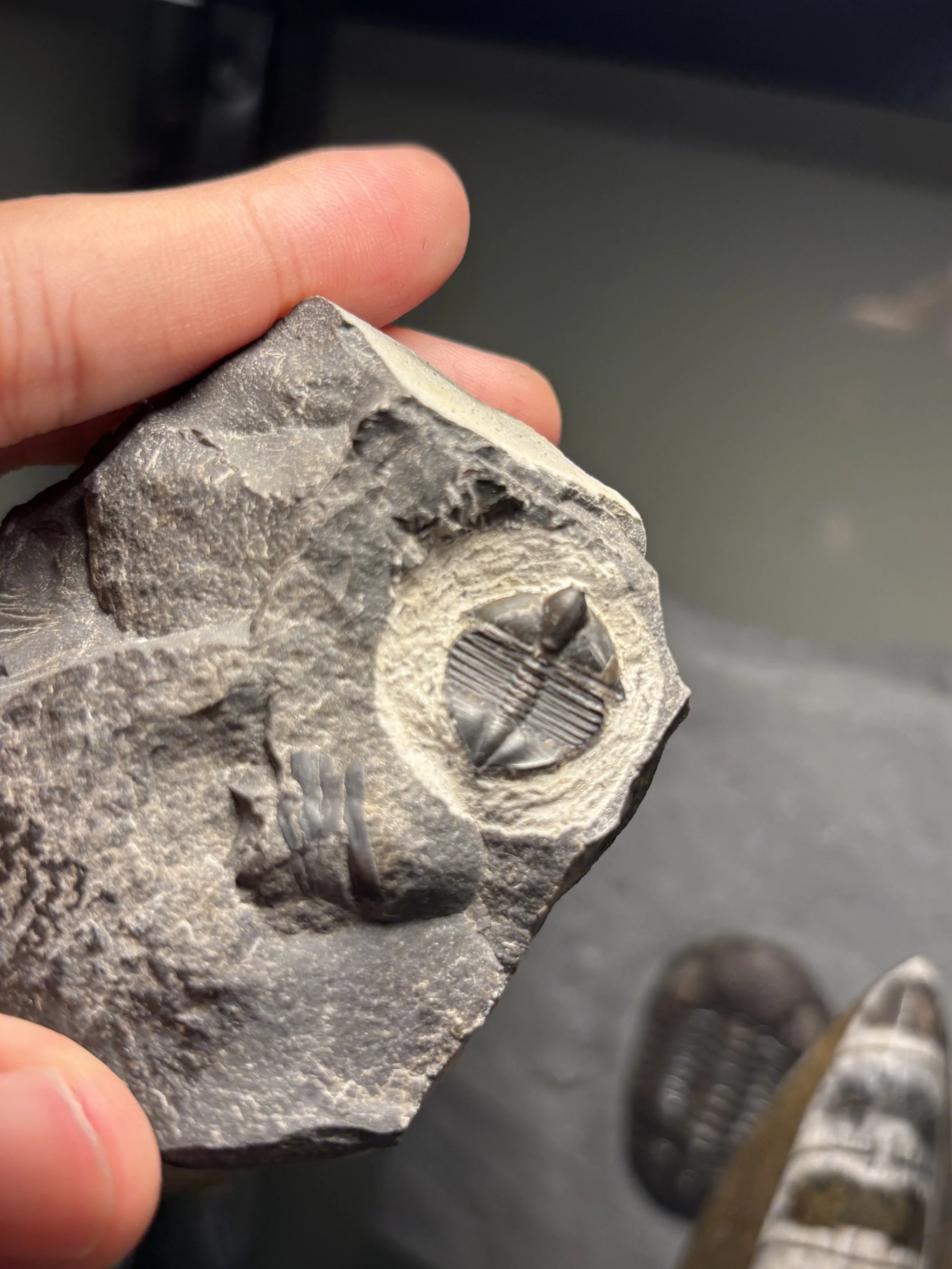
32mm Ampyx sp. unknown locale, Guizhou, China
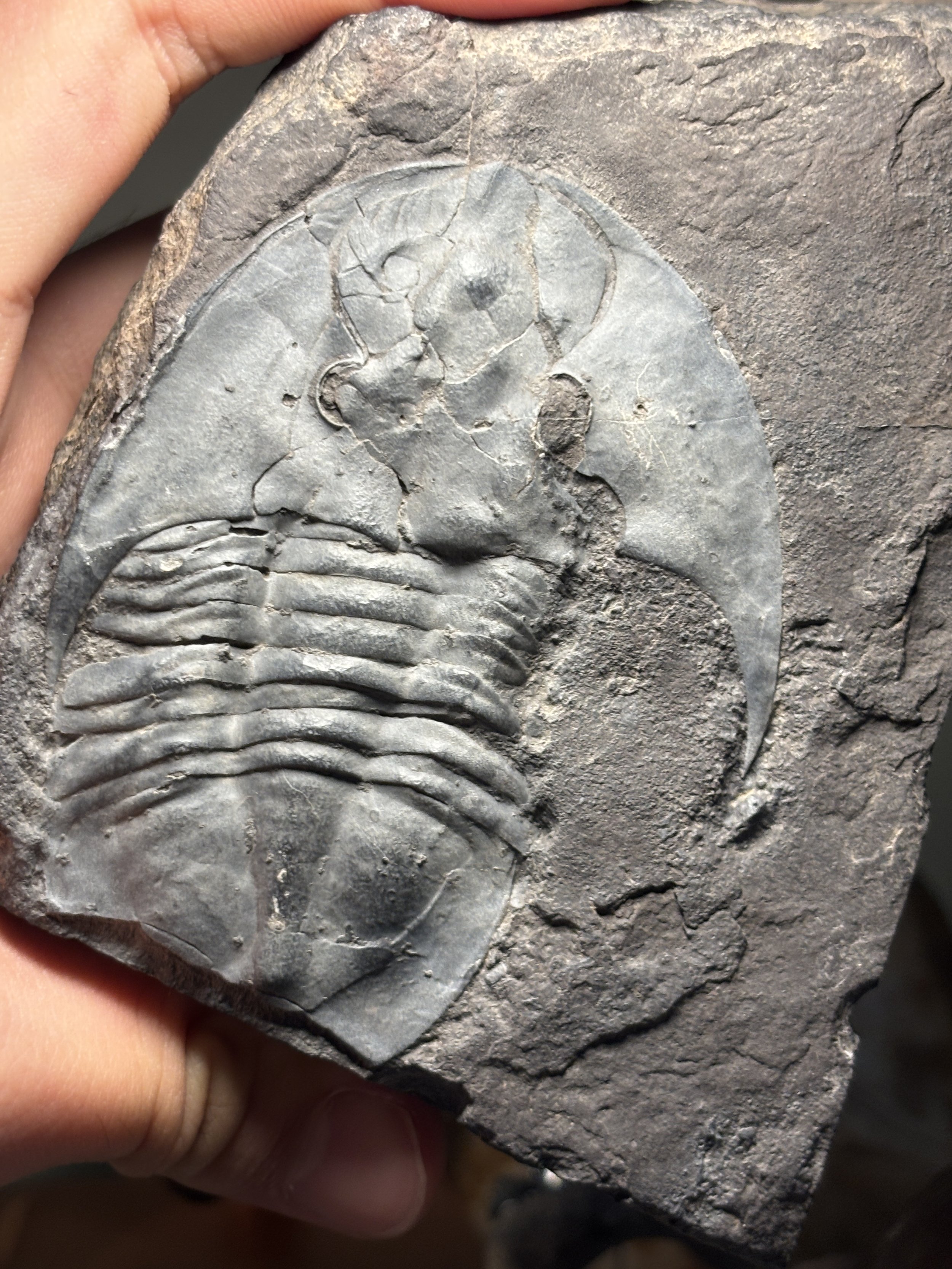
82mm compressed Asaphellus sp. Lower Ordovician, Madaoyu Formation, Yongshun County, Western Hunan, South China
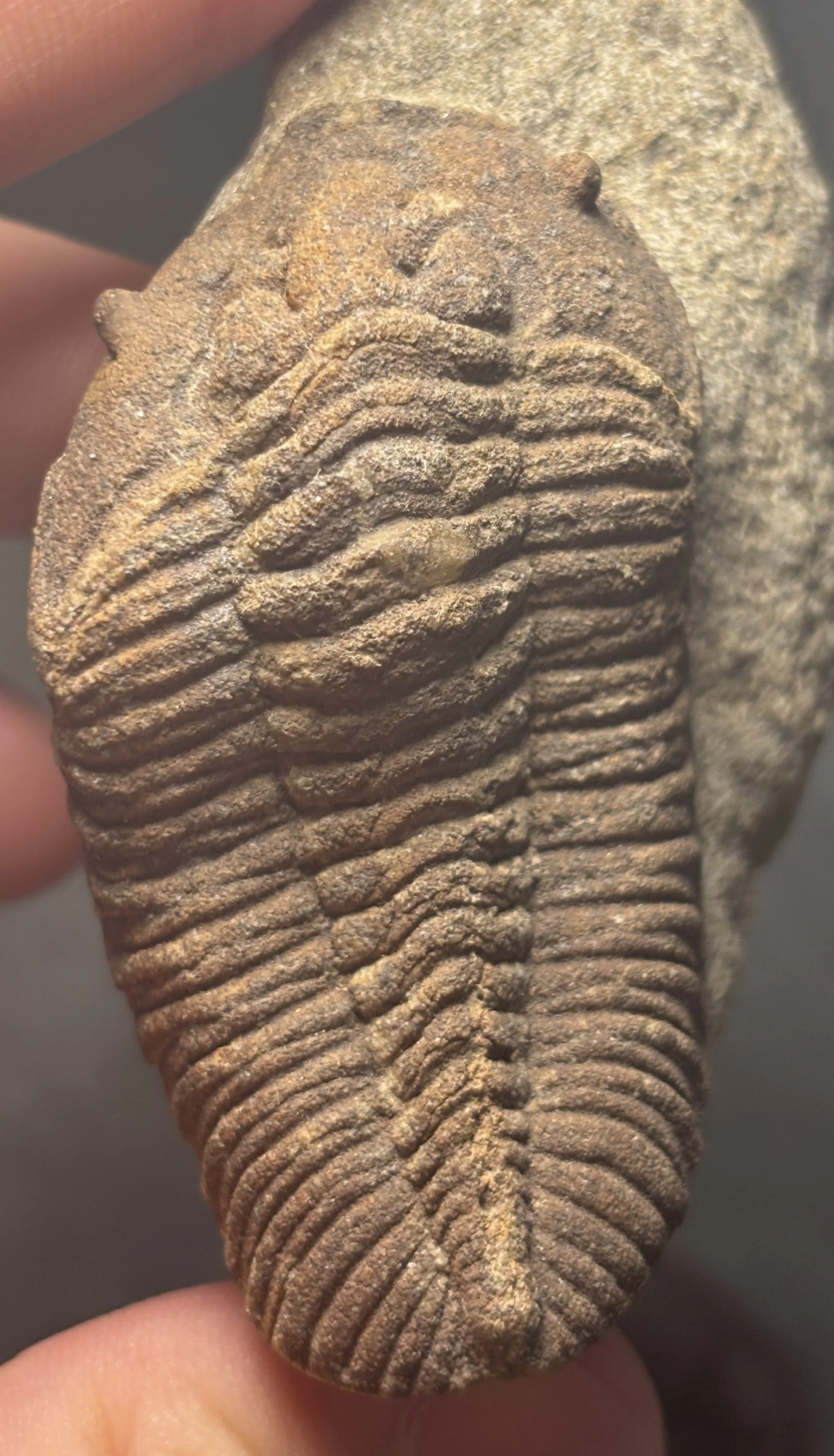
59mm Neseruretus tristani, Middle Ordovician, Darrivilien Stage, St Aubin des Chateaux, Loire, France
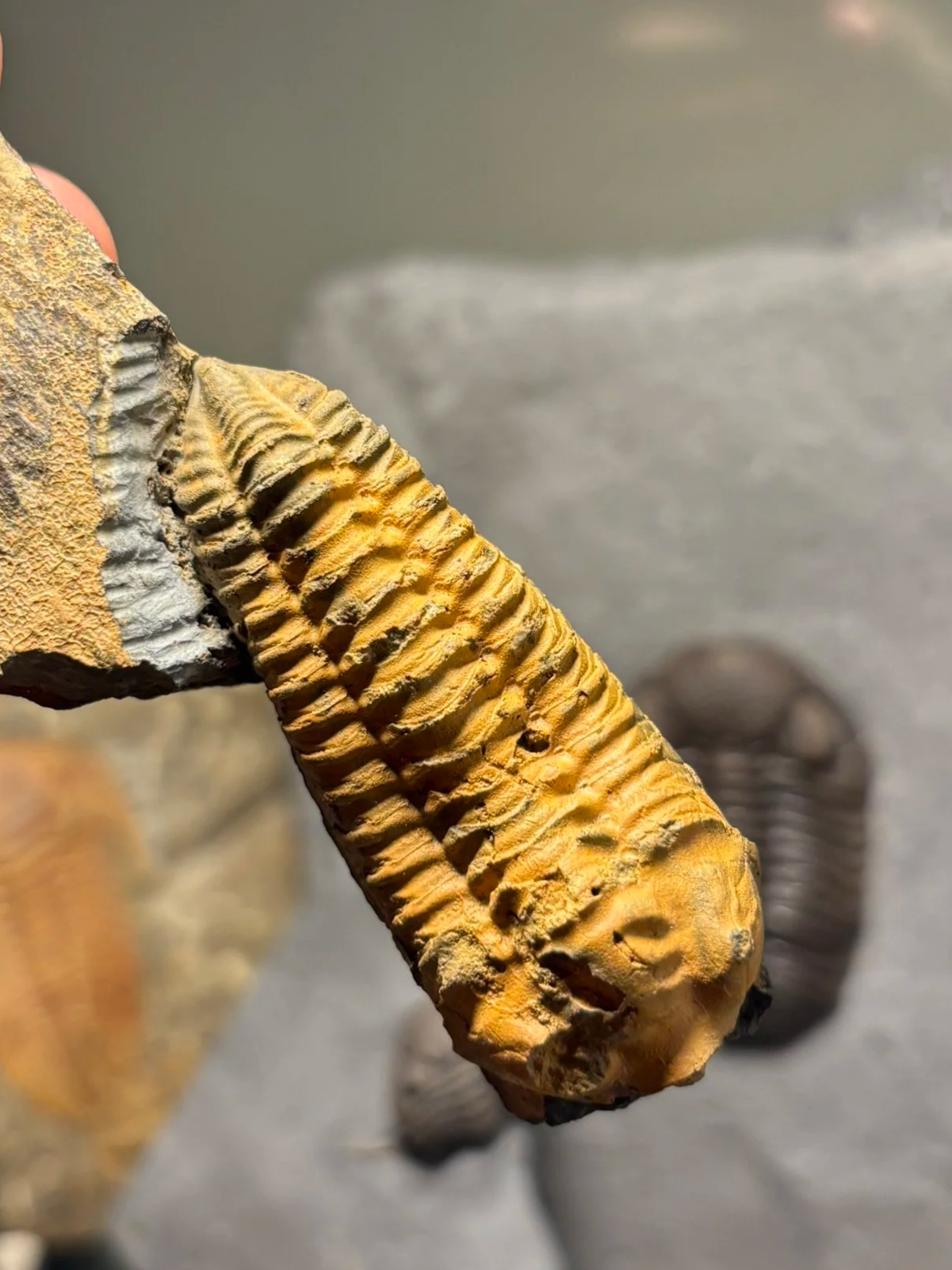
42mm unkown calymenid trilobite, Early Ordovician, Fezouata Formation, Morocco
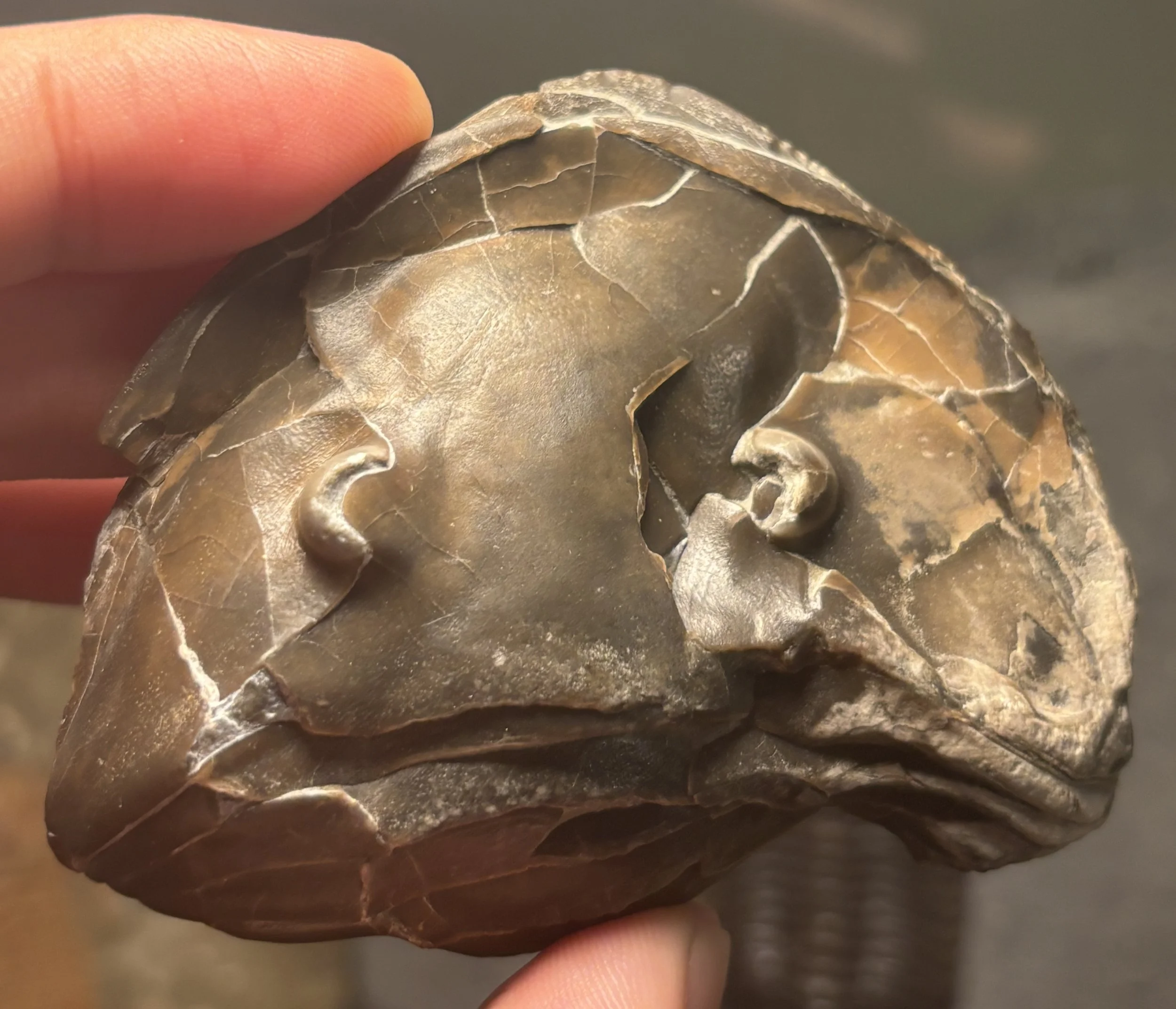
73mm wide enrolled Isotelus maximus, Late Ordovician, Arnheim Formation, Mt. Orab, Ohio
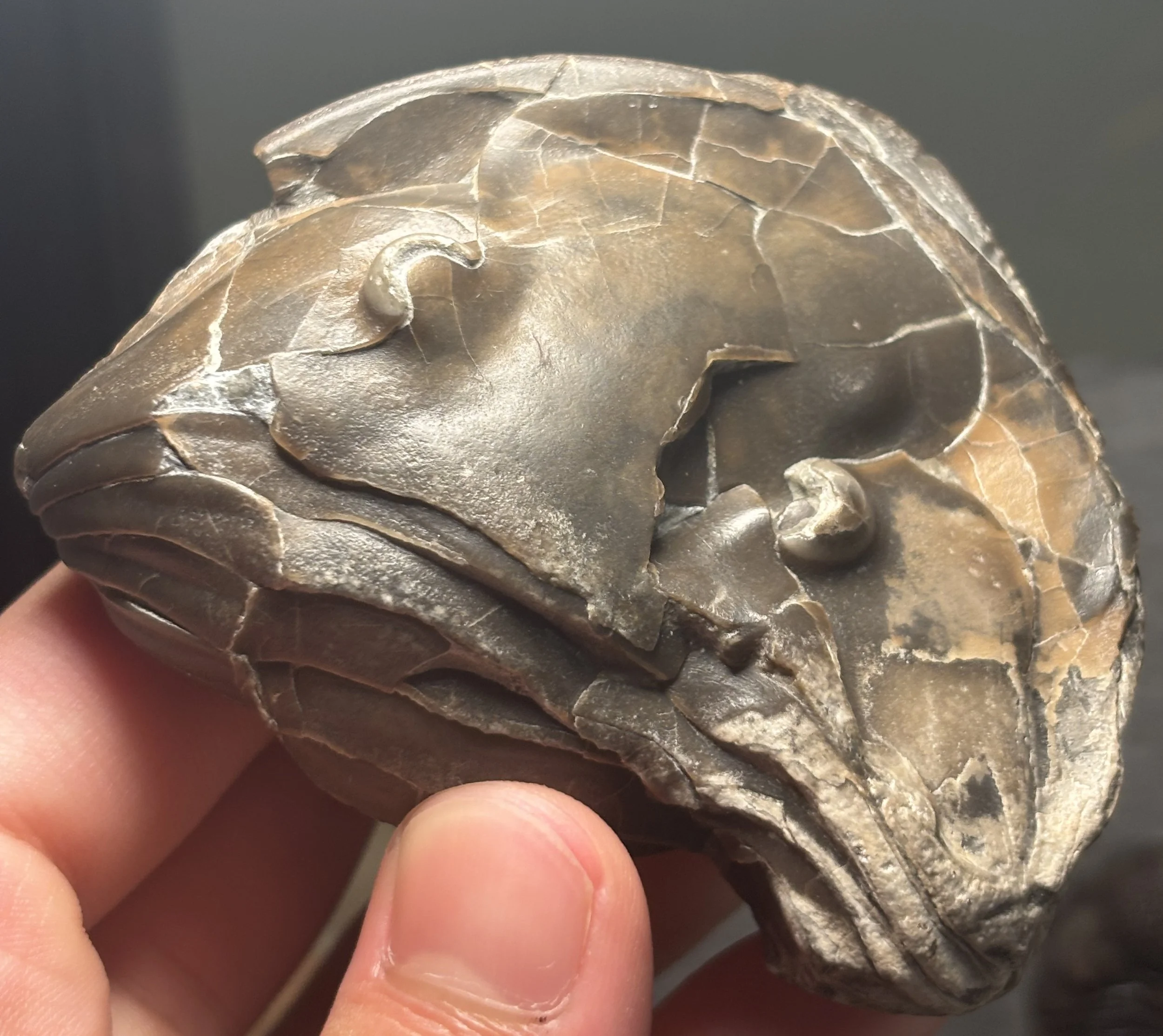
73mm wide enrolled Isotelus maximus
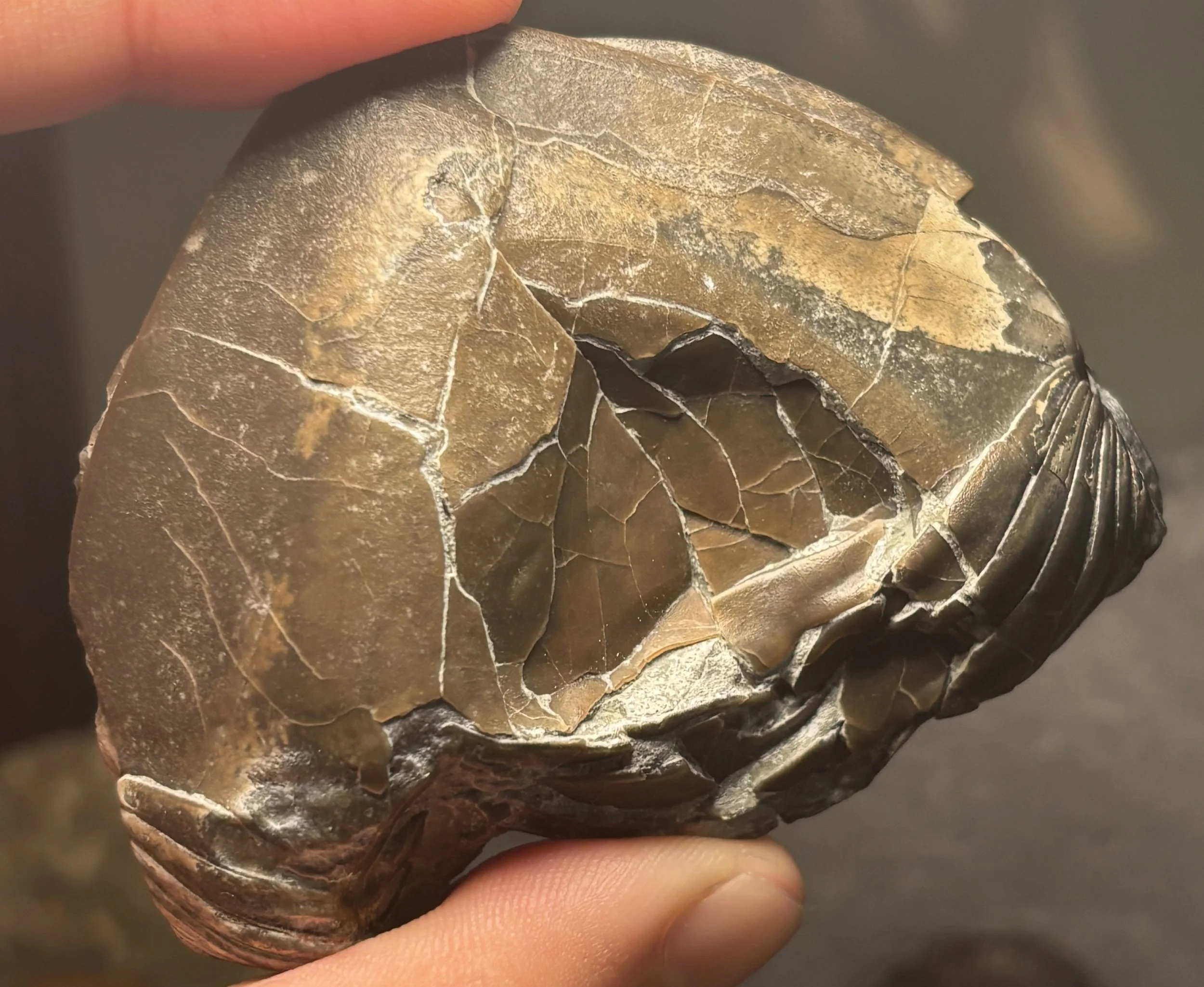
73mm wide enrolled Isotelus maximus
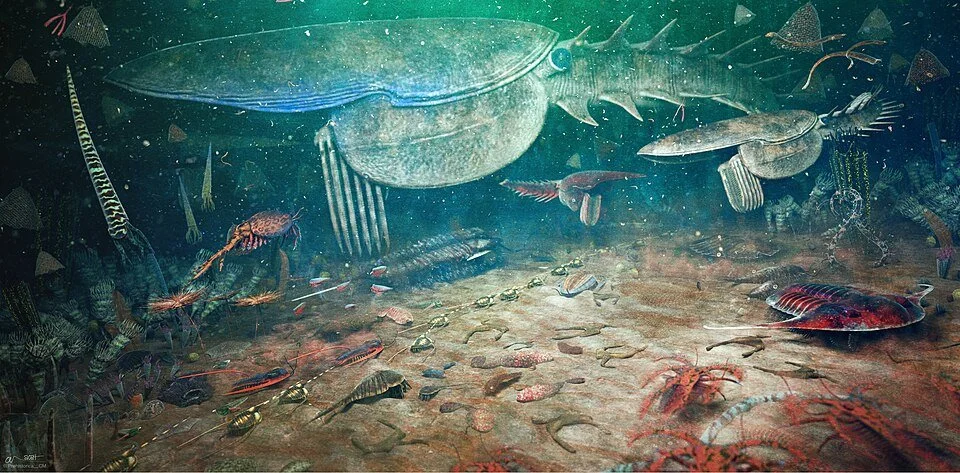
Reconstruction of Fezouata Biota, PaleoEquii, CC BY 4.0
Paleozoic Era: Silurian Period
(444 to 419 million years ago)
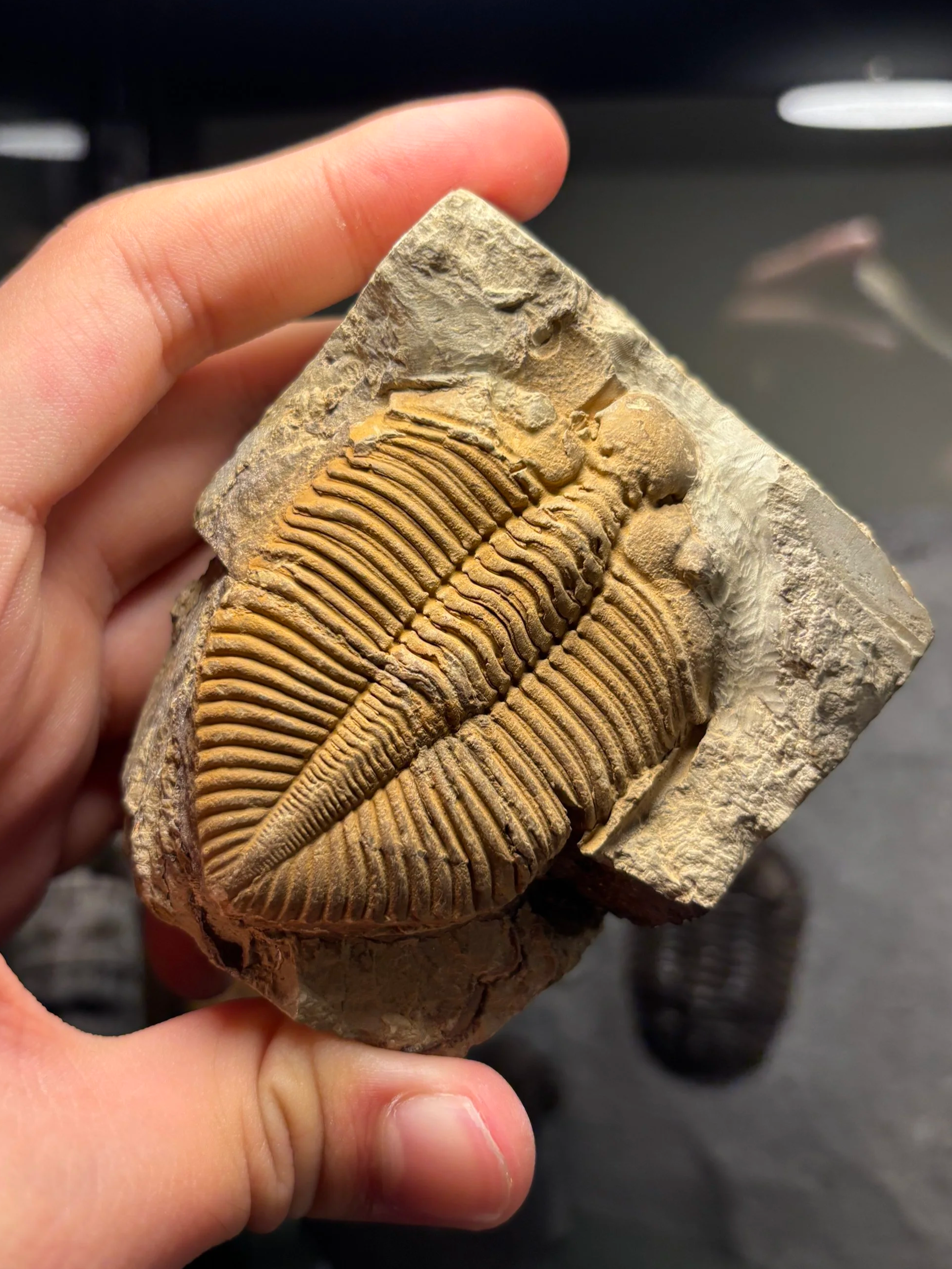
67mm Coronocephalus gaoluoensis molt, Early Silurian(Llandovery stage), Xiushan formation, Yongshun county, Western Hunan province
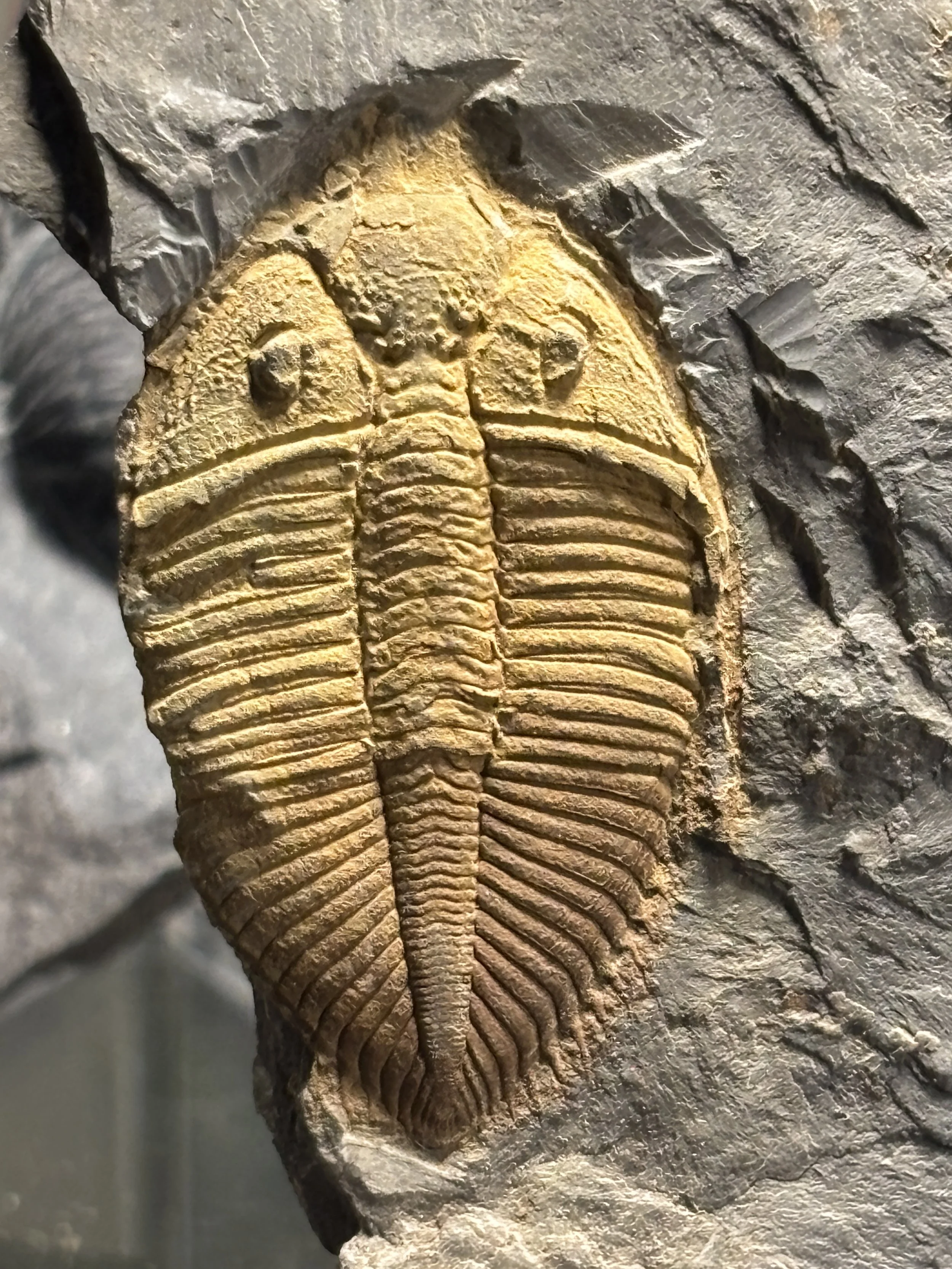
50mm Coronocephalus gaoluoensis, Early Silurian(Llandovery stage), Xiushan formation, Yongshun county, Western Hunan province
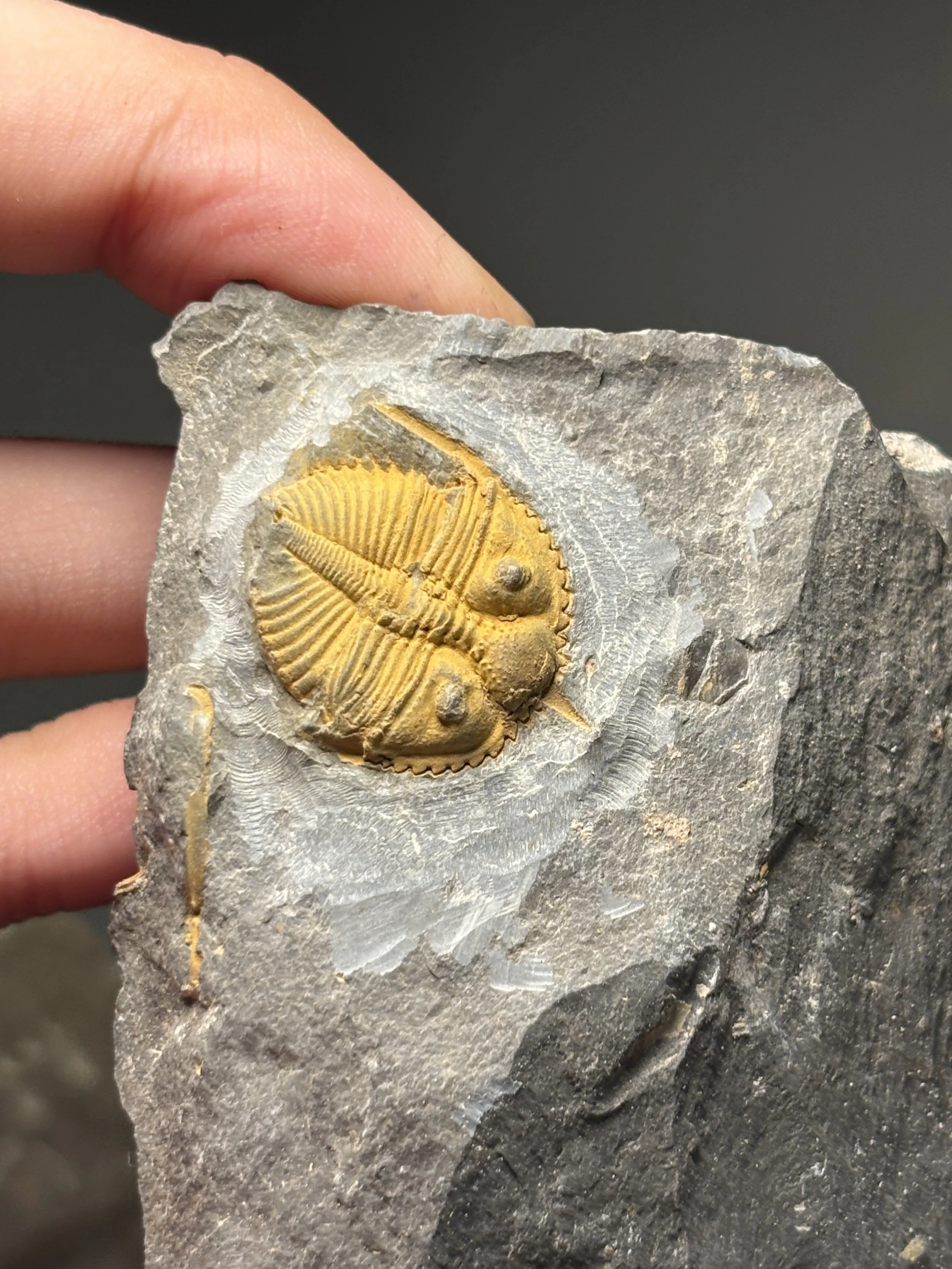
juvenile 19mm Coronocephalus gaoluoensis, Early Silurian (Llandovery stage), Xiushan formation, Yongshun county, Western Hunan province
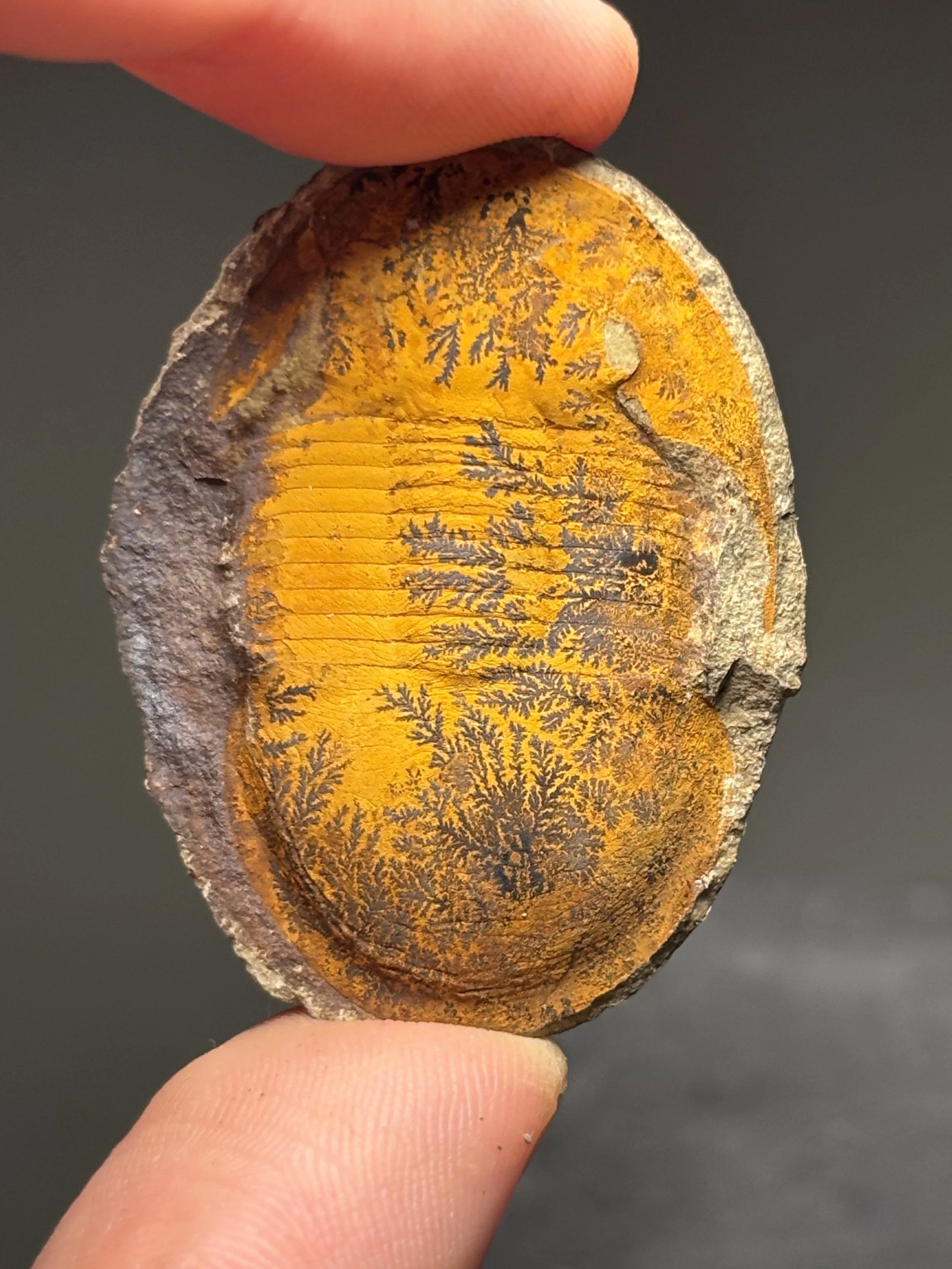
43mm positive Ciliscutellum ciliensis, Lungmachi formation, Lower Silurian deposits of Hunan, China
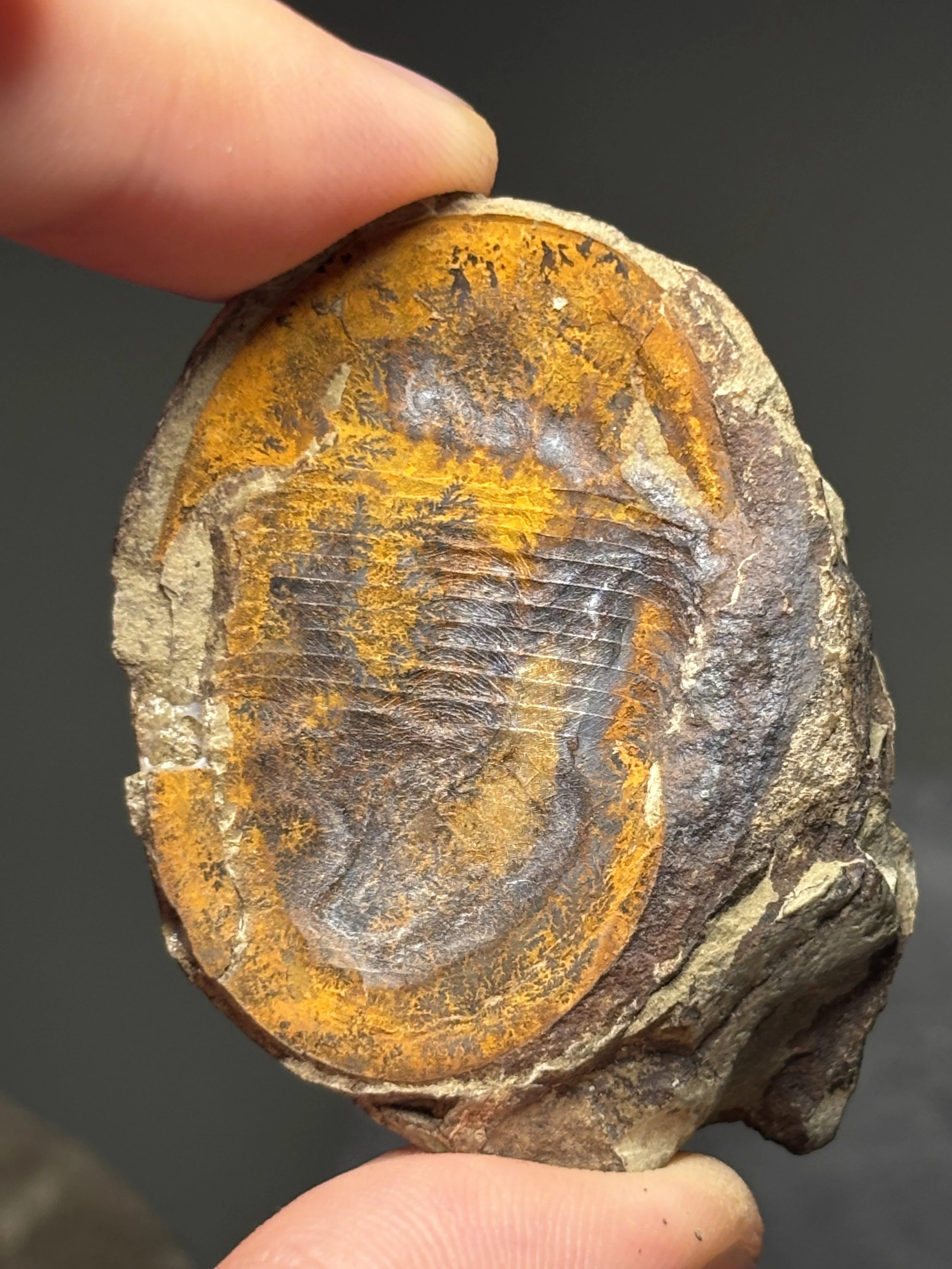
43mm negative Ciliscutellum ciliensis, Lungmachi formation, Lower Silurian deposits of Hunan, China
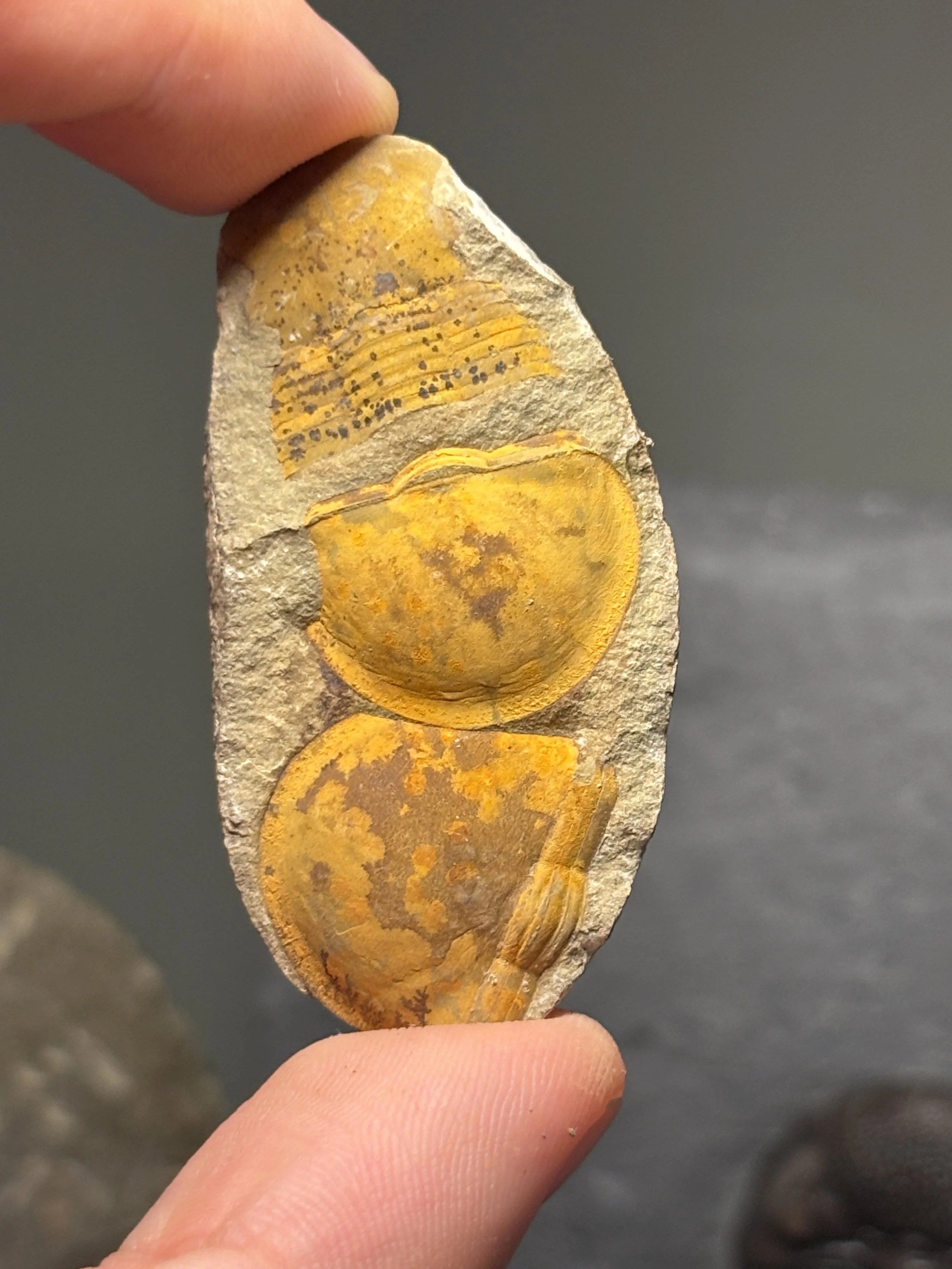
34mm Ciliscutellum ciliensis, Lungmachi formation, Lower Silurian deposits of Hunan, China
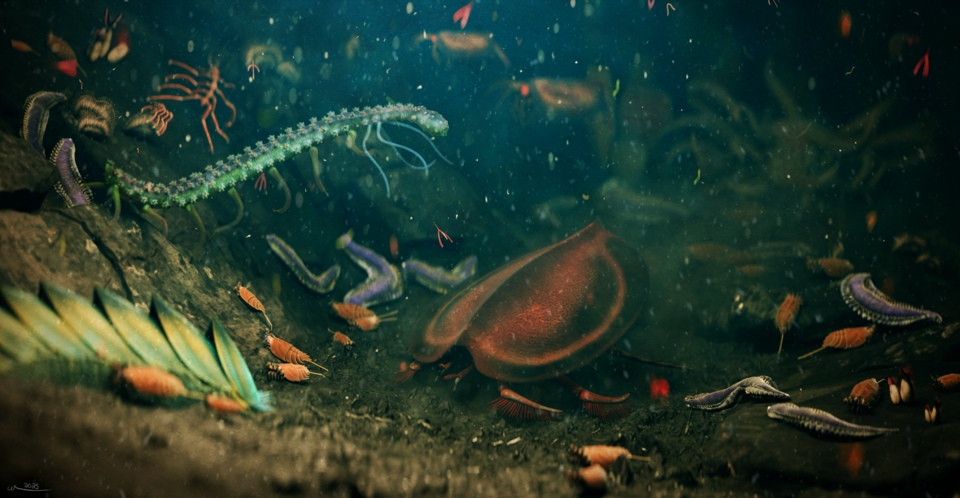
Herefordshire Biota, Prehistorica CM, CC BY 4.0
Paleozoic Era: Devonian Period
Early Devonian (419.2 – 393.3 million years ago)
Lochkovian stage: The first stage that is distinct from the end of the Silurian. Early primitive jawless fishes flourished and plant life developed on land
Pragian stage: The evolution of early vascular plants continued and heavily armored jawless fishes flourished
Emsian stage: Saw the emergence of the first jawed fishes, known as placoderms, and the continued complexity in the plant life on earth
Middle Devonian (393.3 – 382.7 million years ago)
Eifelian stage: The supercontinent of Euramerica began to form which created expansive shallow marine basins. Placoderms like the giant armored fish Dunkleosteus began to dominate as apex predators, squeezing out the orthocone cephalopods. As a result, invertebrates like trilobites and brachiopods developed new defense mechanisms like spines.
Givetian stage: The climate evolved to be warm and stable. This allowed the first extensive coral reefs formed from rugose corals and outcompeted the primitive bacterial mats that developed in the shallow seas.
Late Devonian (382.7 – 358.9 million years ago)
Frasnian stage: Earth's first forests comprised of wood-tree structures like Archaeopteris- progymnosperm tree with fern-like leaves- appeared on land. The development of mature forests elevated atmospheric oxygen levels but led to climate cooling. Early seed plants also evolved.
Kellwasser Events: separated the Frasnian and Famennian- shifted carbon cycles from mass volcanic eruptions, led to the mass deposits of black shales. Wiped out the majority of trilobites and other sea diversity.
Famennian stage: This marked the end of the Devonian which ended in the detrimental Devonian Mass Extinction (Kellwasser & Hangenberg events). The extinction comprising of volcanic eruptions, mass algae blooms choking off the oxygen supply in oceans, oceanic cooling wiped out approximately 70% of marine species. The oldest definitive four-legged tetrapods evolved from lobe-finned fish by the end of this epoch.
Hangenberg Events: Marked the end of the Devonian and the final stage of the Devonian Mass Extinction
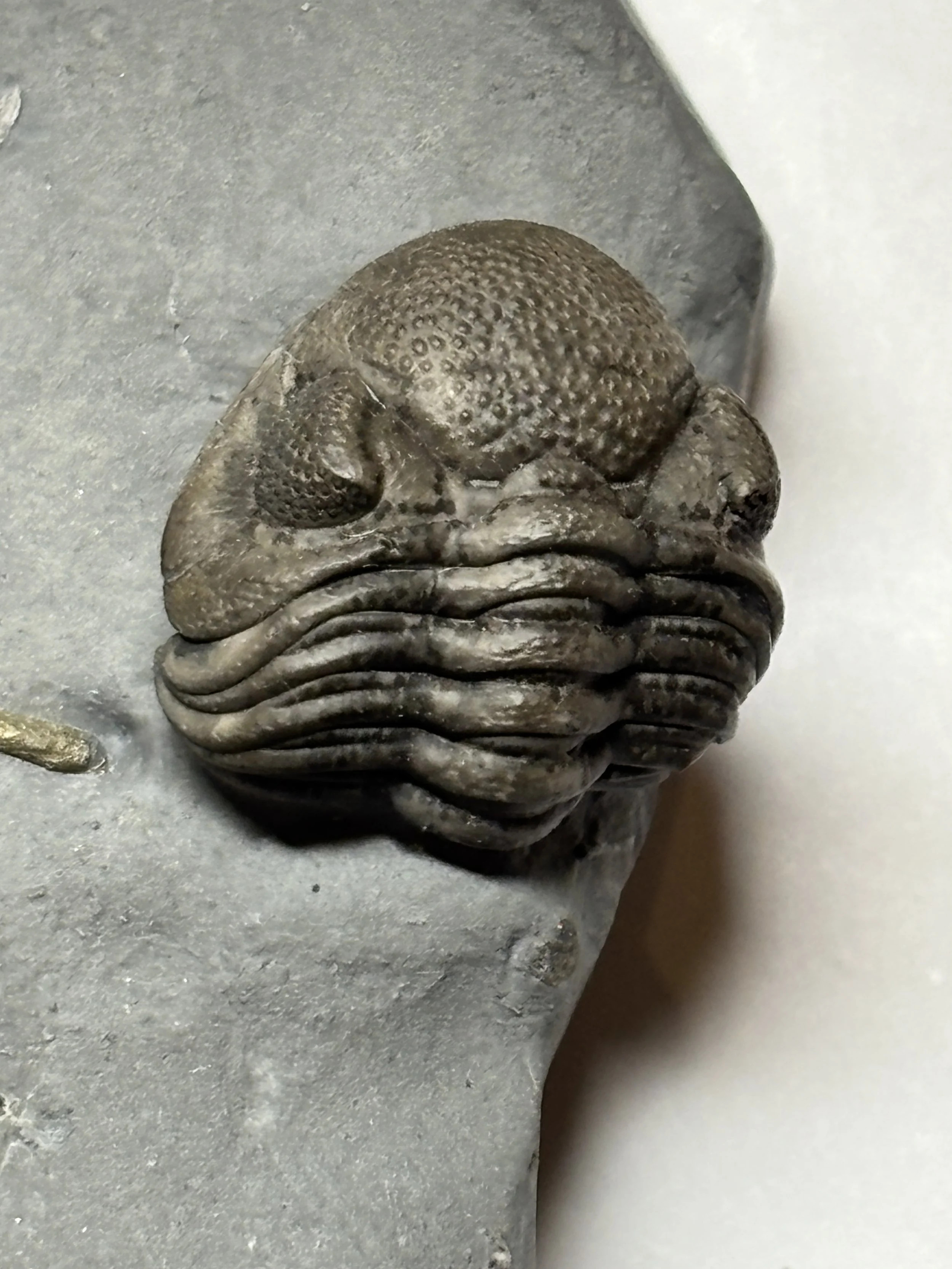
18.4mm Eldredgeops rana enrolled, Middle Devonian-Givetian Stage, Hamilton Group, Wanakah Shale, New York
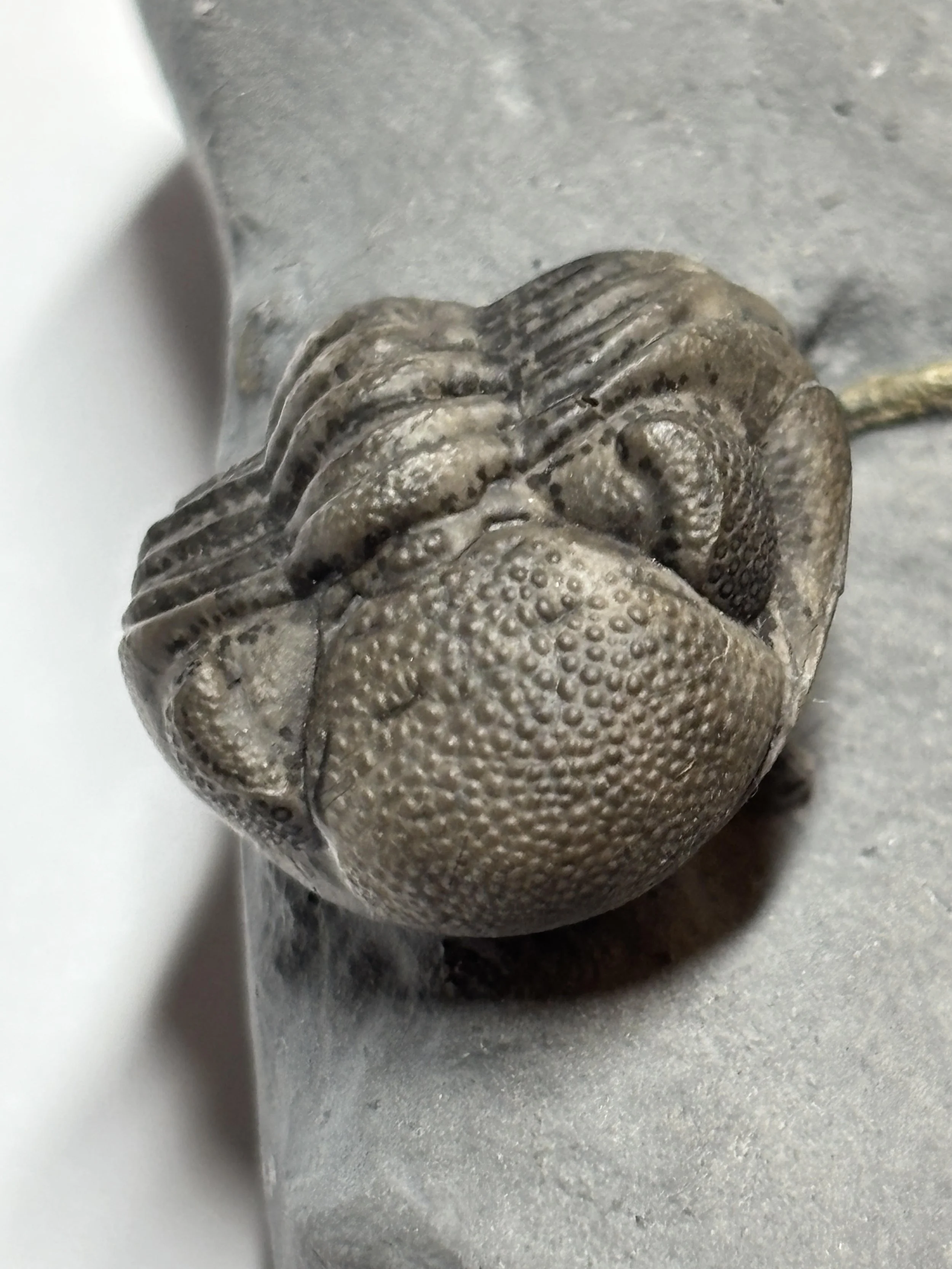
well-preserved specimen representative of camouflage patterns: of scientific significance
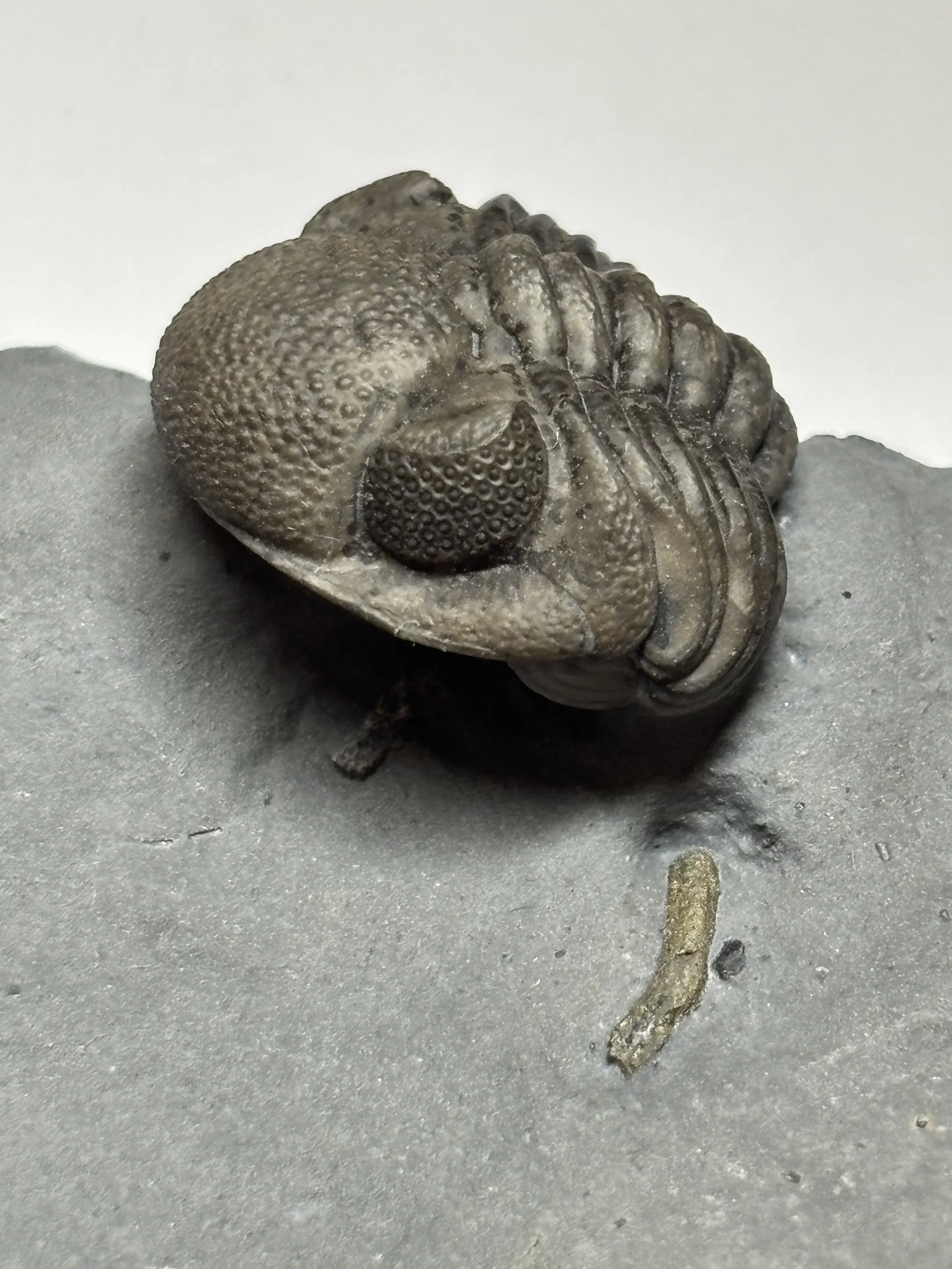
Article Linked: "Eldredgeops Camouflage"
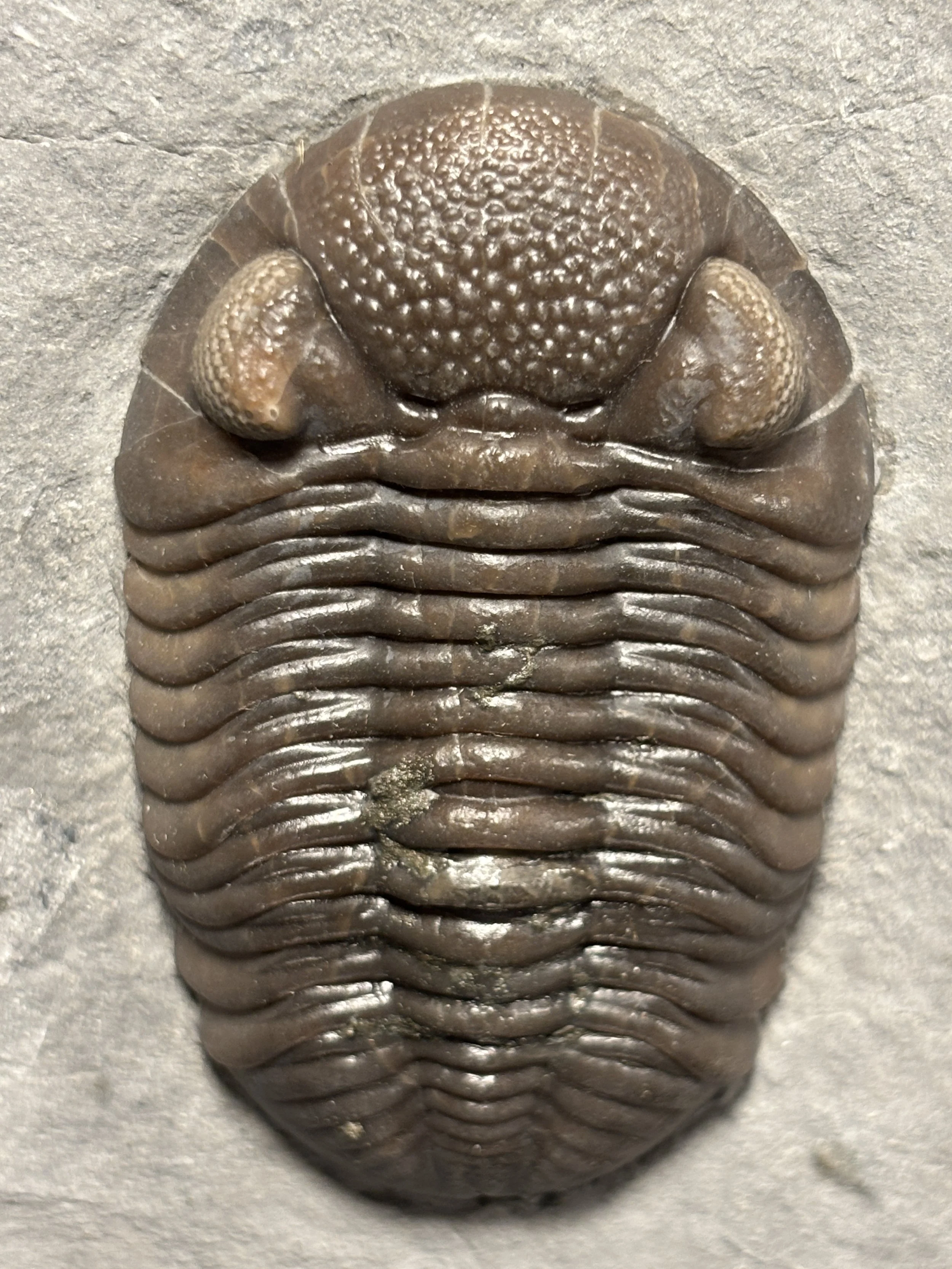
61mm Prone specimen of Eldredgeops rana crassituberculata, Middle Devonian-Givetian stage, Silica Formation, Paulding, Ohio,
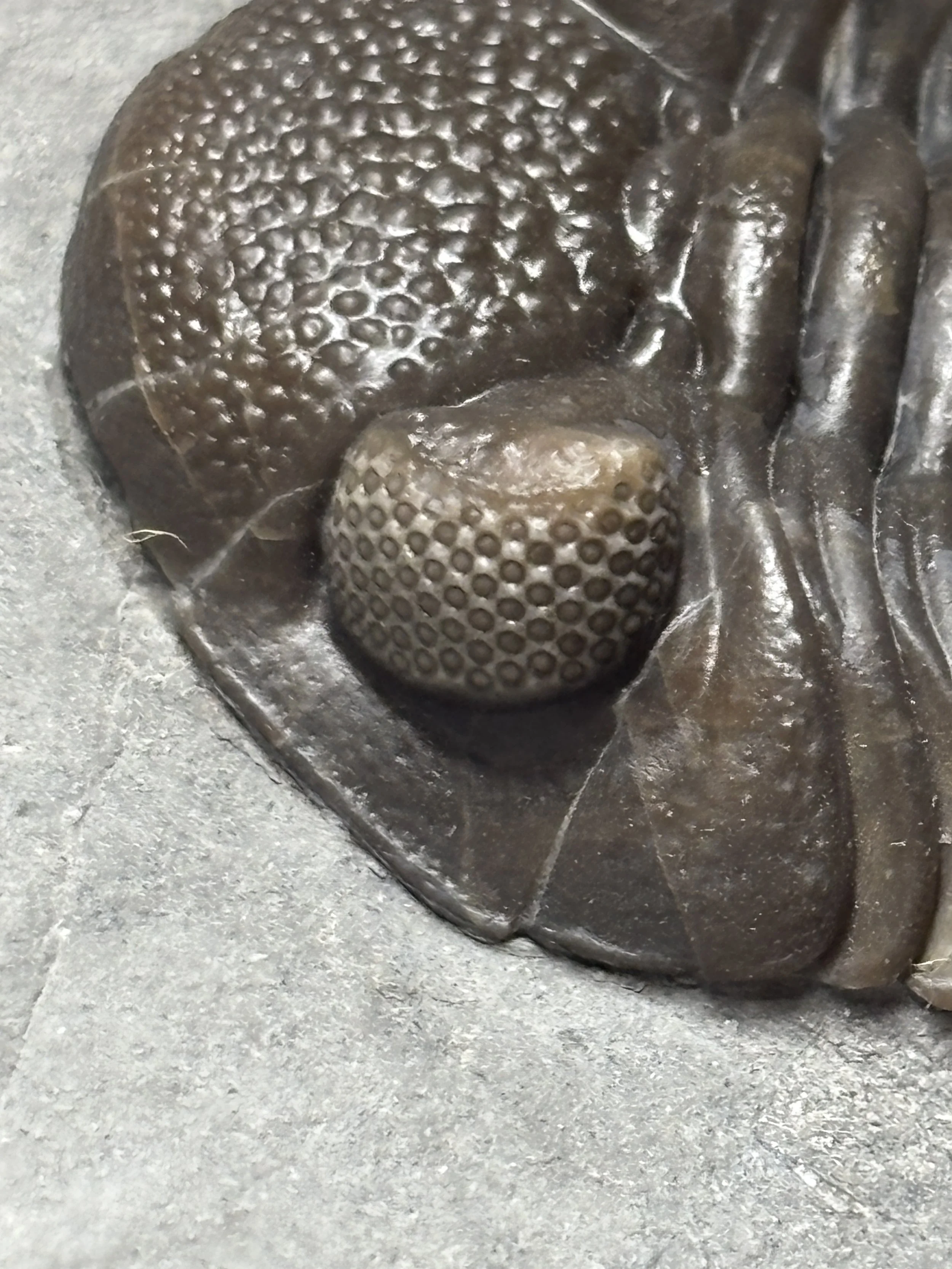
well preserved schizochroal eyes
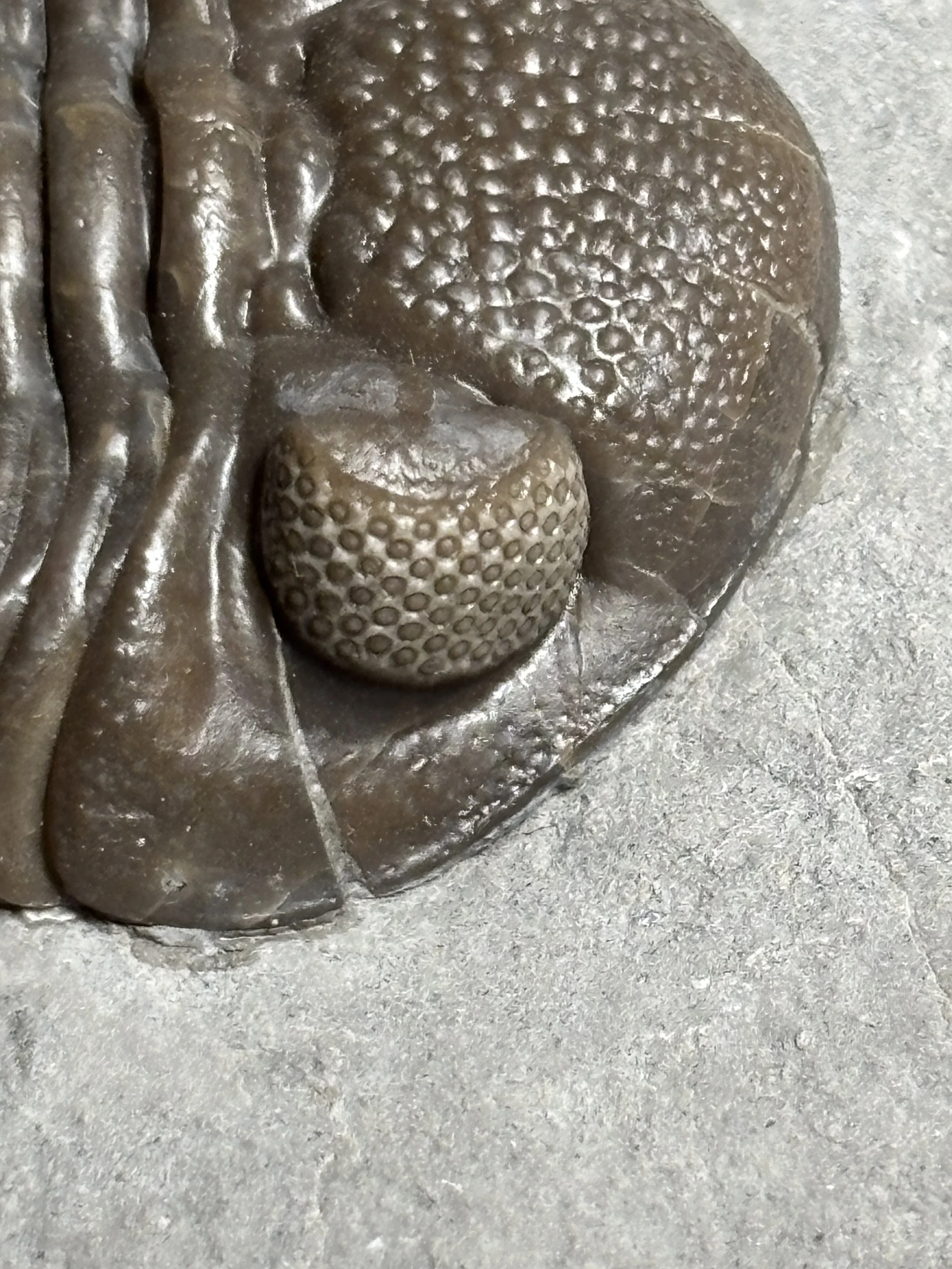
well preserved schizochroal eyes
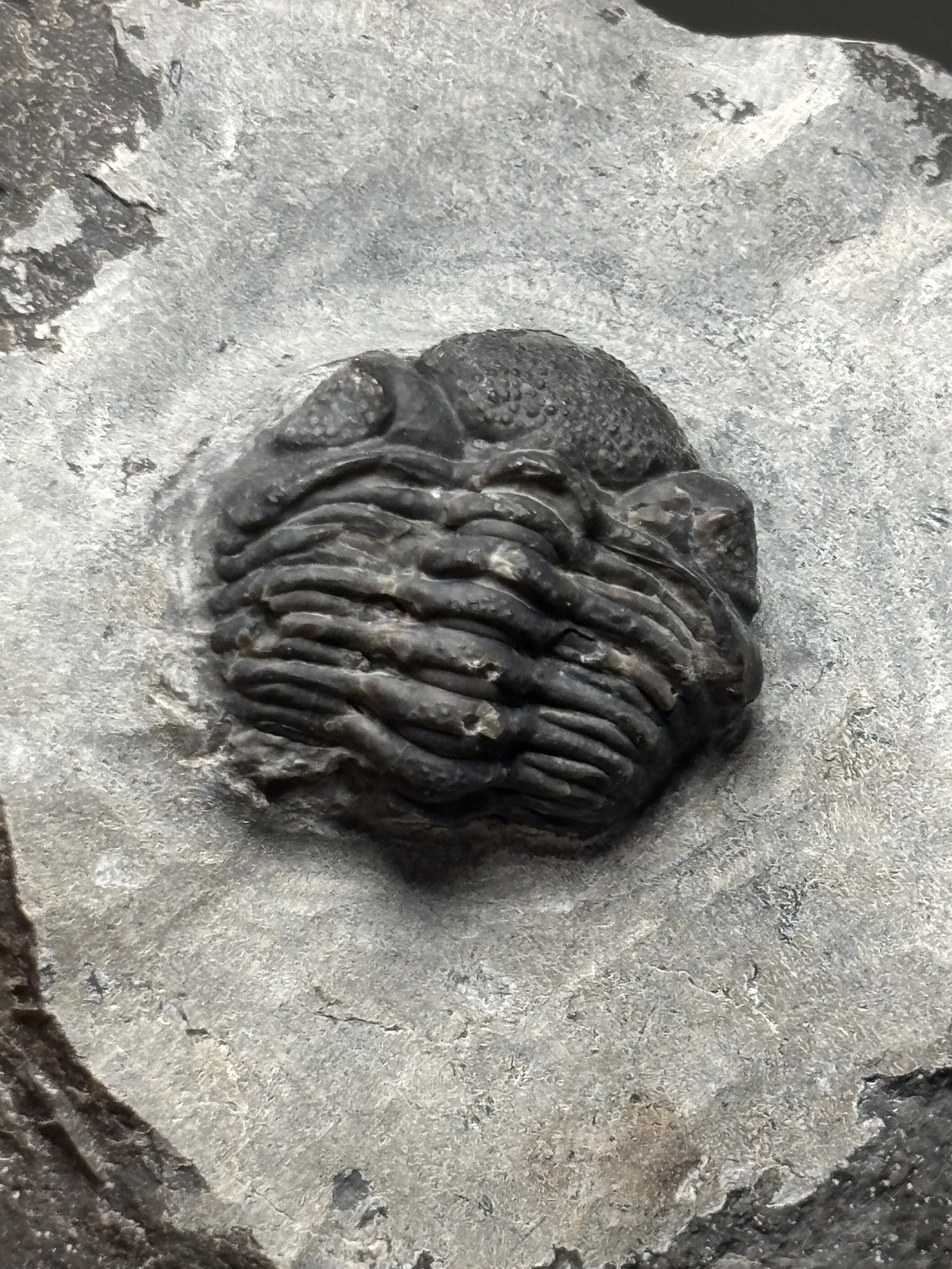
21mm Undescribed Viaphacops, Middle Devonian Eifelian stage, New York, Onondaga Formation
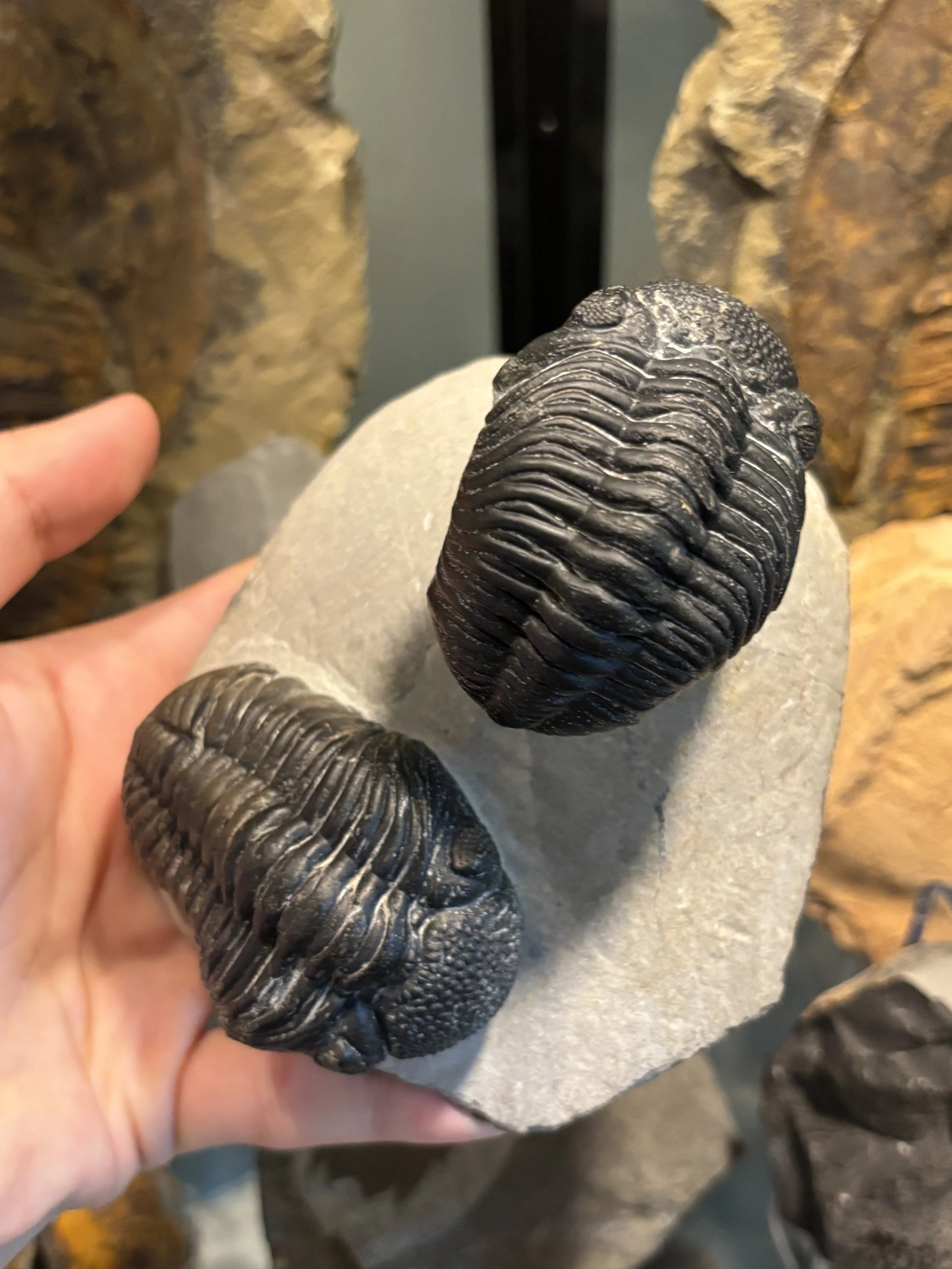
72mm, 65mm, Pedinopariops (Hypsipariops) vagabundus, Middle Devonian Eifelian stage, Bou Dib Formation, Jbel Mrakib Morocco
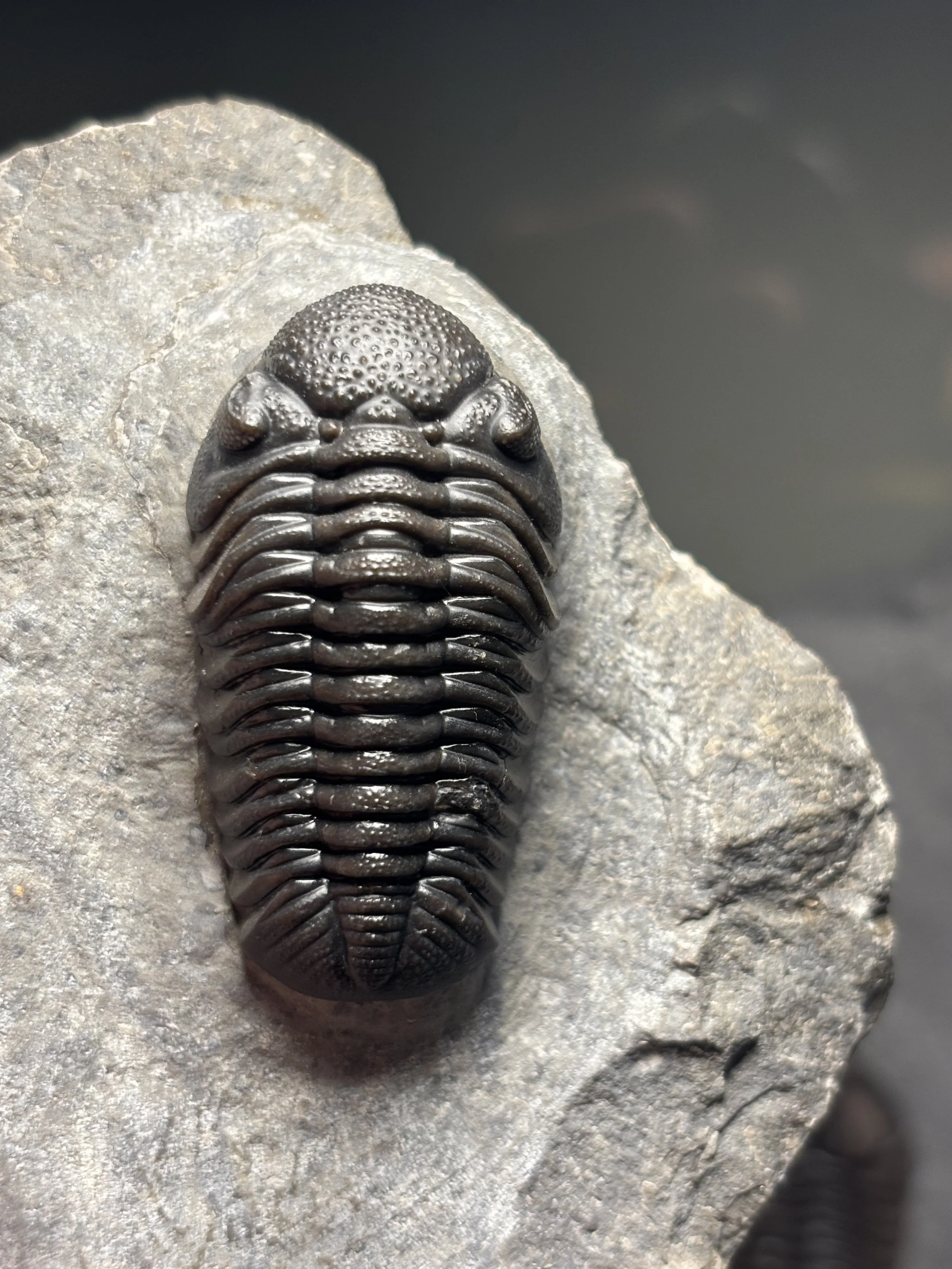
45mm Morocops ovatus, Lower Devonian Emsian stage, Taharajat Jbel Oufaten, Drâa-Tafilalet, Morocco
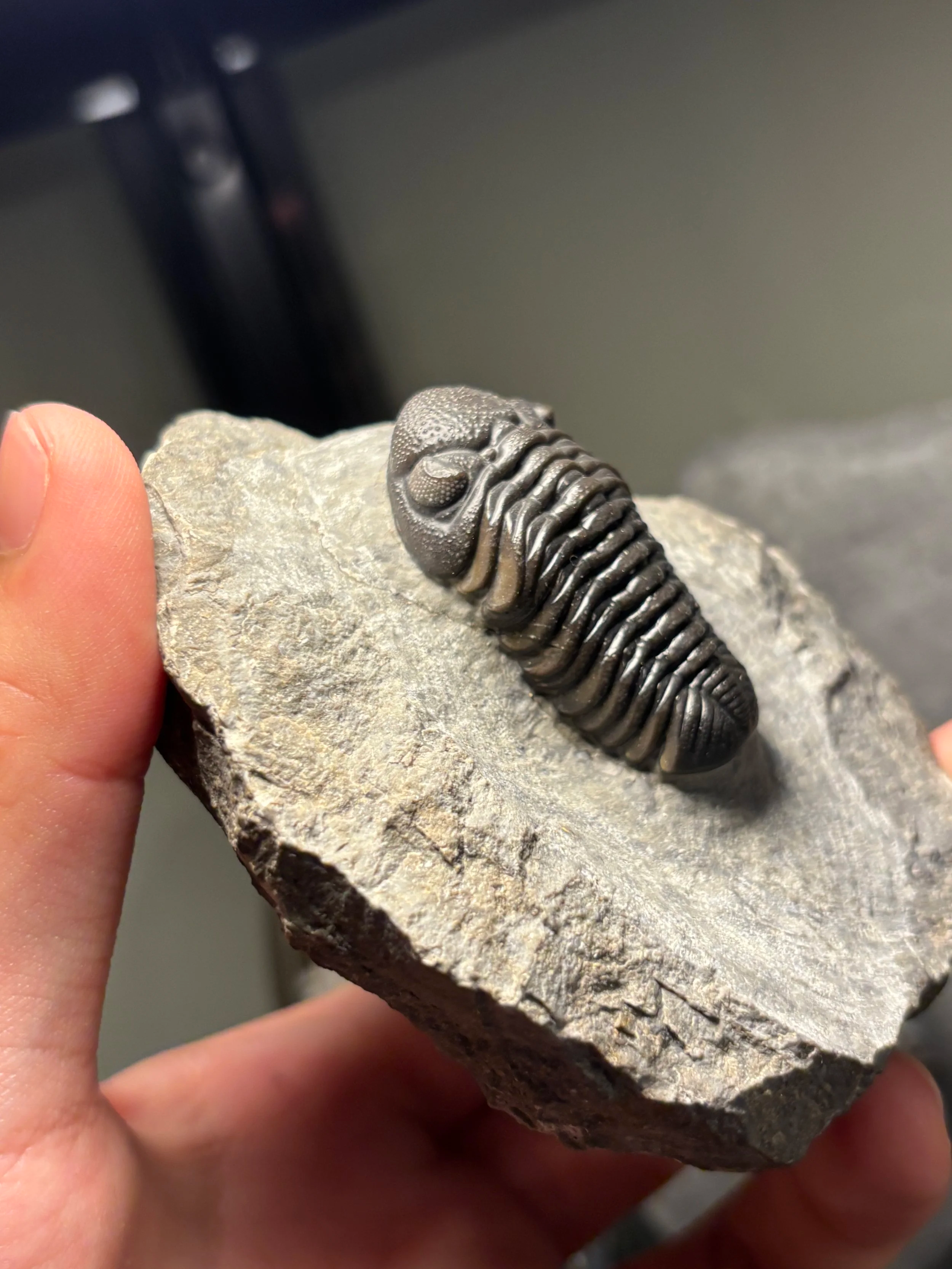
angle of eye-Morocops ovatus, Lower Devonian Emsian stage, Taharajat Jbel Oufaten, Drâa-Tafilalet, Morocco
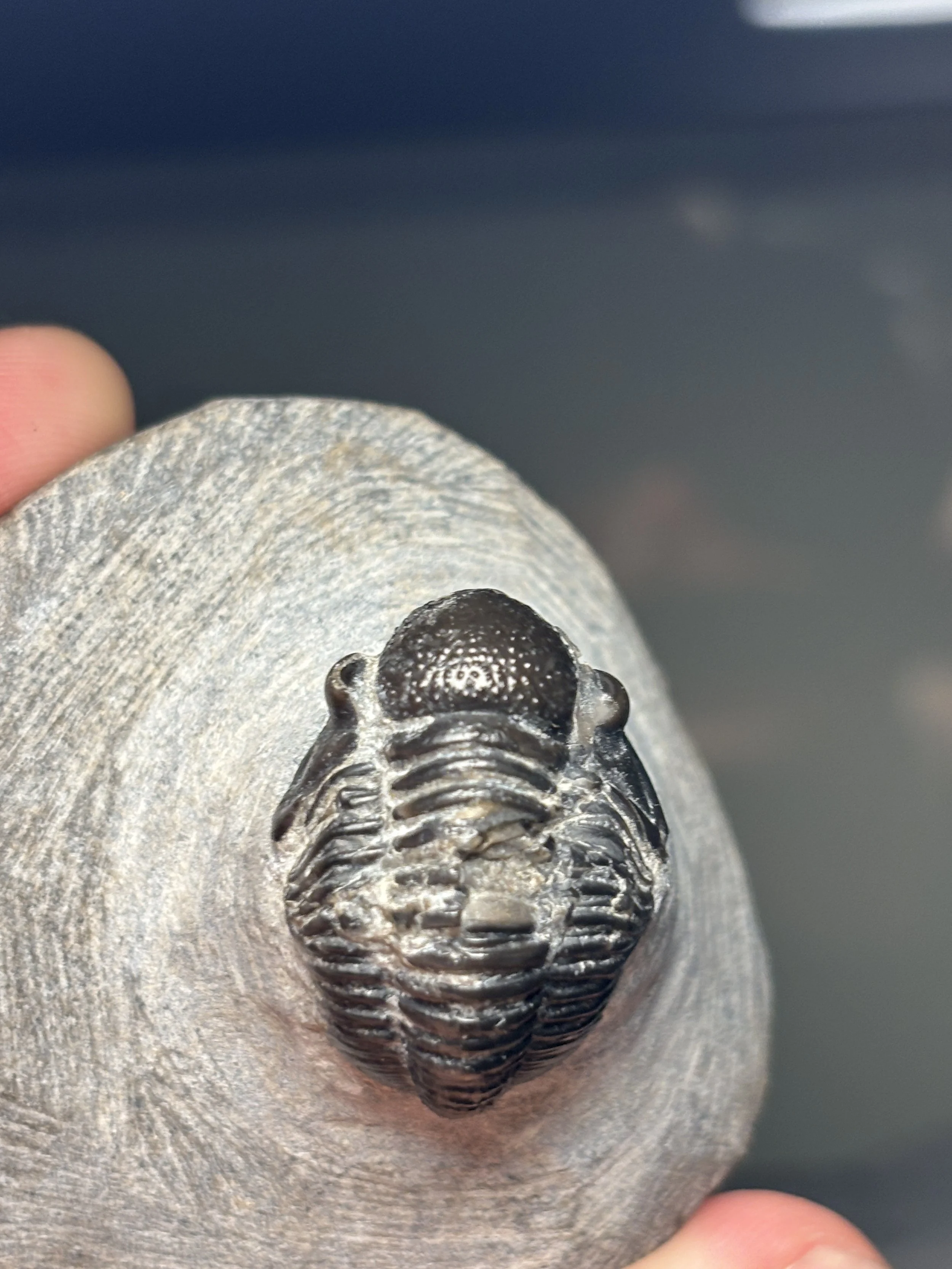
25.4mm unusually large Gerastos sp. Middle Devonian Eifelian Stage, El Otfal formation, Morocco
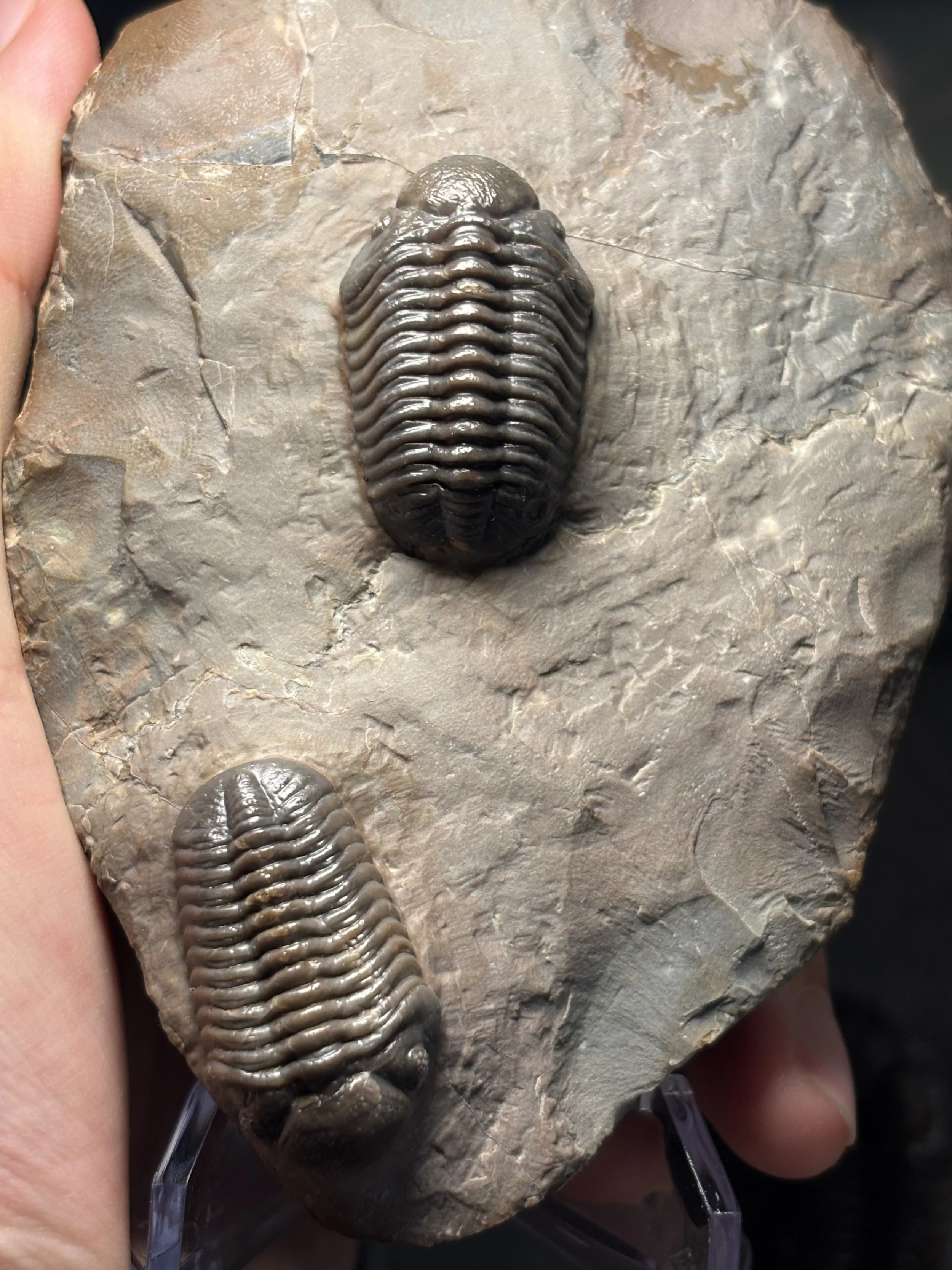
31mm, 34mm, Struveaspis sp. Middle Devonian-Eifelian Stage, Bou Tchrafine Formation, Jorf, Erfoud, Morocco
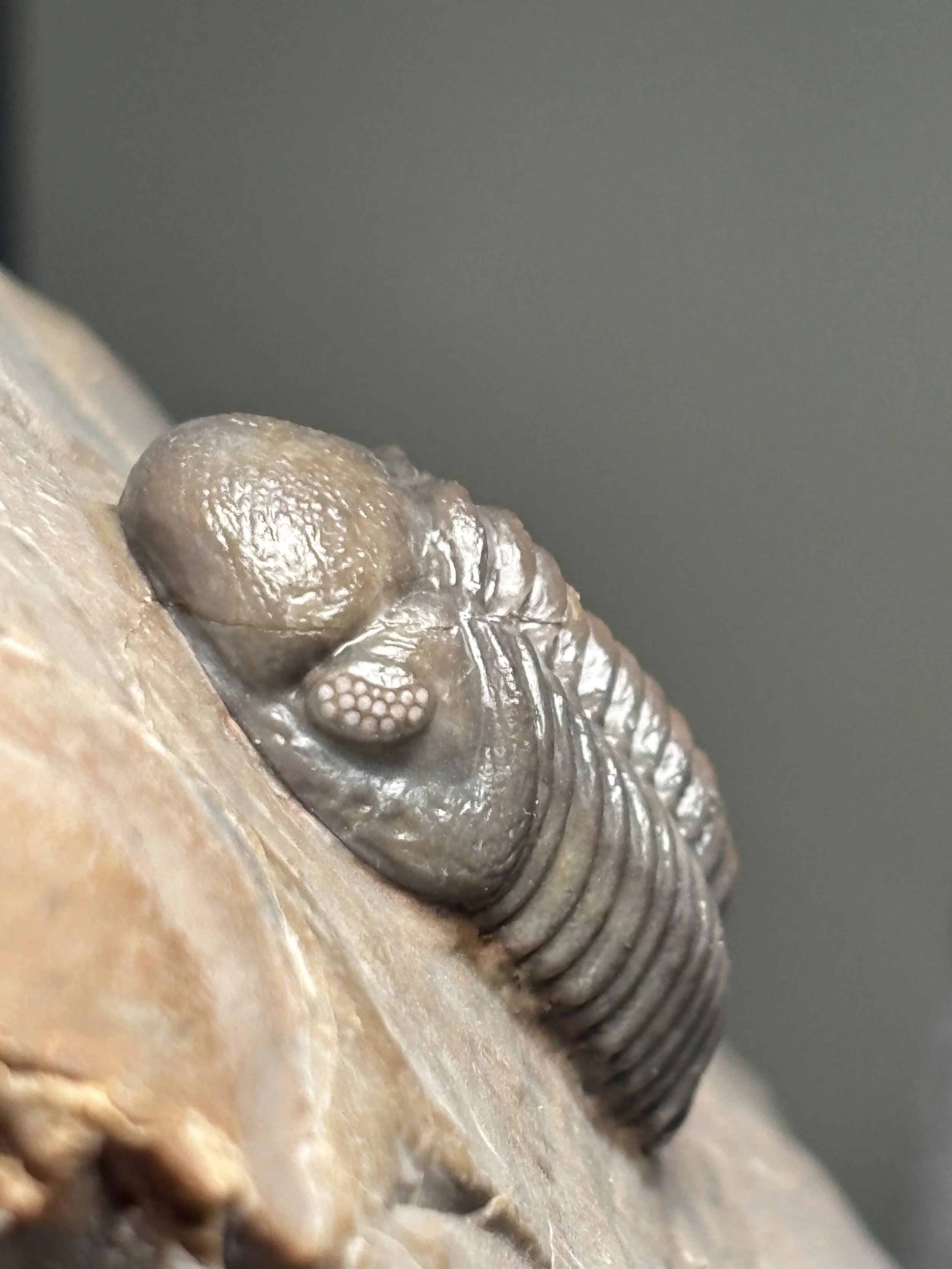
diminutive schizochroal eyes Struveaspis sp.
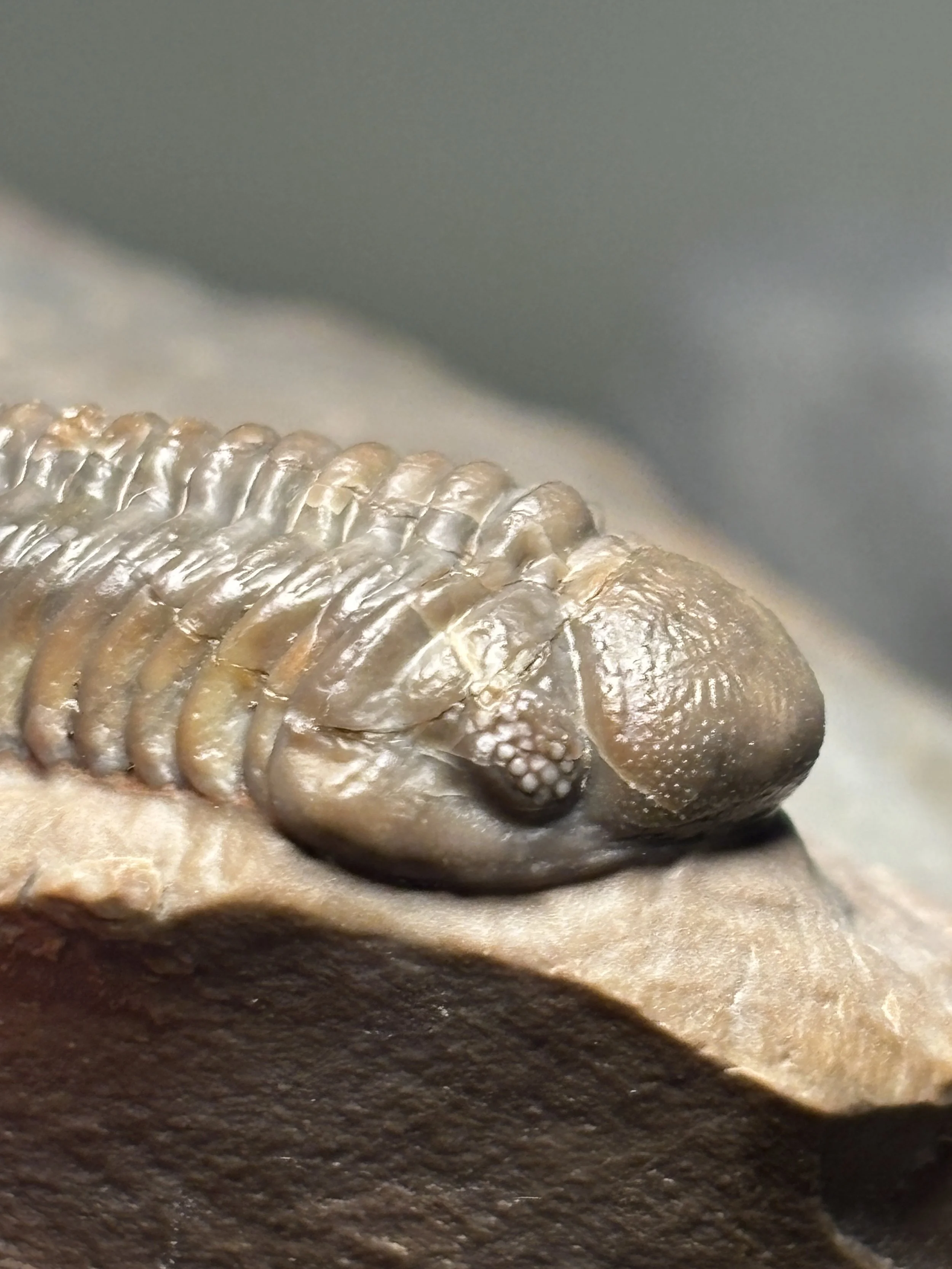
diminutive schizochroal eyes Struveaspis sp.
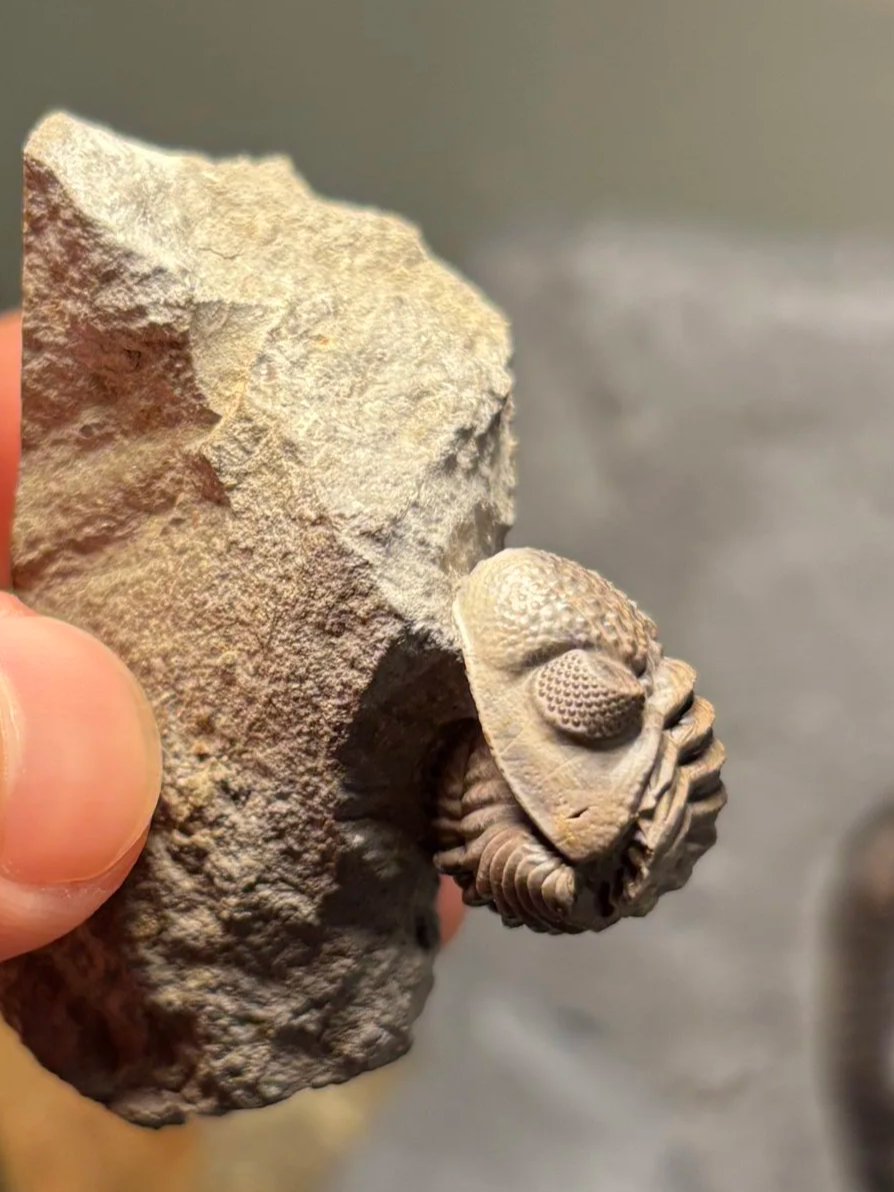
22mm, Geesops schlotheimi, Middle Devonian-Eifelian Stage, Ahrdorf Formation, Flesten-Member, Gees, Eifel Region, Germany
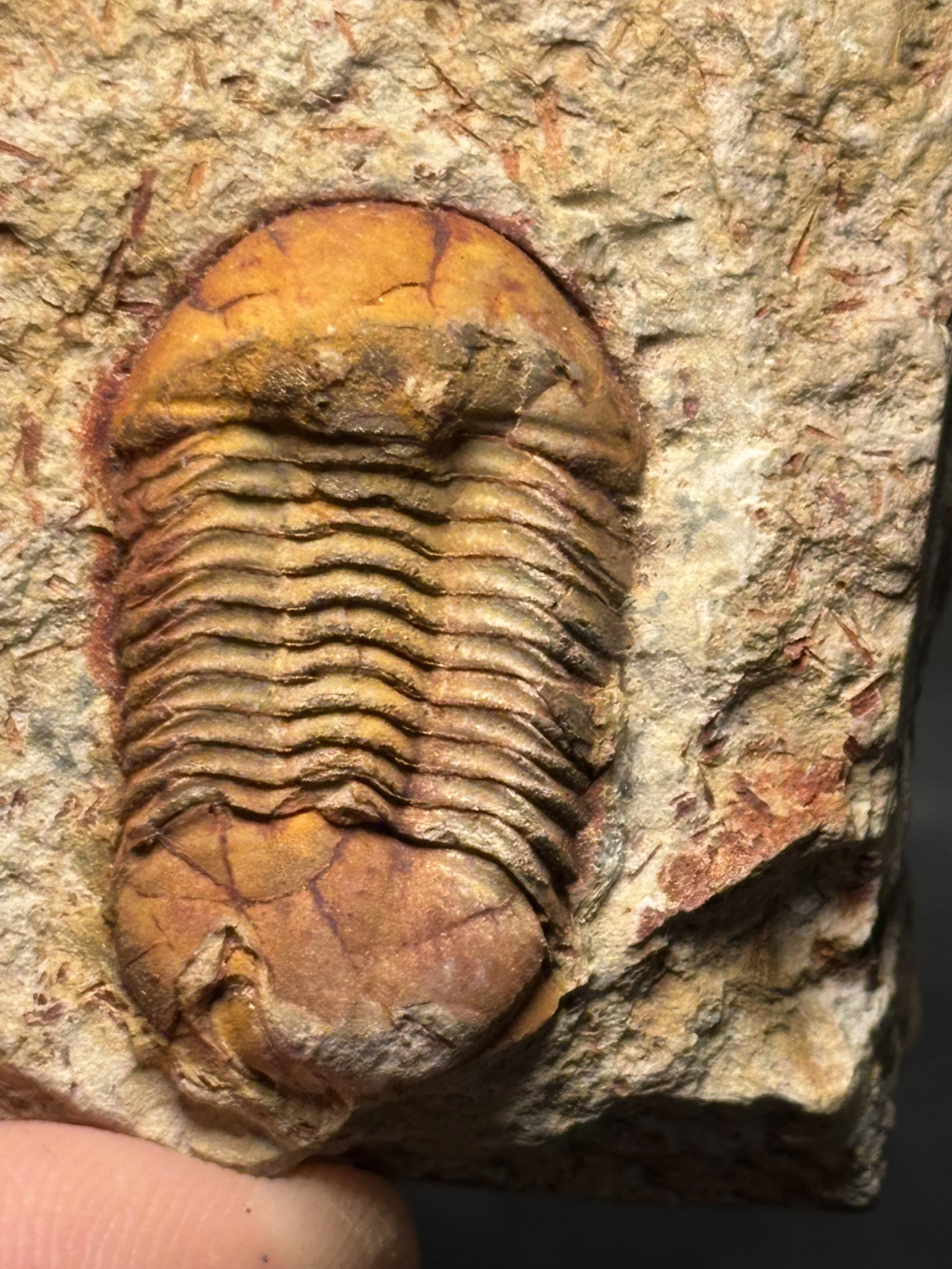
29mm Ductina vietnamica, Middle Devonian-Eifelian Stage, Nandan Formation, Hunan, China
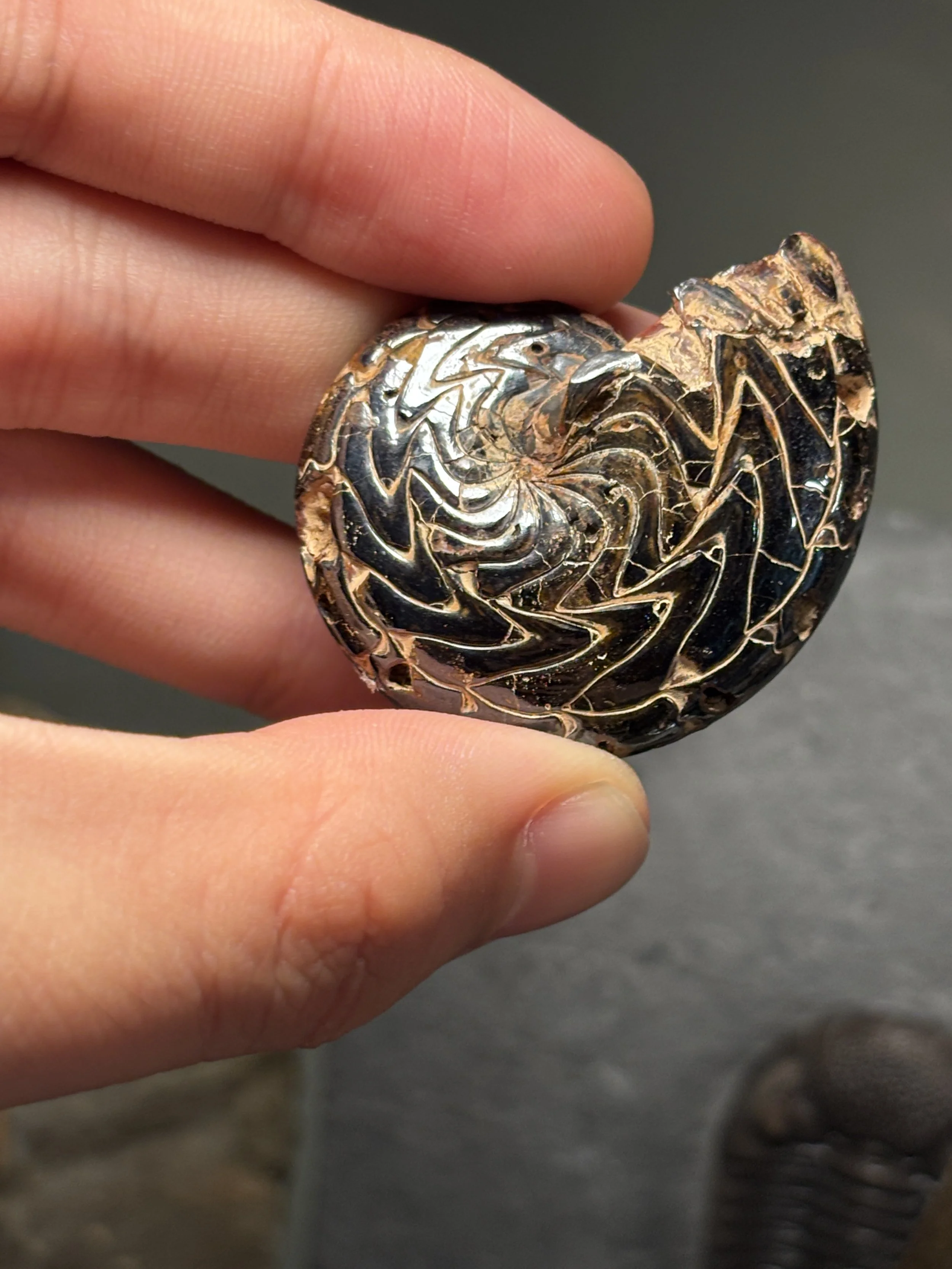
42mm Discoclymenia cucullata Goniatite, Late Devonian-Famennian stage, Quidane Cheppi, Morocco
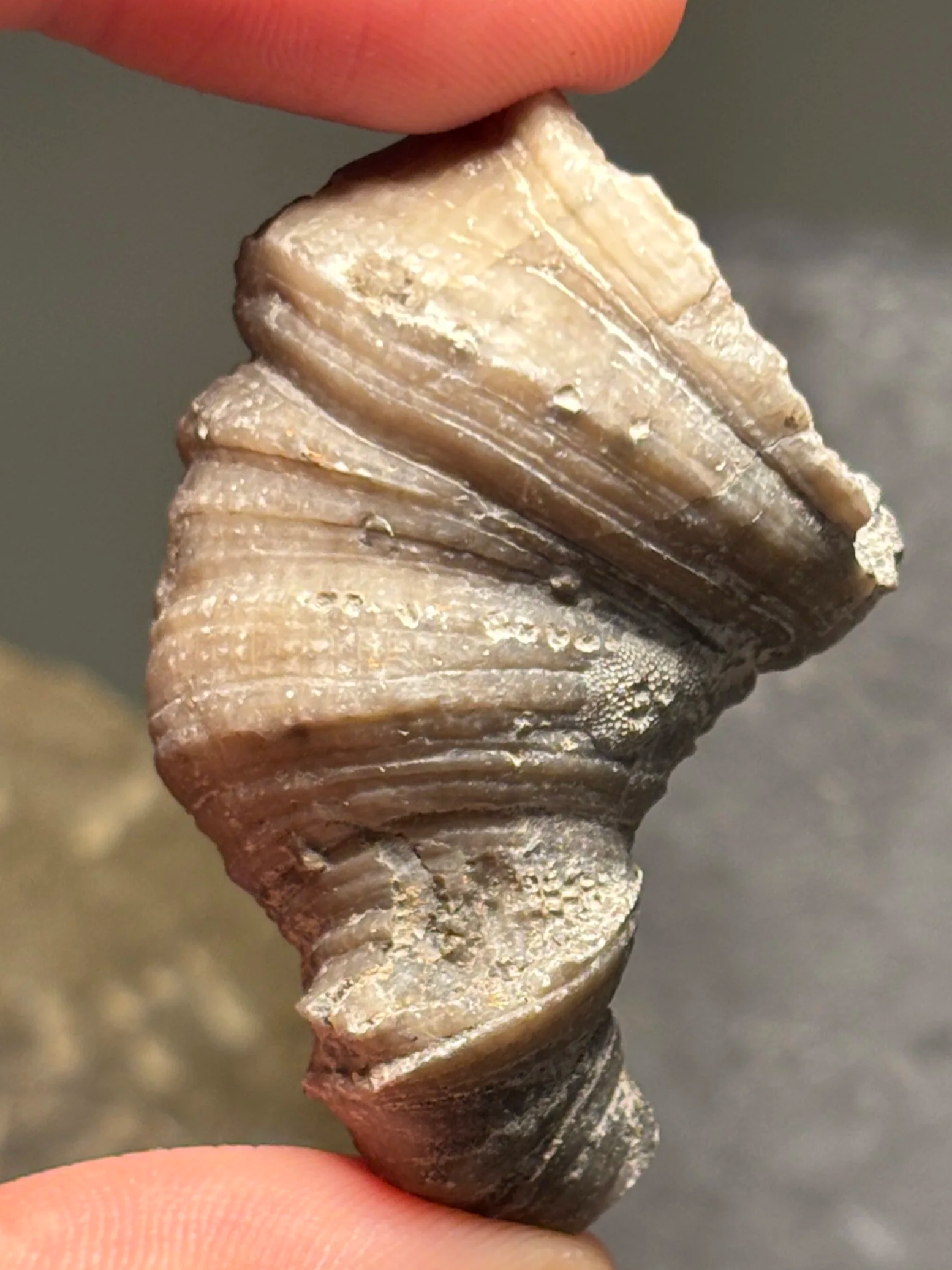
43mm solitary rugose coral Heliophyllum halli, Middle Devonian period-Givetian stage, Arkona Formation, Southern Ontario, Canada
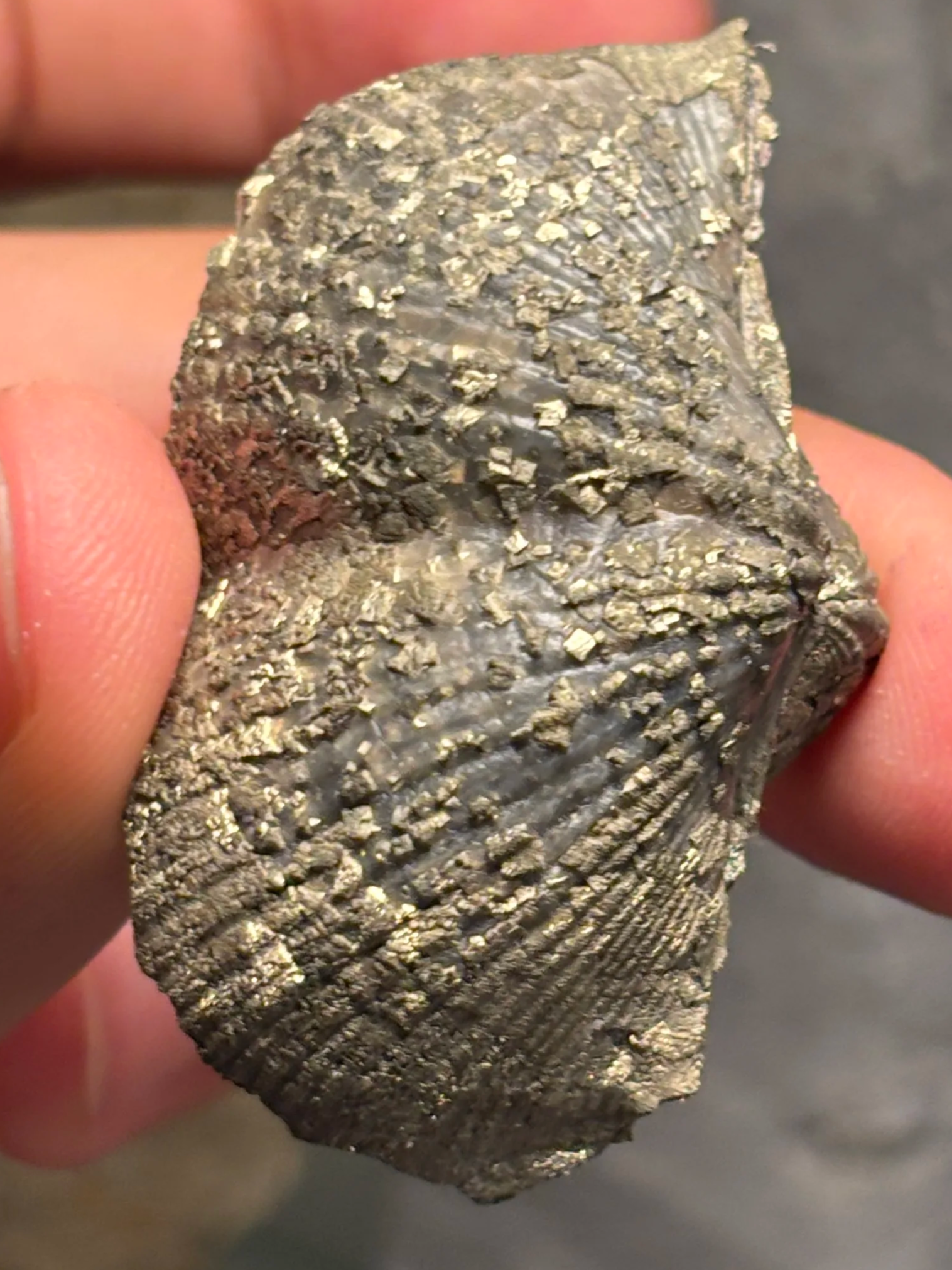
52mm Paraspirifer bownockeri, Middle Devonian-Givetian stage, Paulding, Ohio, Silica Formation
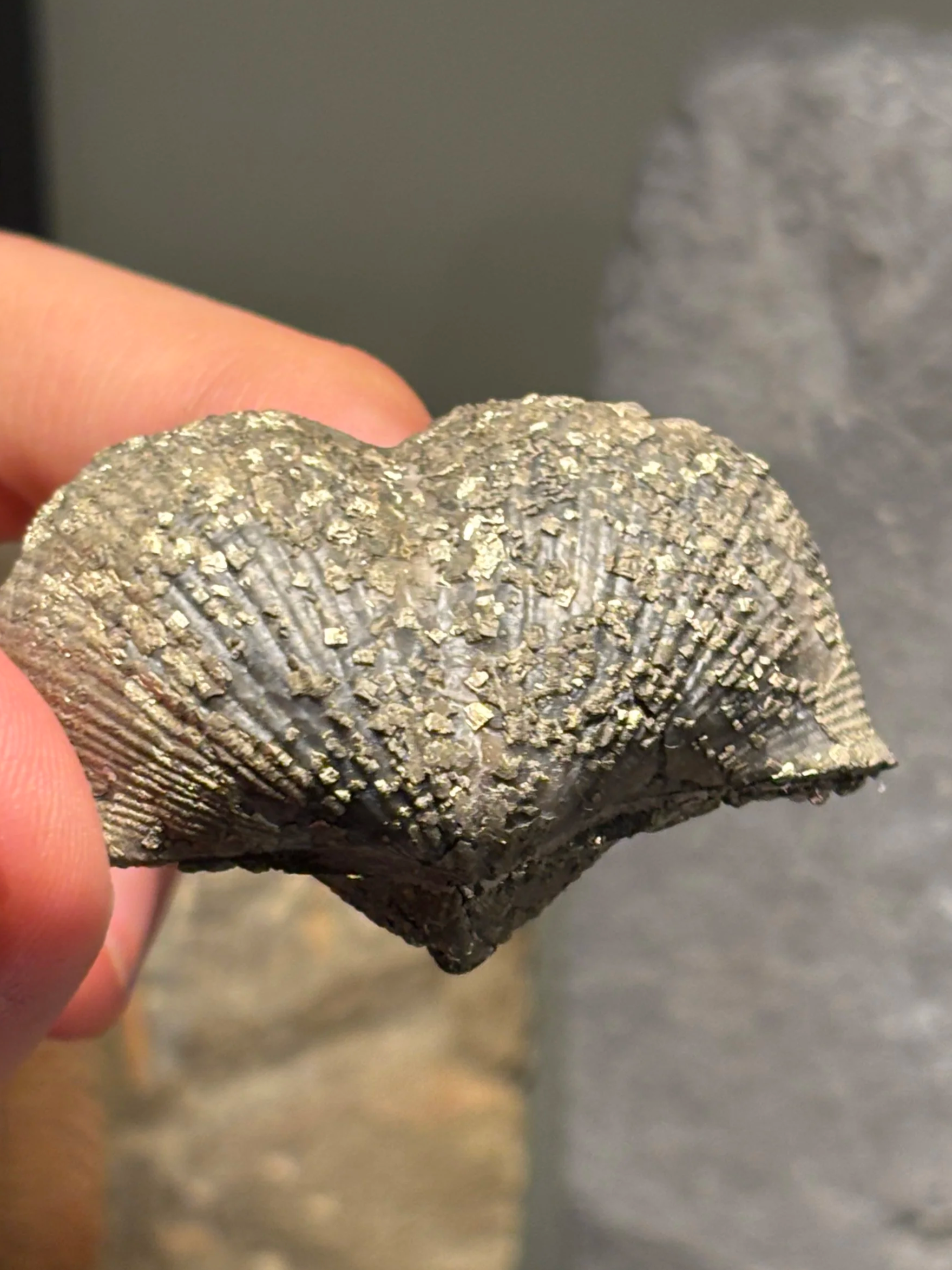
angle 2
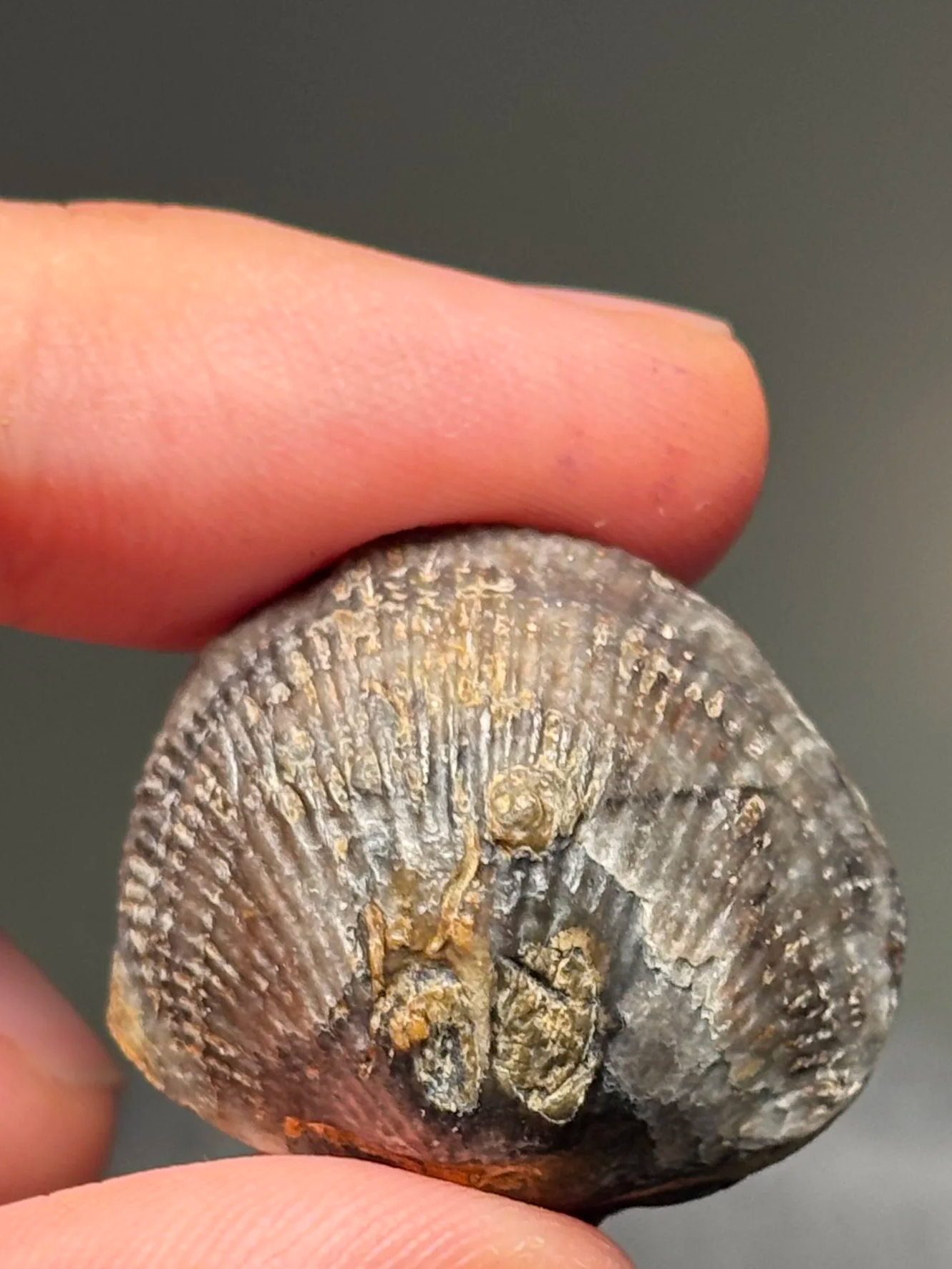
Atrypa sp. brachiopod, Middle Devonian-Givetian stage, Morocco
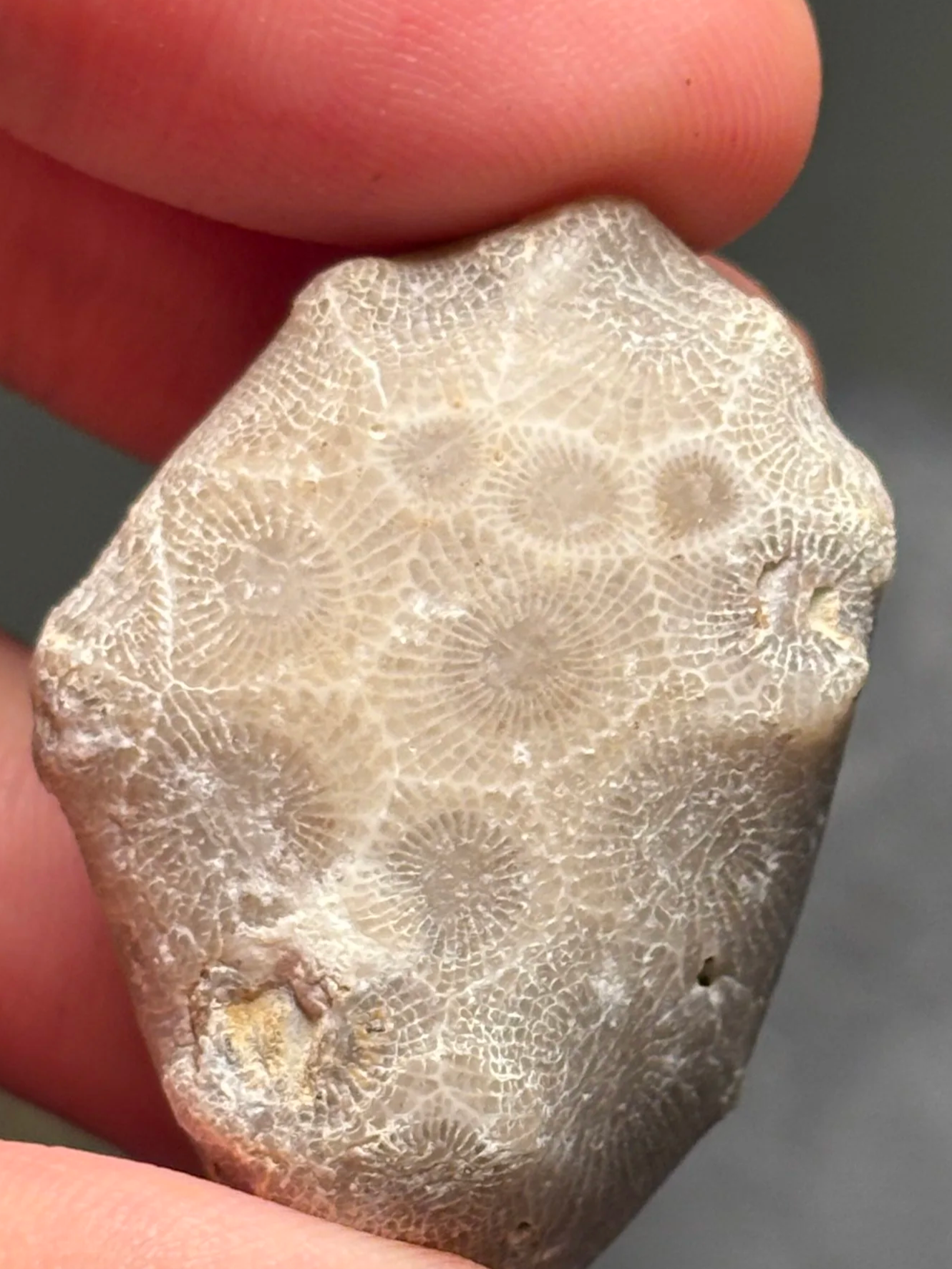
35mm colonial rugose coral Hexagonaria percarinata, Middle Devonian, Gravel Point Formation, Michigan, U.S
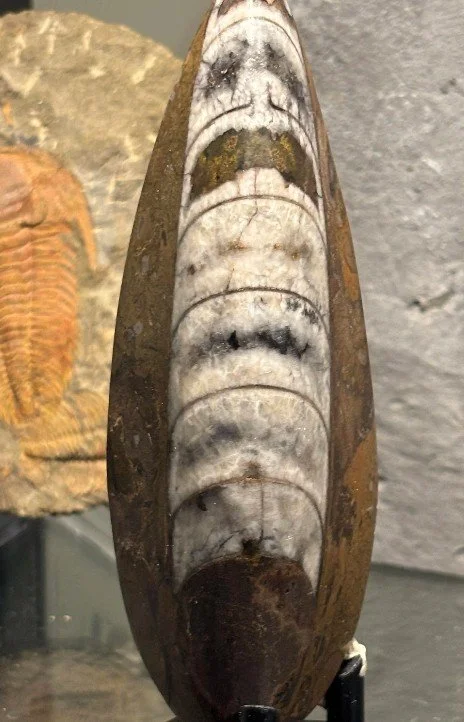
Orthocone Cephalopod, Devonian, Morocco

Middle Devonian Sea Floor, Canada, James St. John, CC BY 2.0
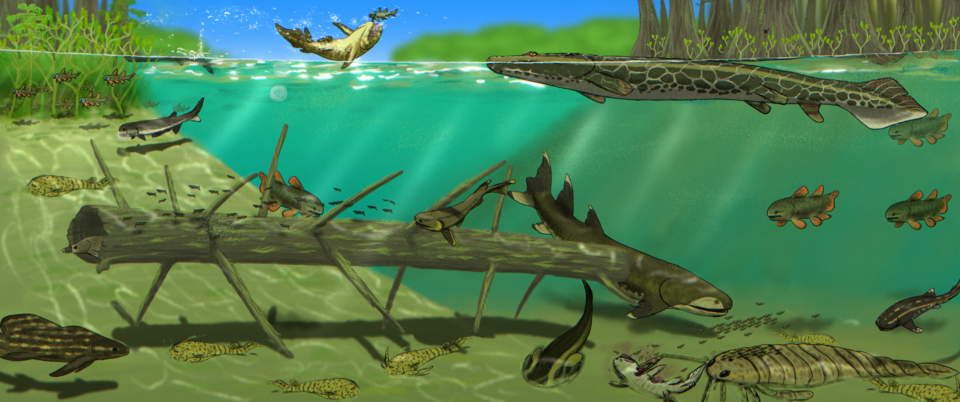
Shallow Seas of the Devonian featuring wood-decomposition, forestry, He who needs to be silenced, CC BY 4.0
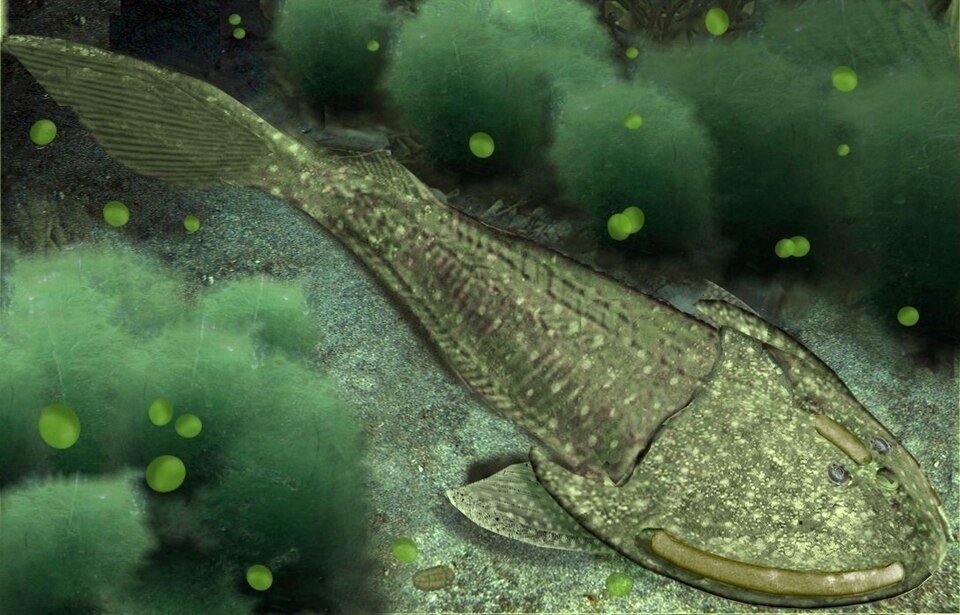
Early Fish: Ostracoderm, Rod6807, CC BY-SA 3.0
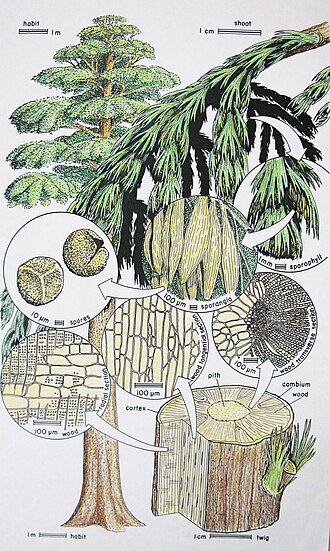
Archaeopteris wood tree reconstruction, Retallack, CC BY-SA 4.0
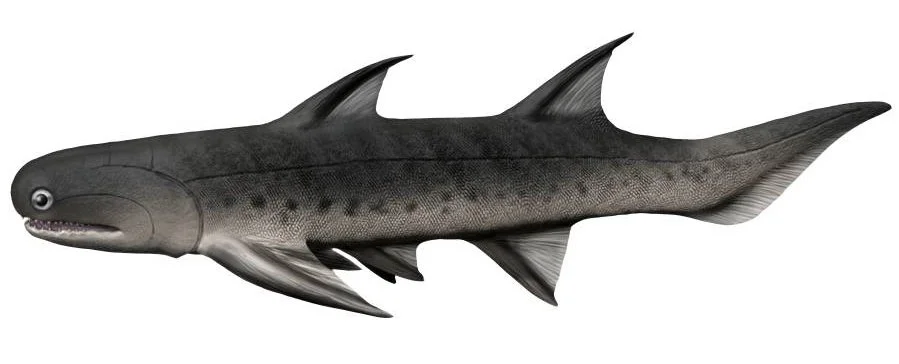
Ischnacanthus gracilis early shark, Nobu Tamura (http://spinops.blogspot.ca/), CC BY-SA 4.0
Paleozoic Era: Carboniferous Period
(359 to 299 million years ago)
Known as the coal-age with extreme oxygenation, gigantic forests, gigantic insects & arthropods: majority of the coal deposits that we use today come from deposits dated to the Carboniferous
Mississippian Subsystem-Early Carboniferous (359 to 323 Million Years Ago)
Pennsylvanian Subsystem-Late Carboniferous (323 to 299 Million Years Ago)

Calamites sp. Upper Carboniferous, Westphalian B - Orzeskie Beds, Upper Silesia Coal Basin, Poland
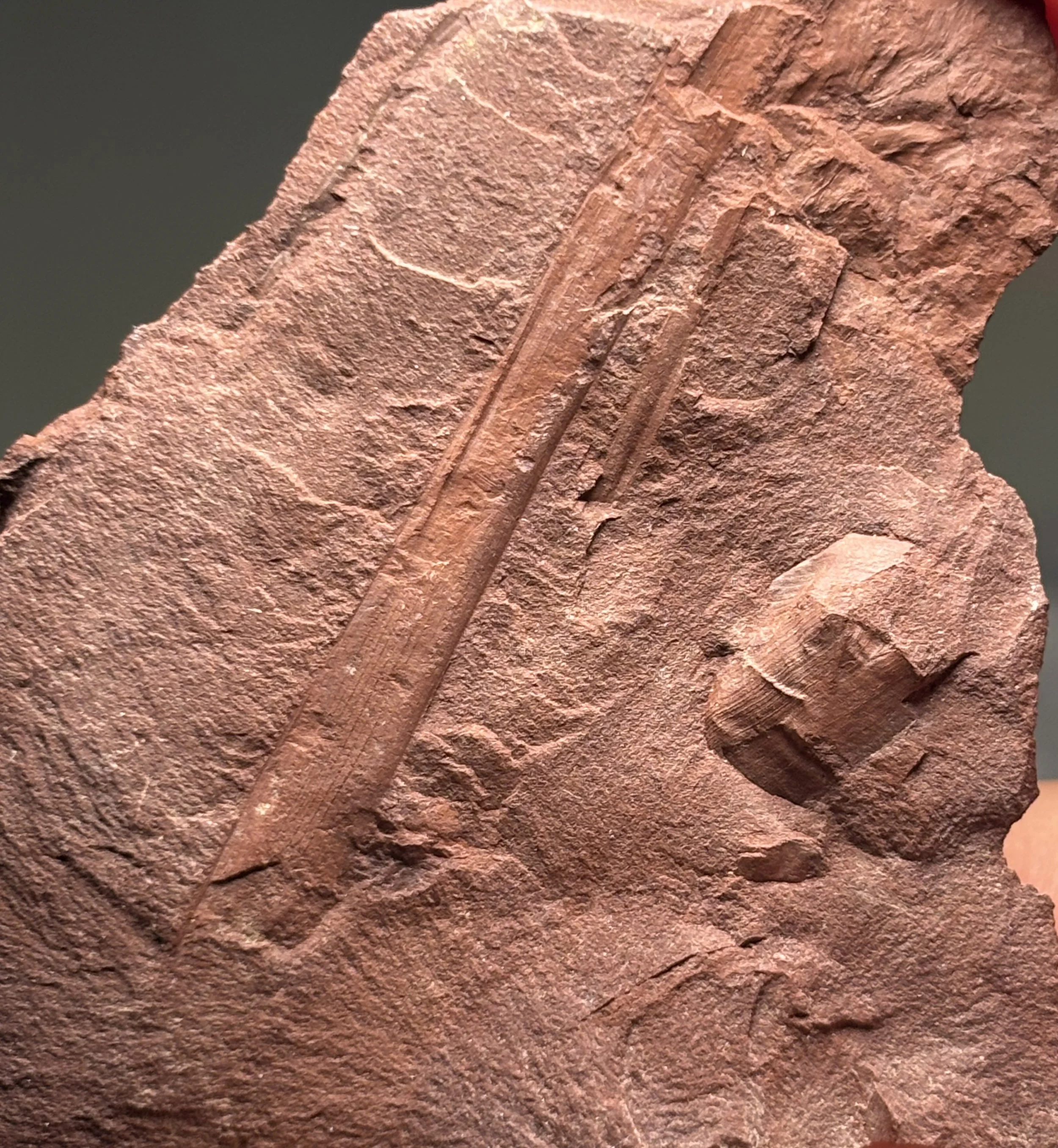
Calamites sp.
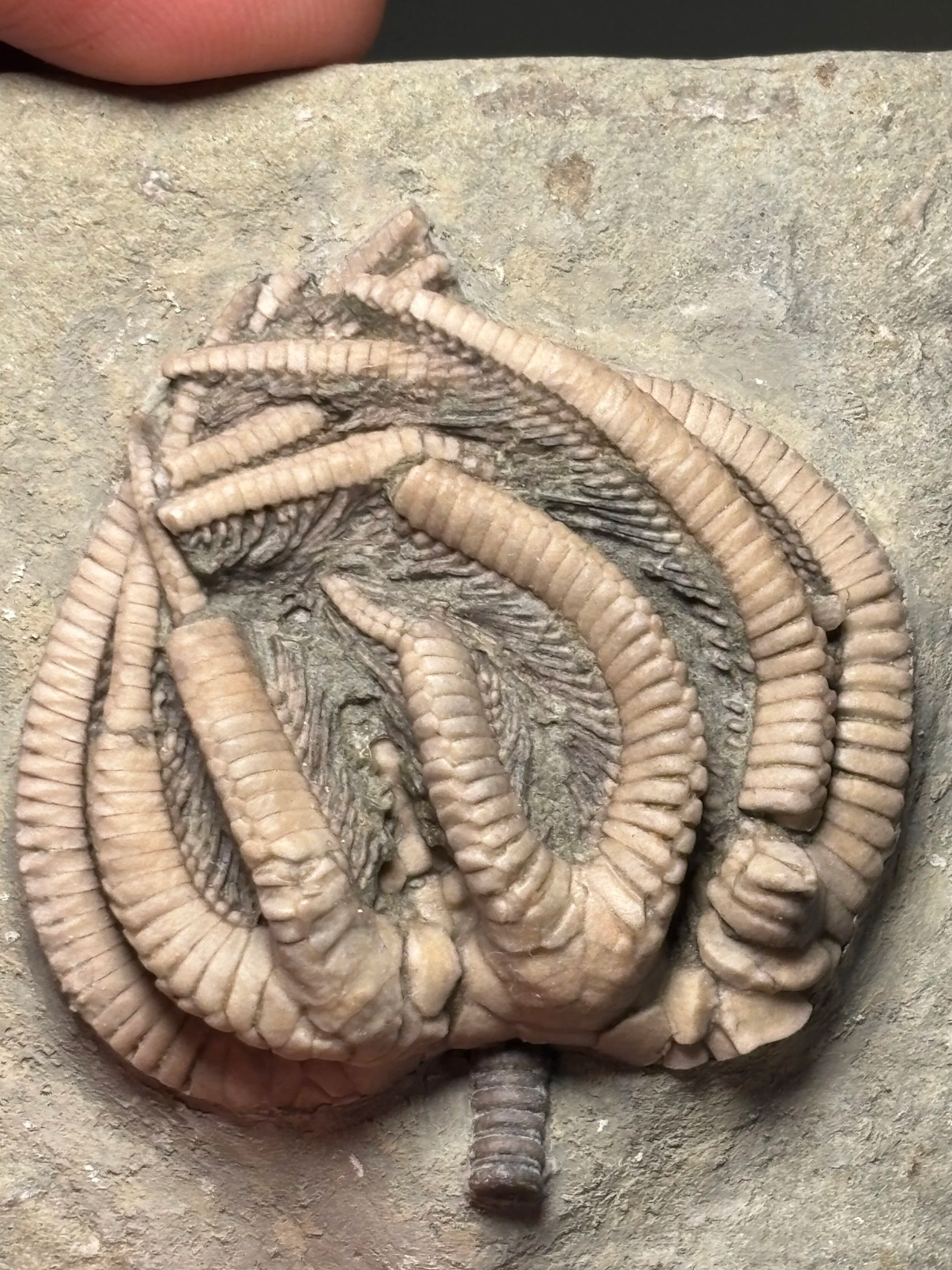
46mm Agariocrinus americanus, Crawfordsville, Indiana, Edwardsville Formation, Carboniferous-Mississippian
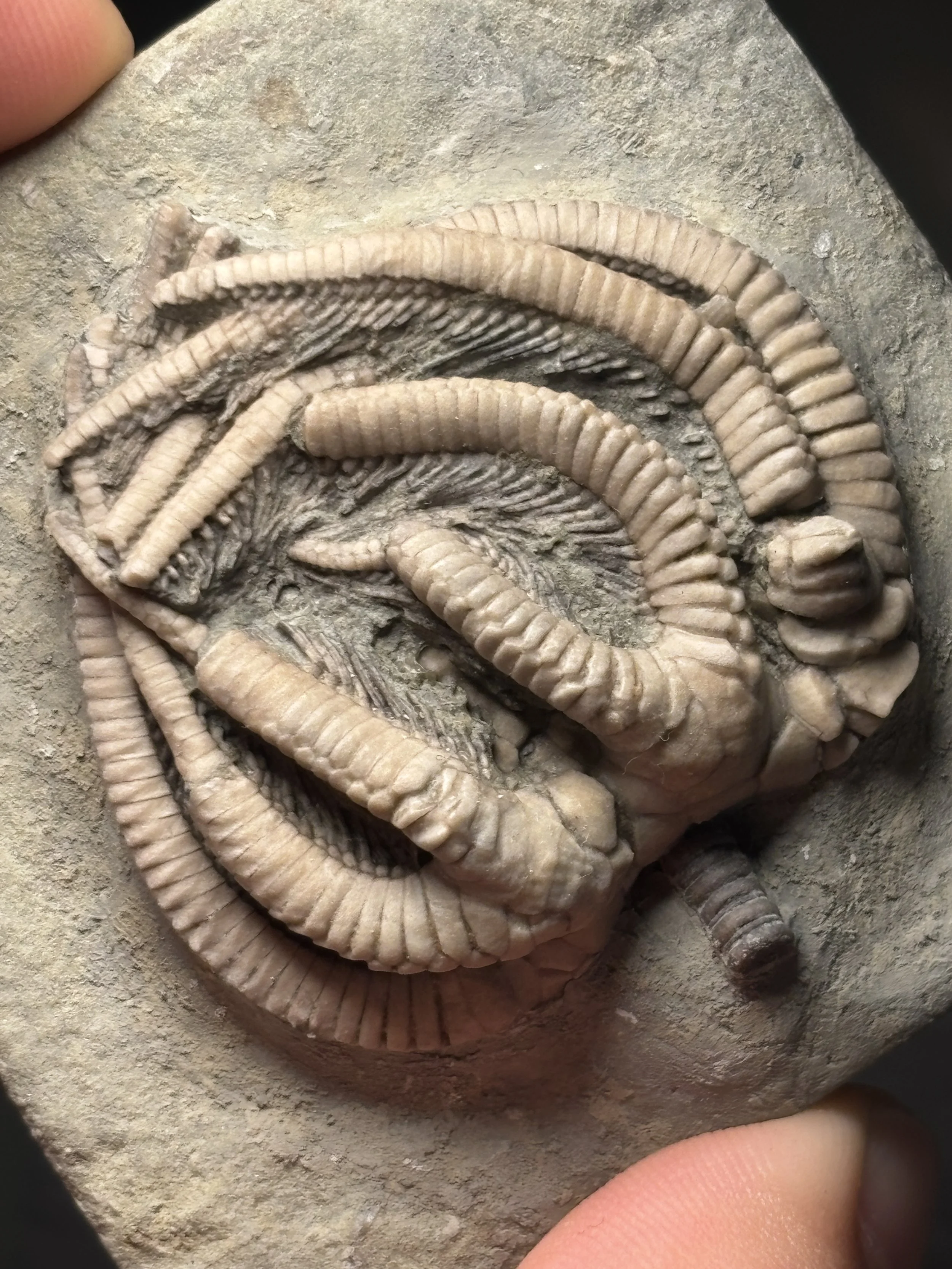
46mm Agariocrinus americanus, Crawfordsville, Indiana, Edwardsville Formation, Carboniferous-Mississippian
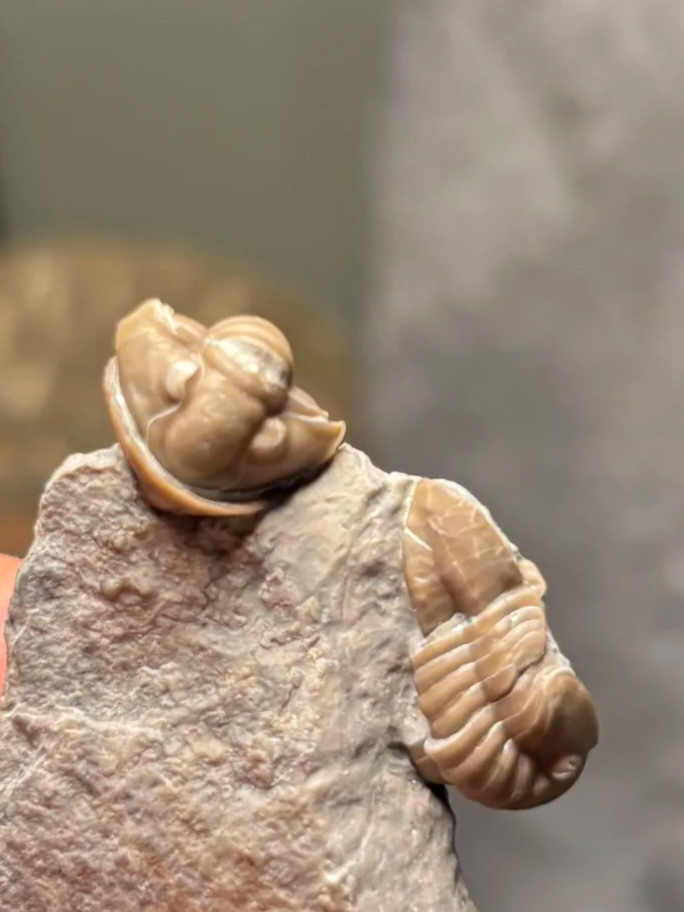
one of the last trilobites: proetid Comptonaspis swallowi, Chouteau Formation, Upper Carboniferous-Mississippian Subsystem, Sedalia, Missouri
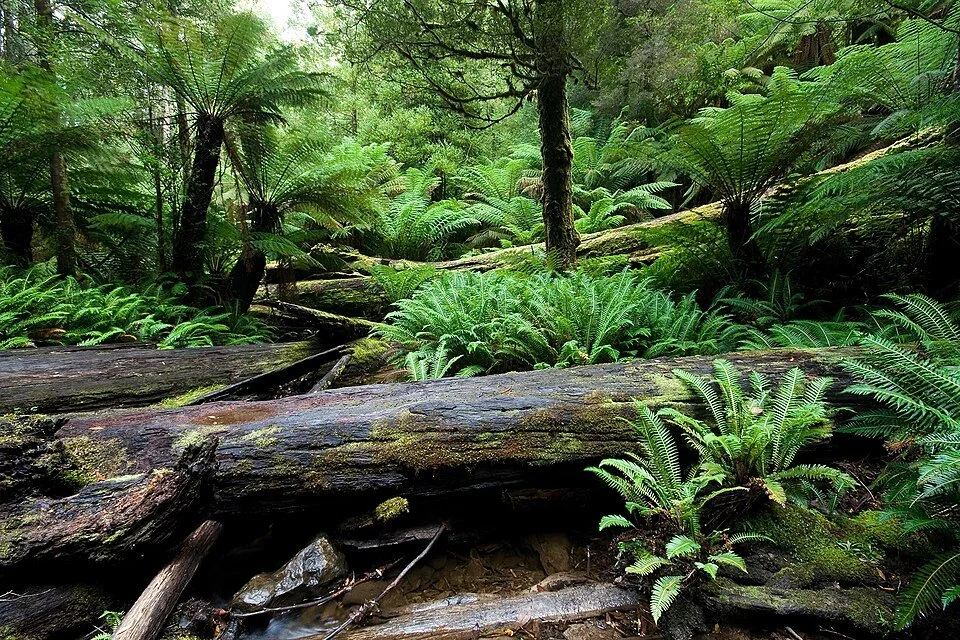
Modern Forest: Floor JJ Harrison (https://www.jjharrison.com.au/), CC BY-SA 3.0
Not Represented: Permian Period (298.9 to 251.9 million years ago)- the last period of the Paleozoic Era before the Mesozoic Era
Not Represented: Triassic Period (252 to 201 million years ago)- the first period of the Mesozoic, known as the age of the dinosaurs
Mesozoic: Jurassic & Cretaceous
(201 to 145 million years ago), (145 to 66 million years ago)
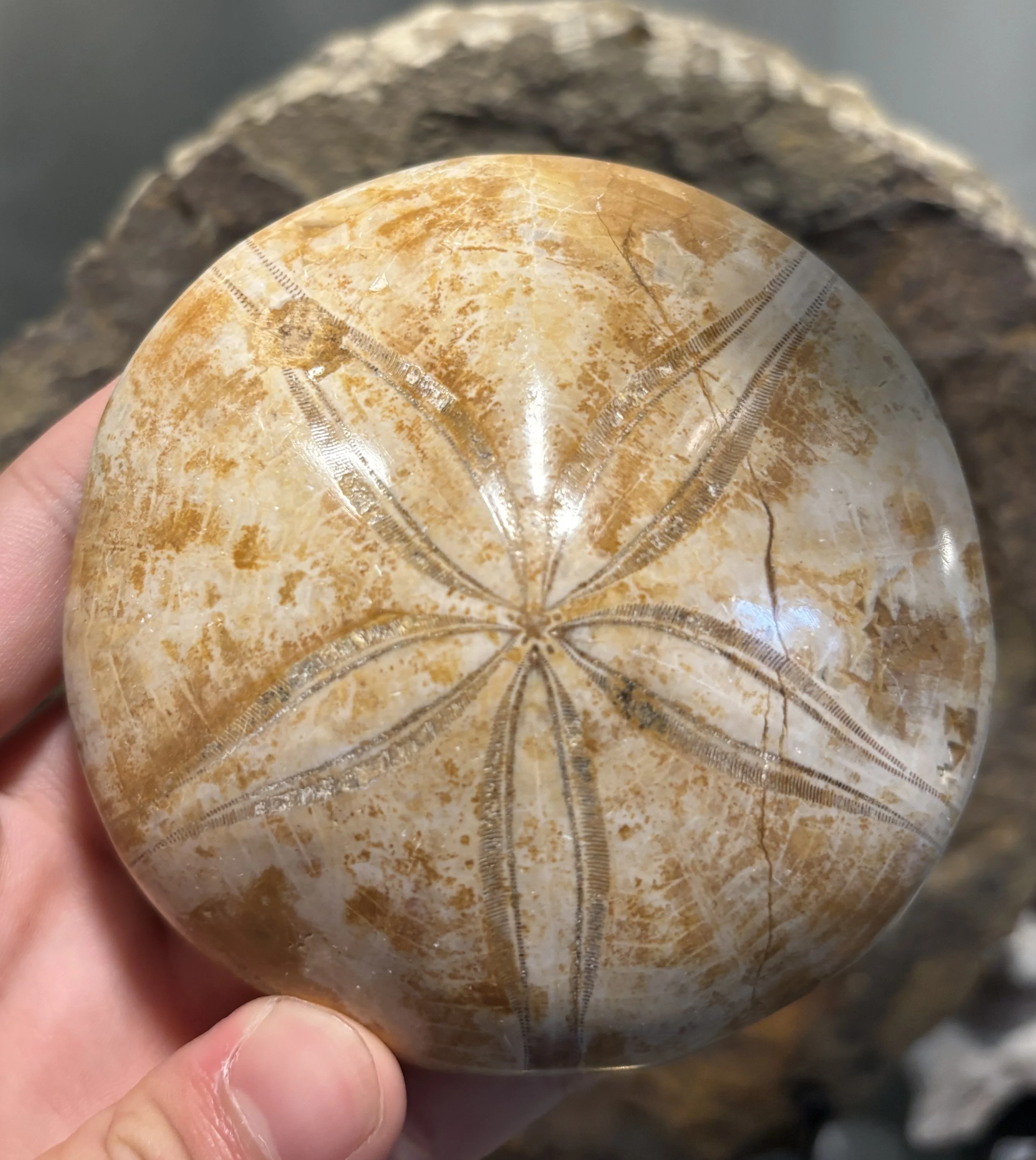
Mepygurus marmonti, Middle Jurassic, Madagascar
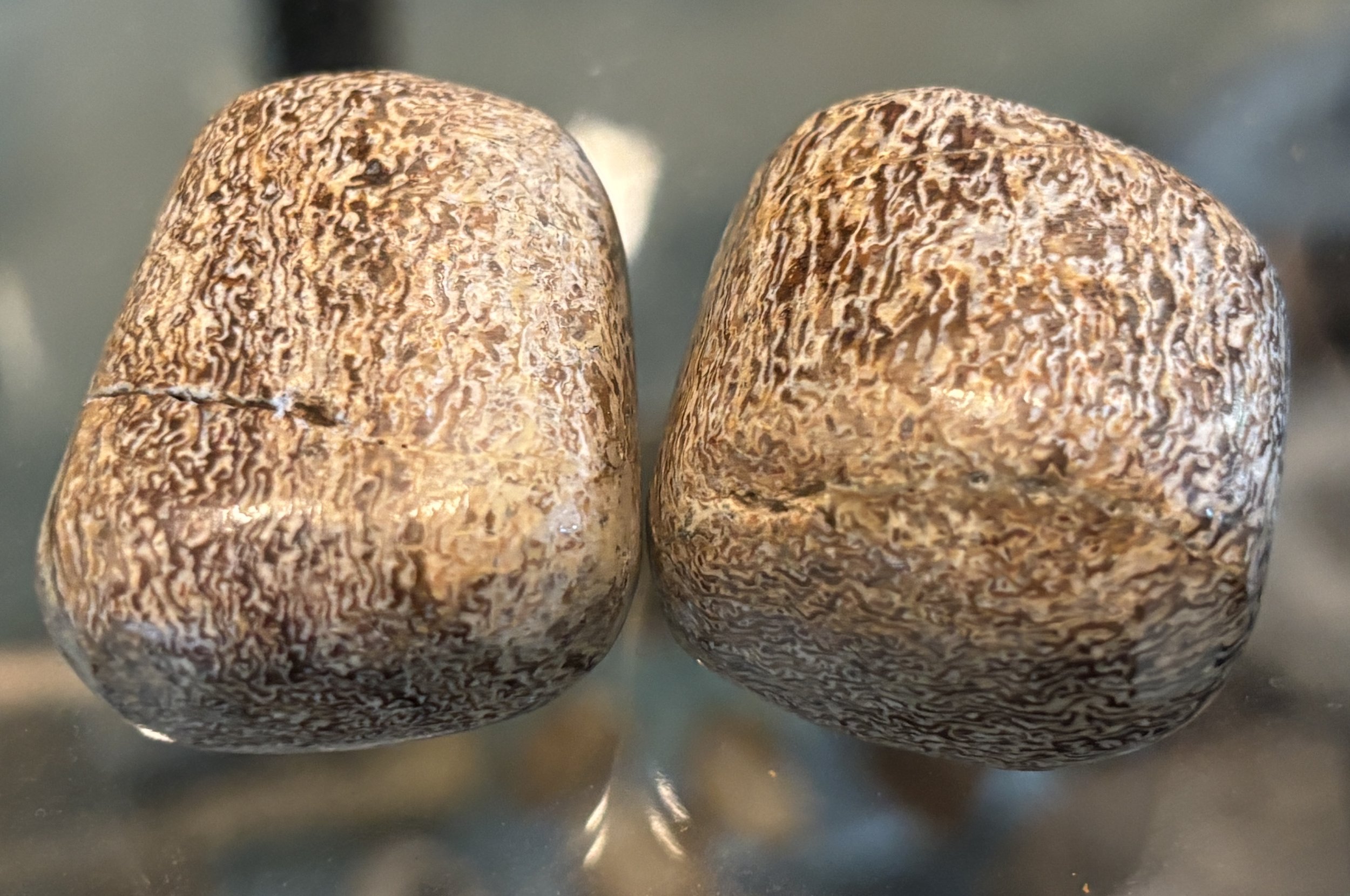
Polished, agatized bones of a unidentified sauropod dinosaur-Early Cretaceous, Morocco
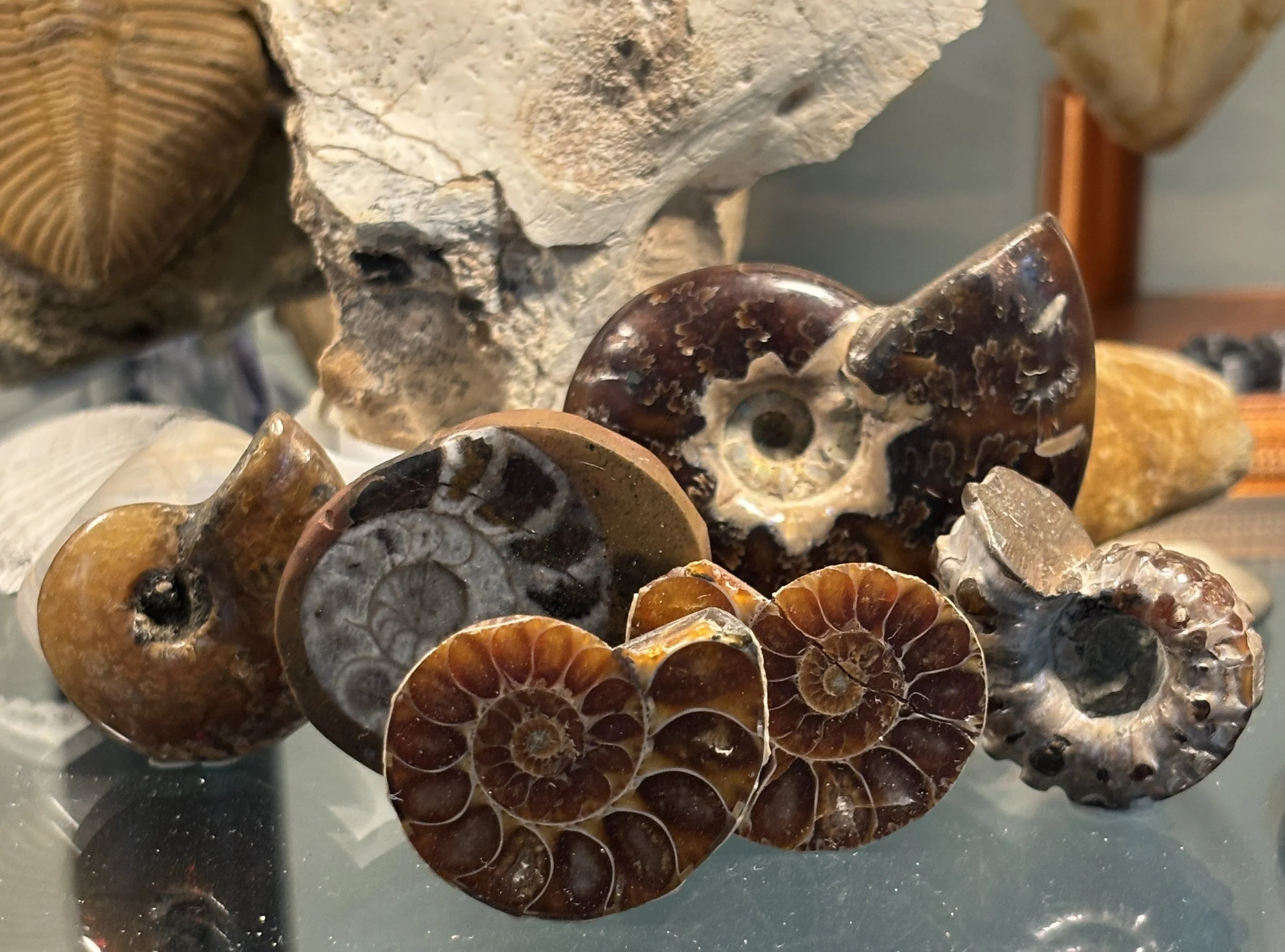
Assortment of polished mineralized Madagascar Ammonites: Cleoniceras sp. & Douvilleiceras mammilatum, Ambatolafia, Mahajanga Province, Madagascar
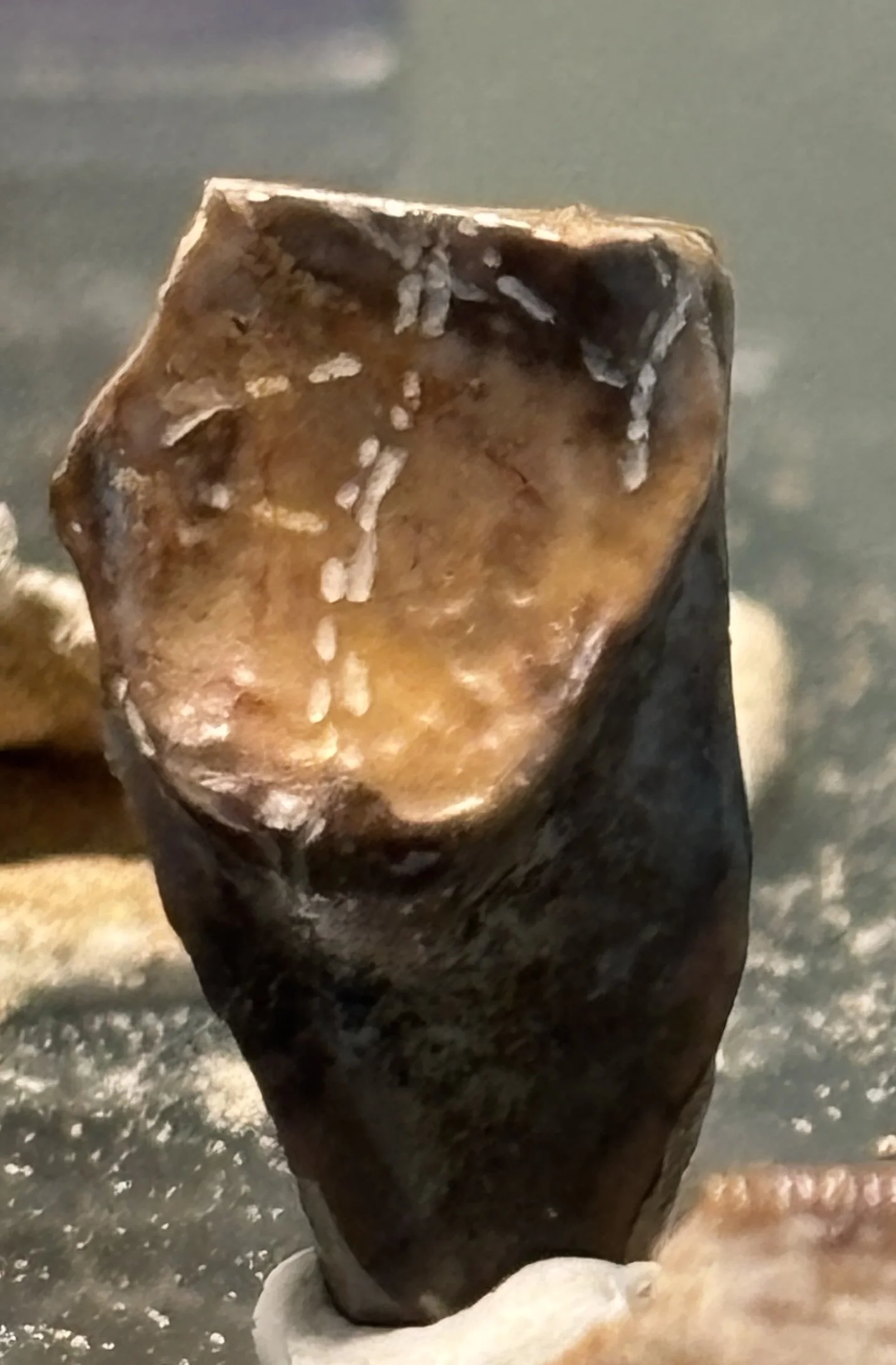
Worn Triceratops tooth, showing extreme wear likely discarded, Cretaceous, Hell Creek Formation, Wyoming, USA
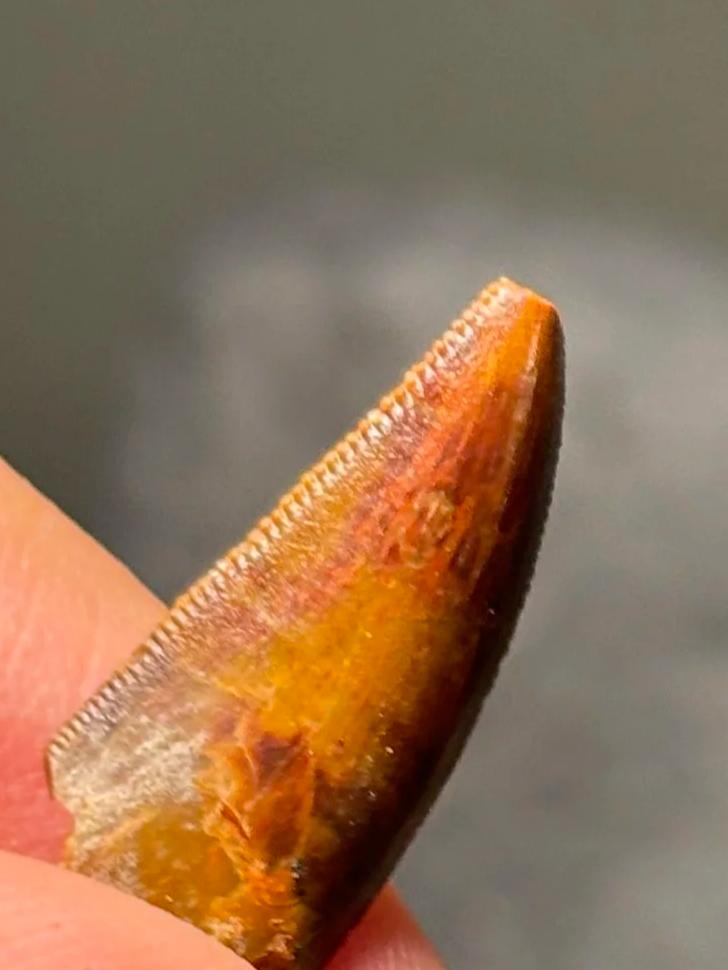
Abelisaur theropod tooth, Late Cretaceous, Kem Kem Beds, Morocco
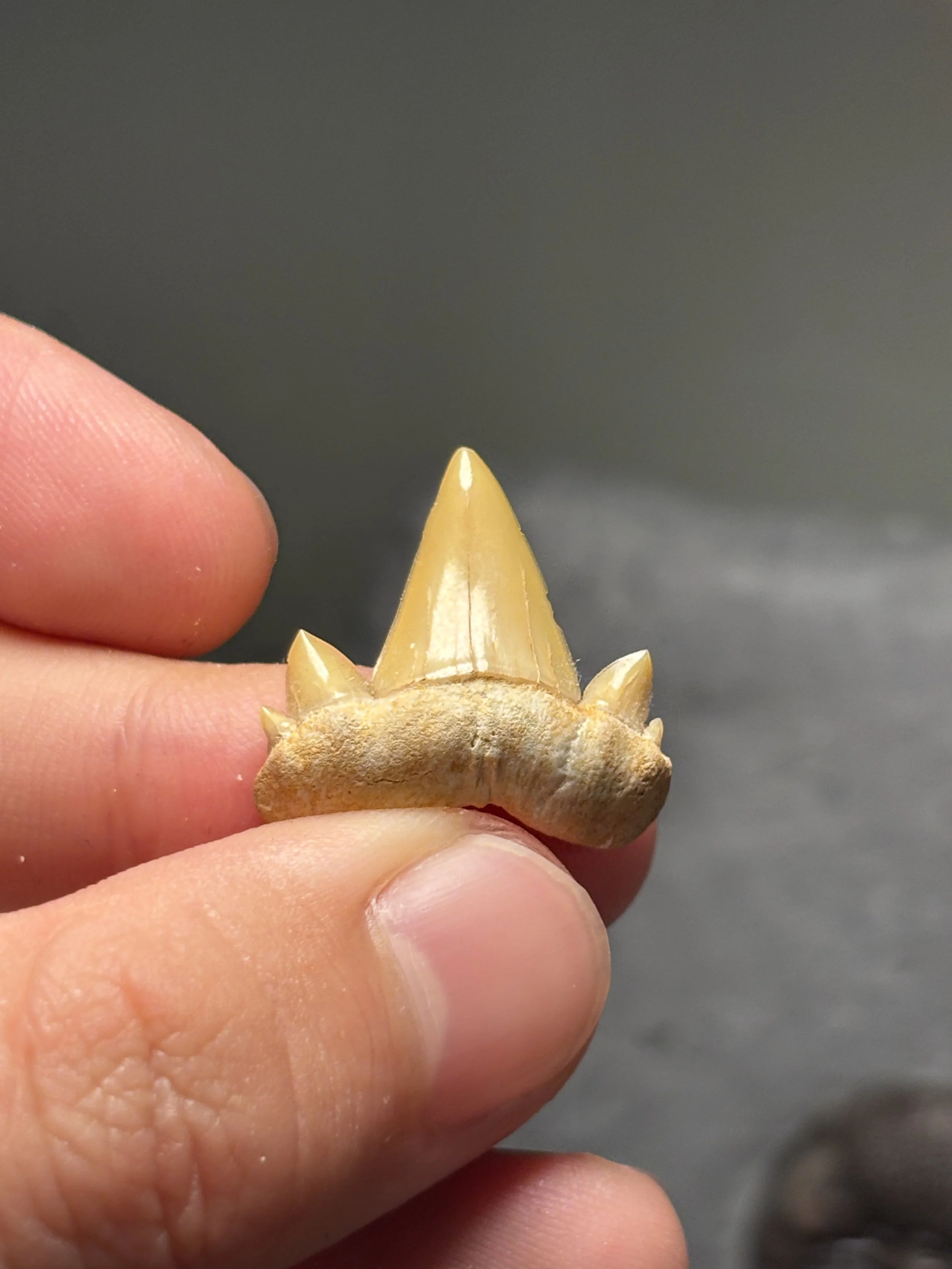
Serratolamna serrata, Late Cretaceous, Phosphate Mines, Khouribga, Morocco
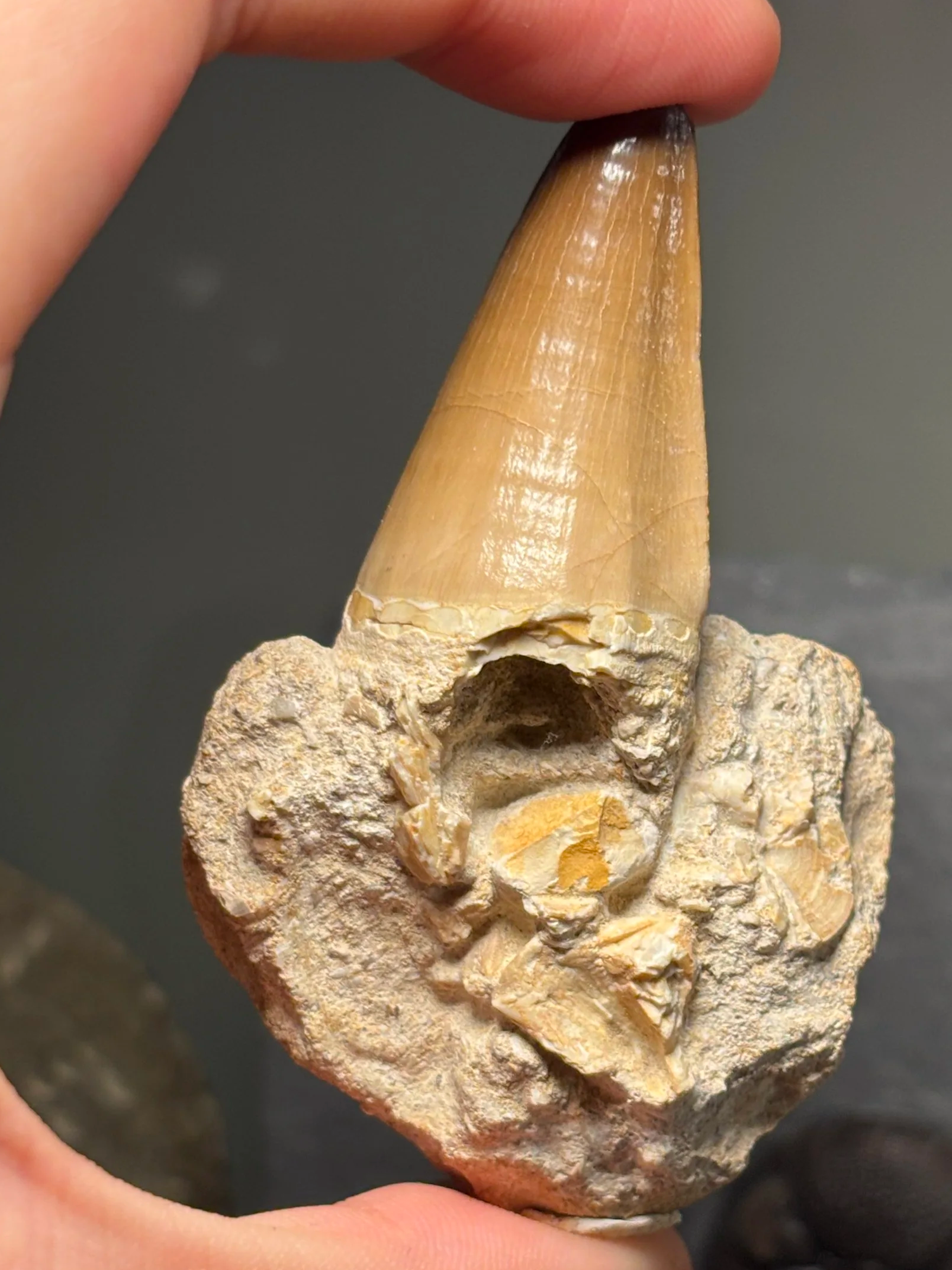
rooted Mosasaurus beaugei tooth, Late Cretaceous, Phosphate Mines, Khouribga, Morocco
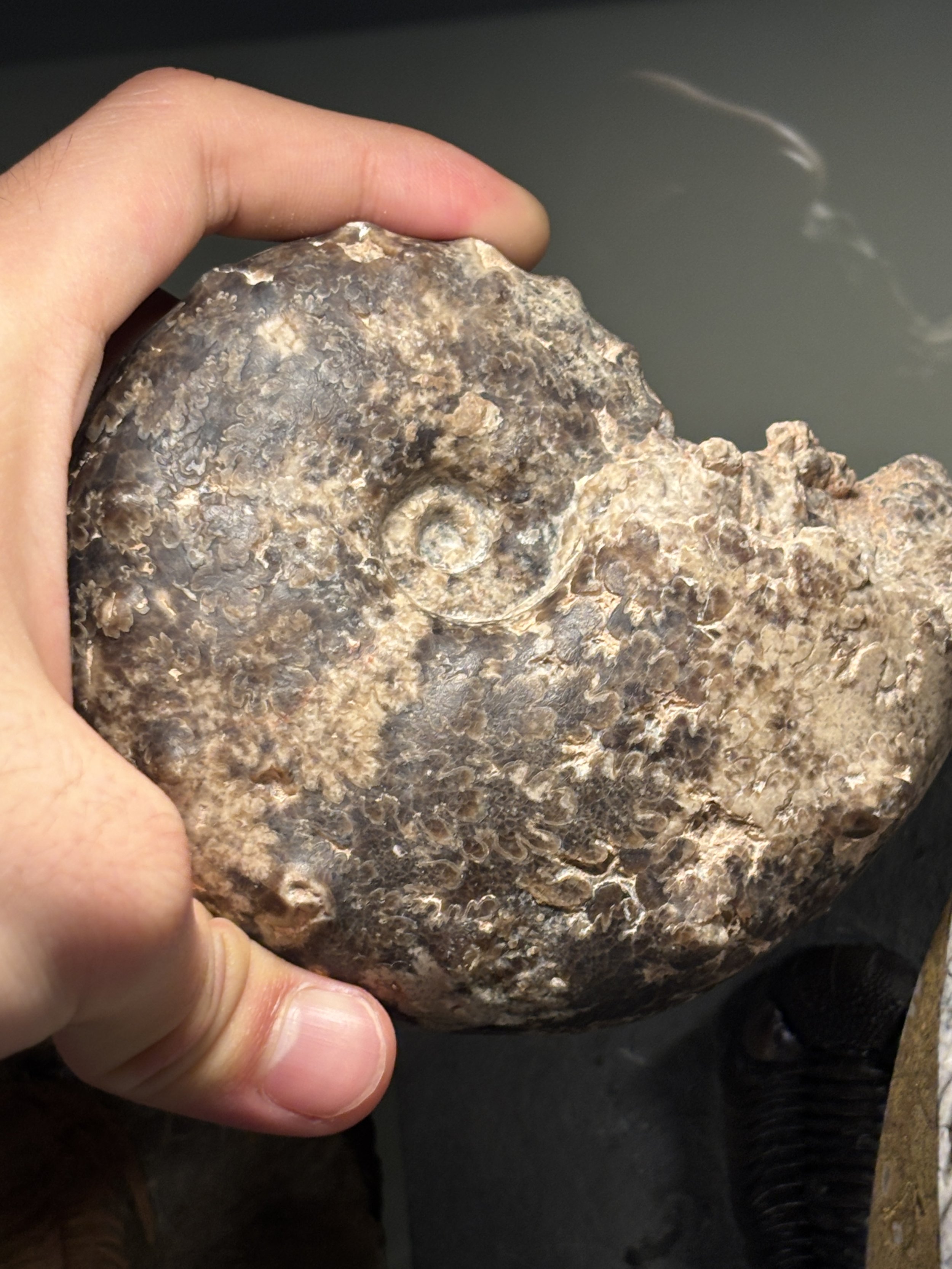
Mammites sp. Late Cretaceous, Goulmima, Morocco
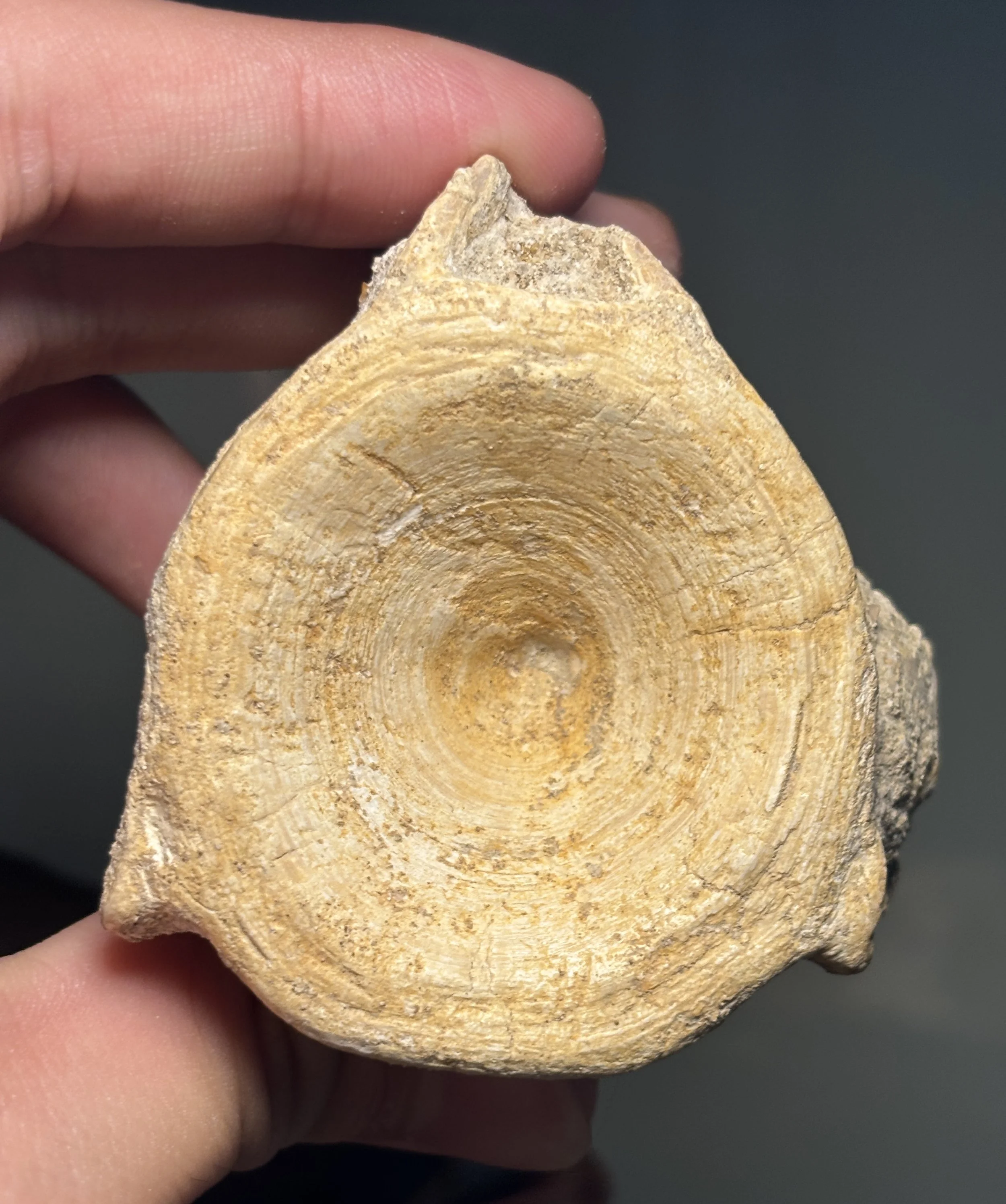
Enchodus vertabrae: large predatory fish, Late Cretaceous, Phosphate Mines, Khouribga, Morocco
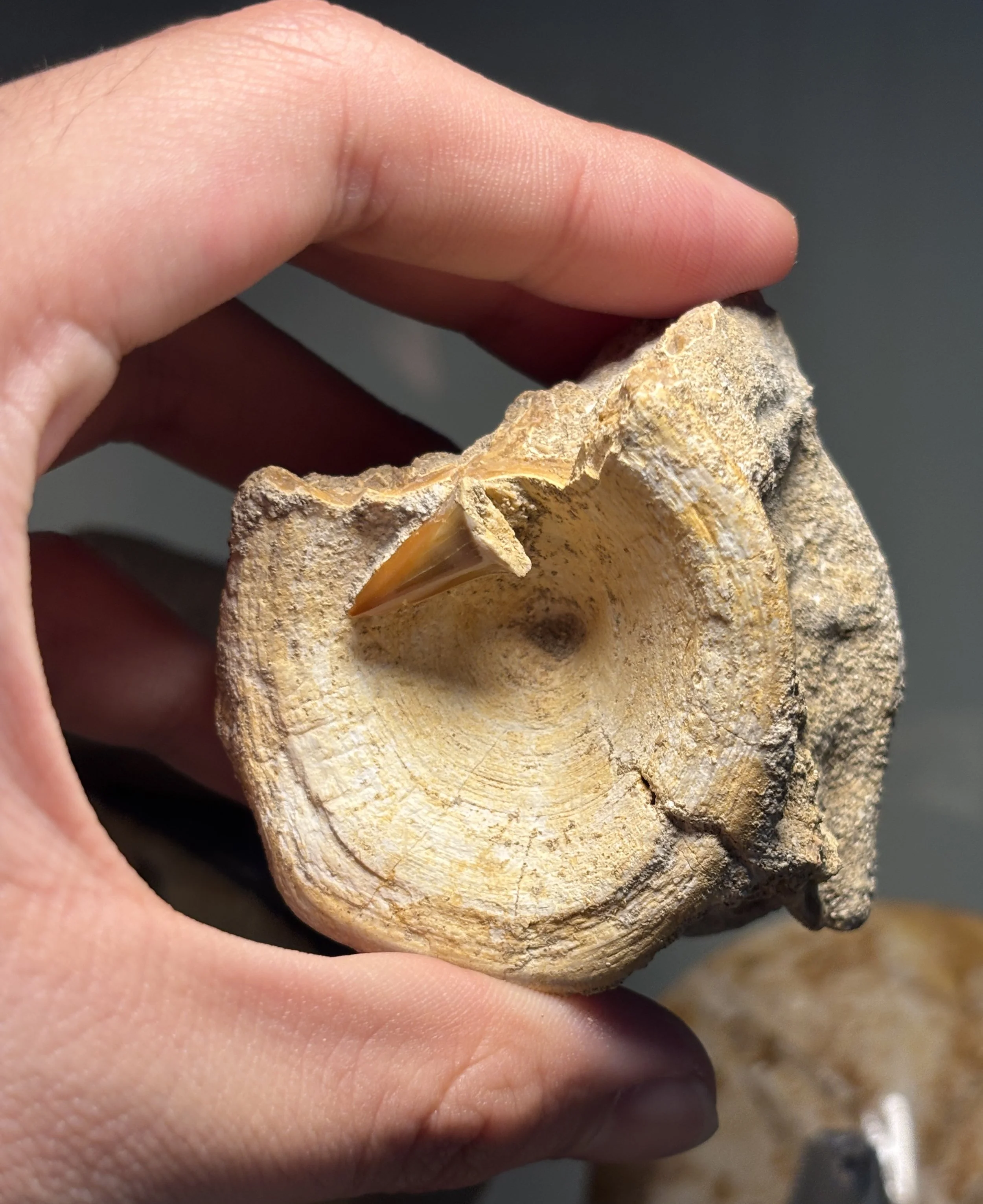
Enchodus vertabrae: Late Cretaceous, Phosphate Mines, Khouribga, Morocco
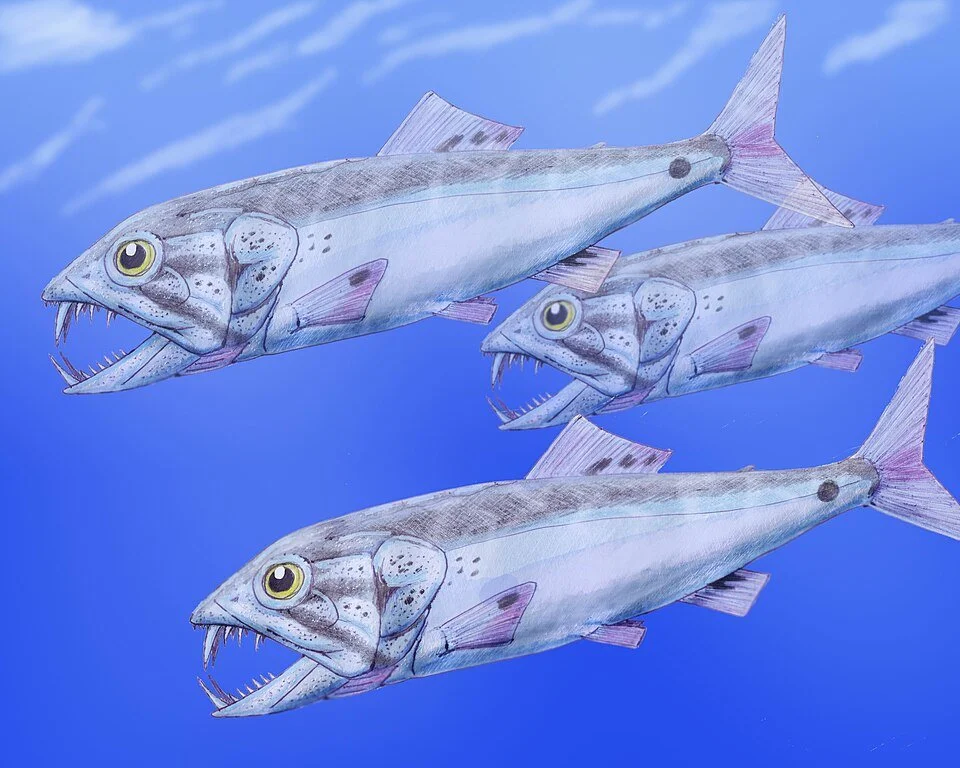
Fang-fish, Enchodus sp. lived with Mosasaurs, large predatory sharks, and others in the Cretaceous: Creator: Dmitry Bogdanov, CC BY 3.0
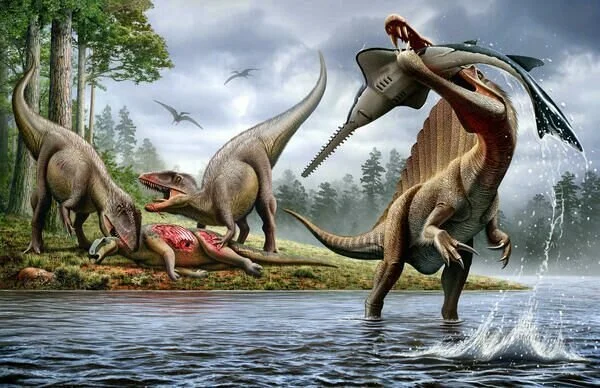
Cretaceous Kem Kem Beds https://www.fossilera.com/pages/kem-kem-beds-history-paleoecology-and-importance?srsltid=AfmBOoqsj8MUZDwb29yYpDnYD89m2bgPA1FPtXdvVZtC1rFt5CCfKRIE
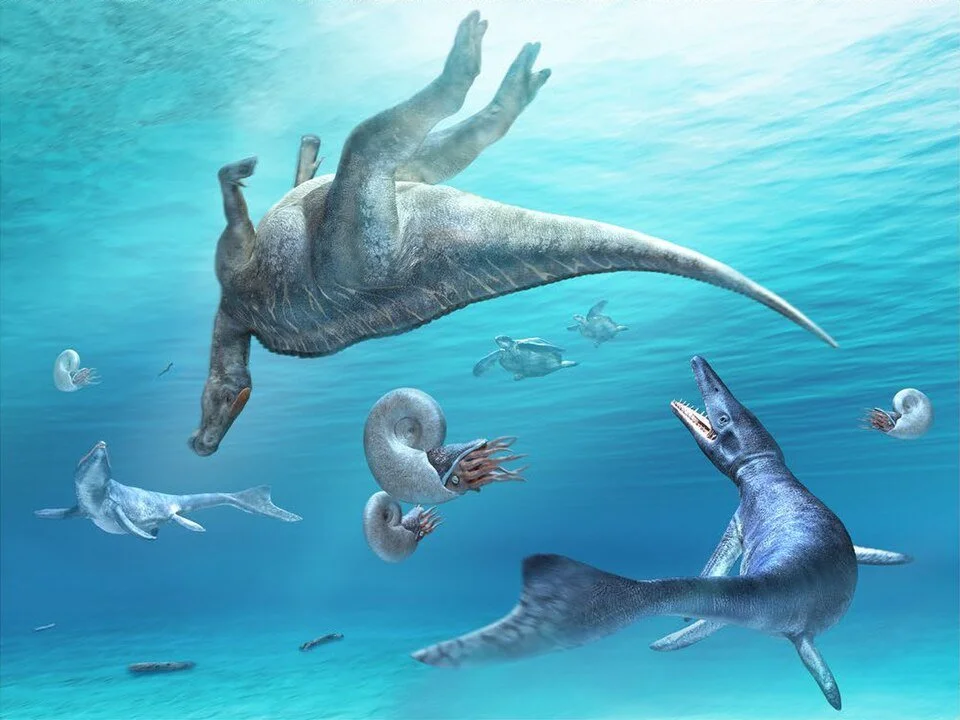
Mosasaur feeding on carcass of dinosaur in reconstruction of Cretaceous sea: Art by Masato Hattori, published by Yoshitsugu Kobayashi, Tomohiro Nishimura, Ryuji Takasaki, Kentaro Chiba, Anthony R. Fiorillo, Kohei Tanaka, Tsogtbaatar Chinzorig, Tamaki Sato & Kazuhiko Sakurai, CC BY 4.0
Cenozoic: Paleogene Period
(66 to 23 million years ago)
Paleocene Epoch (66 – 56 million years ago): After K-Pg extinction that marked the end of the Mesozoic, the Cenozoic was marked by the start of the Paleocene. The Cenozoic Paleogene Period is known by its more distinct Epochs rather than the period. Known as the age of the mammals, the dominant reptilian dinosaurs and large crocodilians were wiped out. As a result, the surviving mammals and birds expanded rapidly to fill the newly vacant ecological niches. Early primates and the first rodents as we know them began to emerge in the trees.
Eocene Epoch (56 – 34 million years ago): The Earth experienced a massive, rapid temperature spike after the Paleocene. This created a warm, tropical climate that supported rainforests. Although not nearly like the Carboniferous, the earth entered a “hothouse period.” The first modern forms of many mammal groups including predatory whales like the Basilosaurs, large filter feeding whales, small, diminutive horses, early rhinos, and early bats.
Oligocene Epoch (34 – 23 million years ago): Following the Eocene, the climate underwent a significant cooling trend, causing ice caps to form at the poles and gave way to large open grassy plains. Mammals grew significantly in size, and grazing animals became more common as large forests and grasslands started becoming more prevalent.
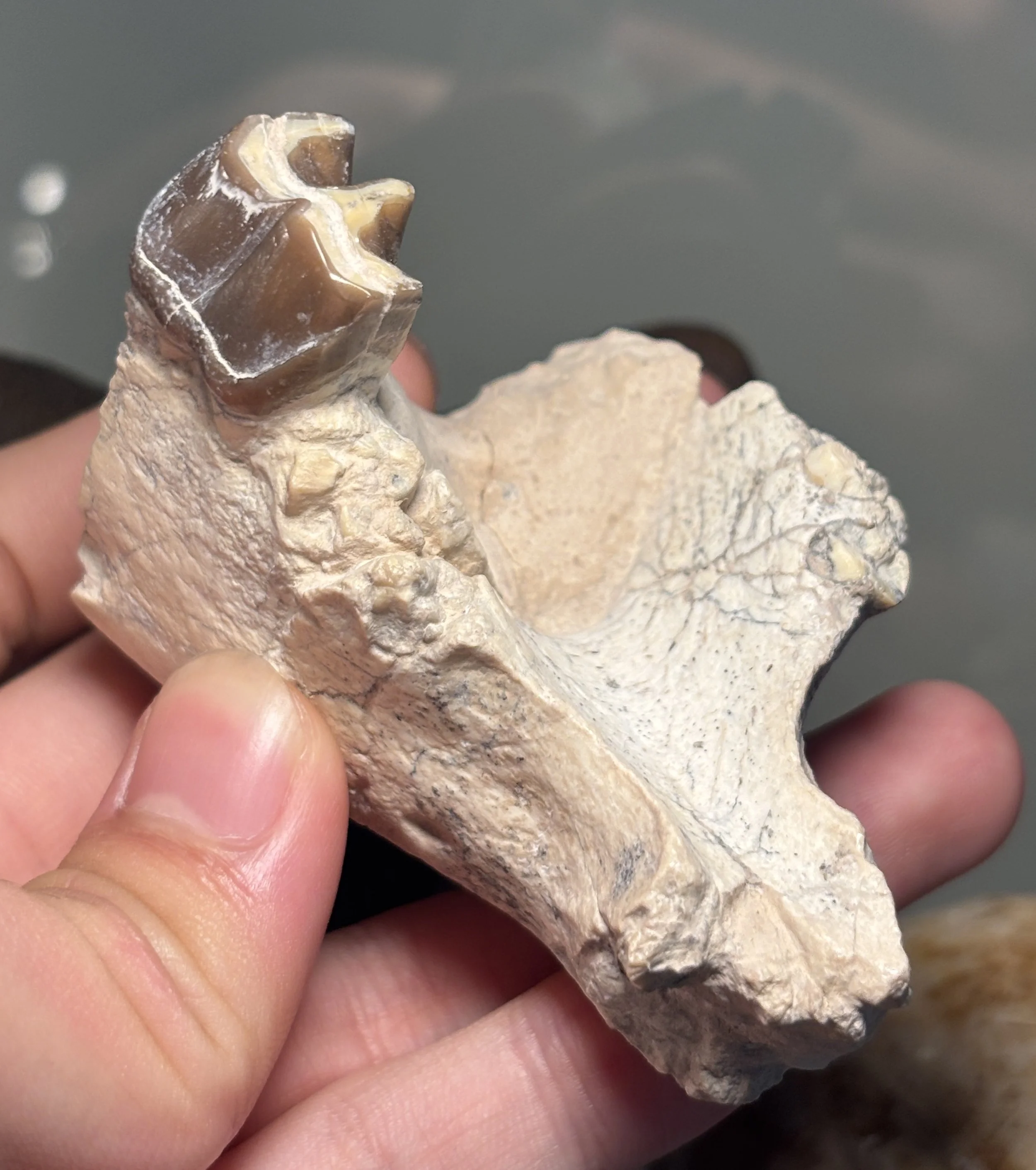
Hyracodon nebrascensis
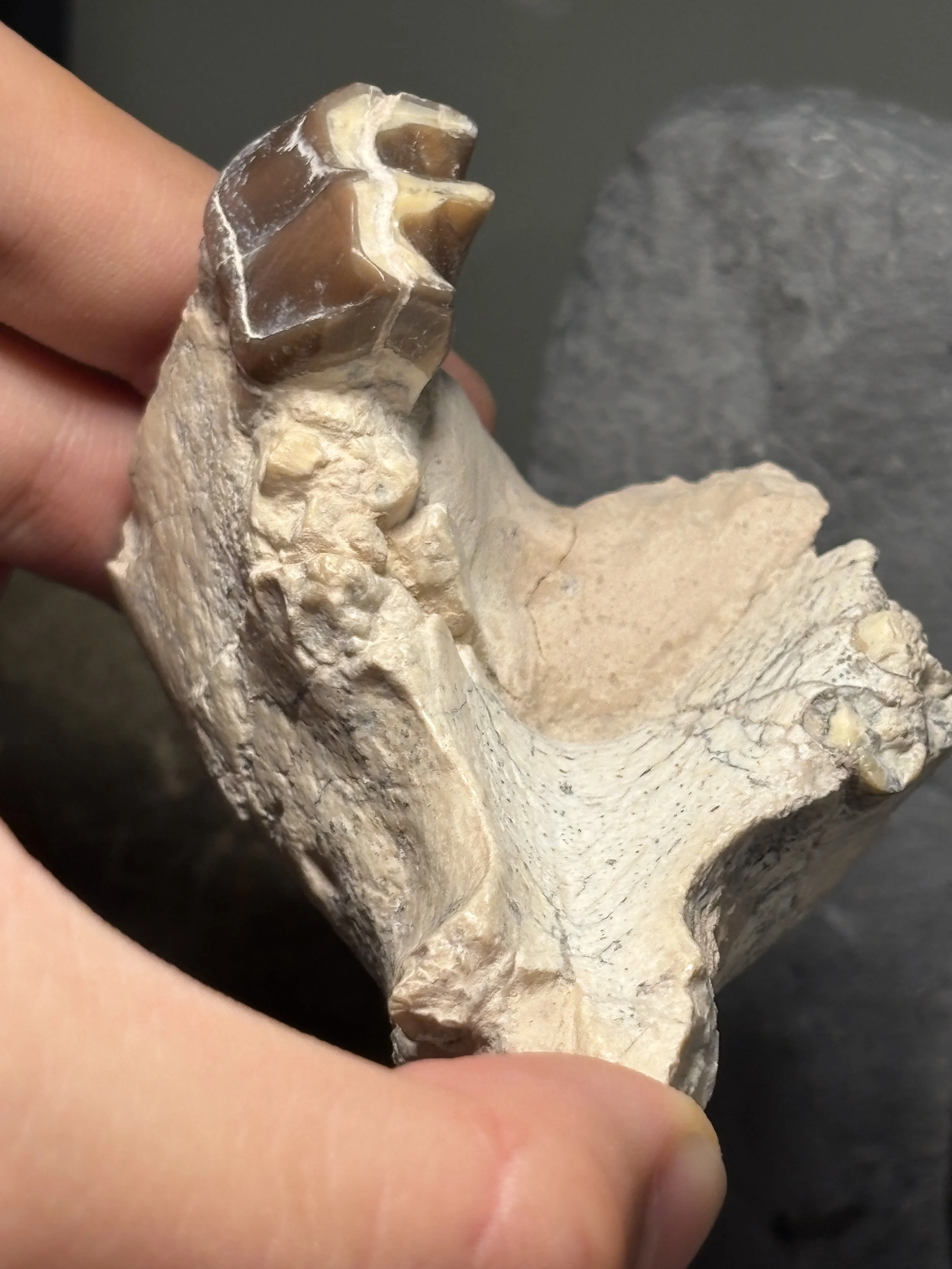
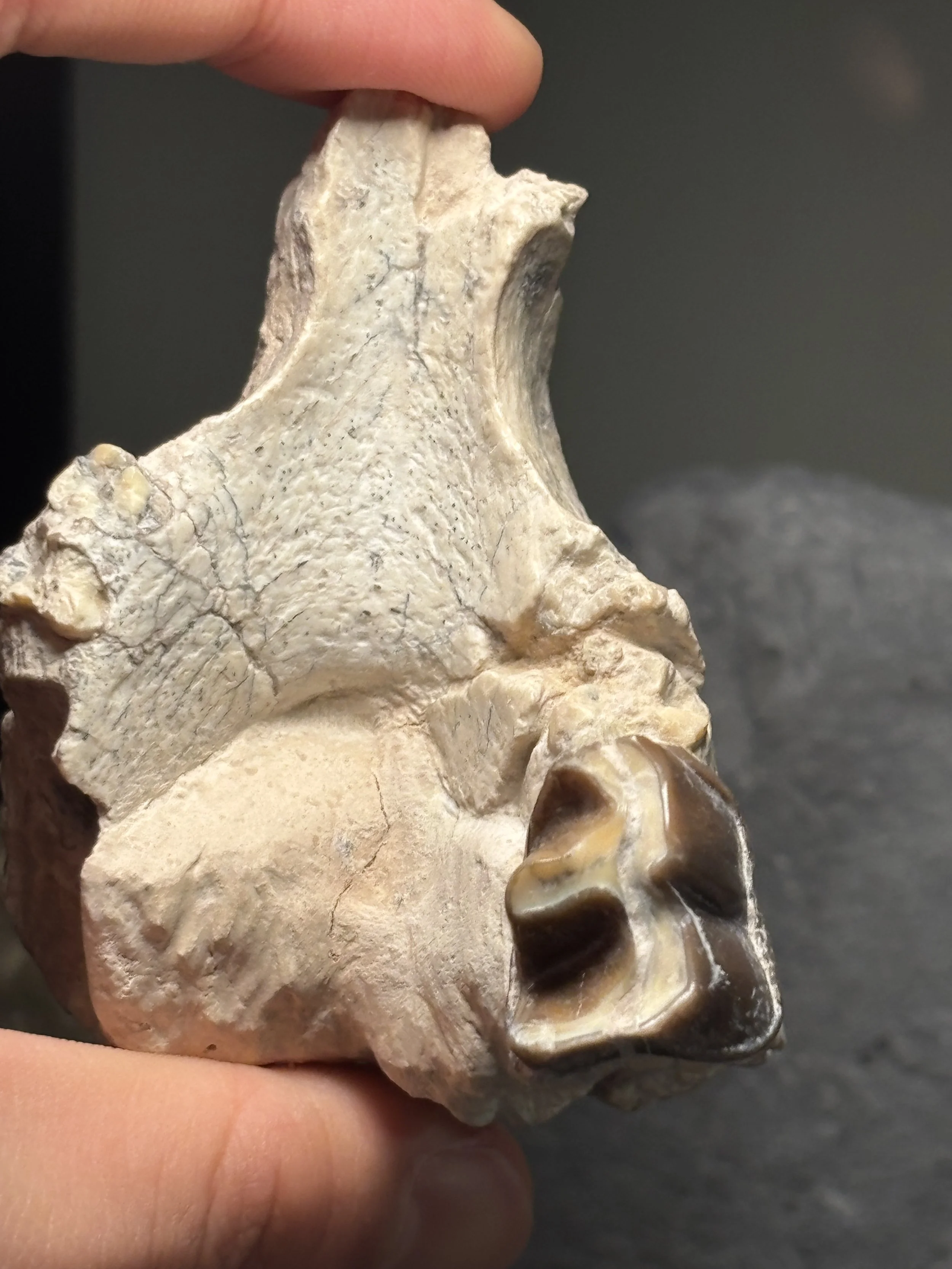
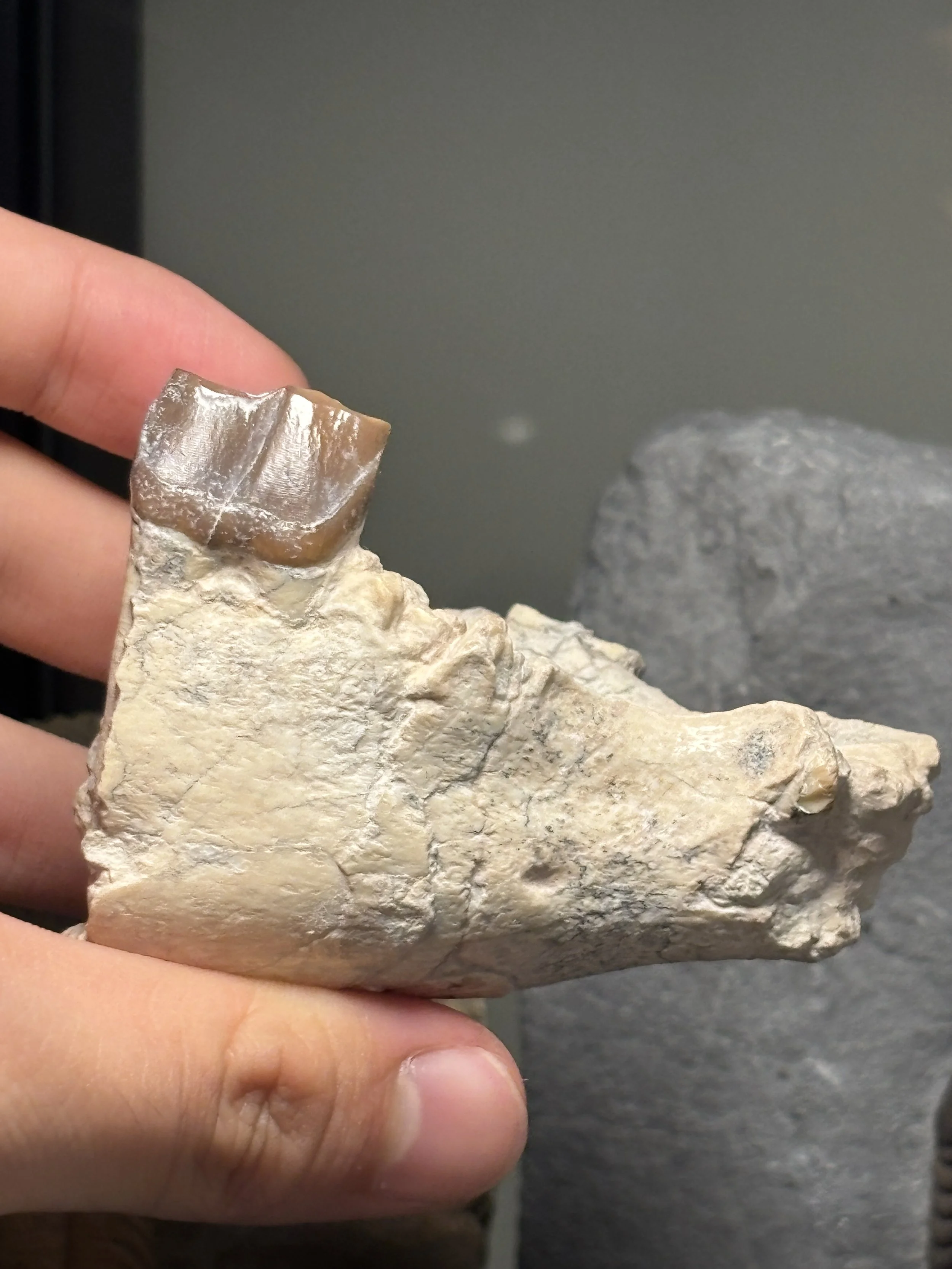
Hyracodon nebrascensis lower jaw and molar, Oligocene, Brule Formation - White River Badlands Group, Pennington County, South Dakota
Hyracodon nebrascensis lower jaw and molar
Hyracodon nebrascensis lower jaw and molar
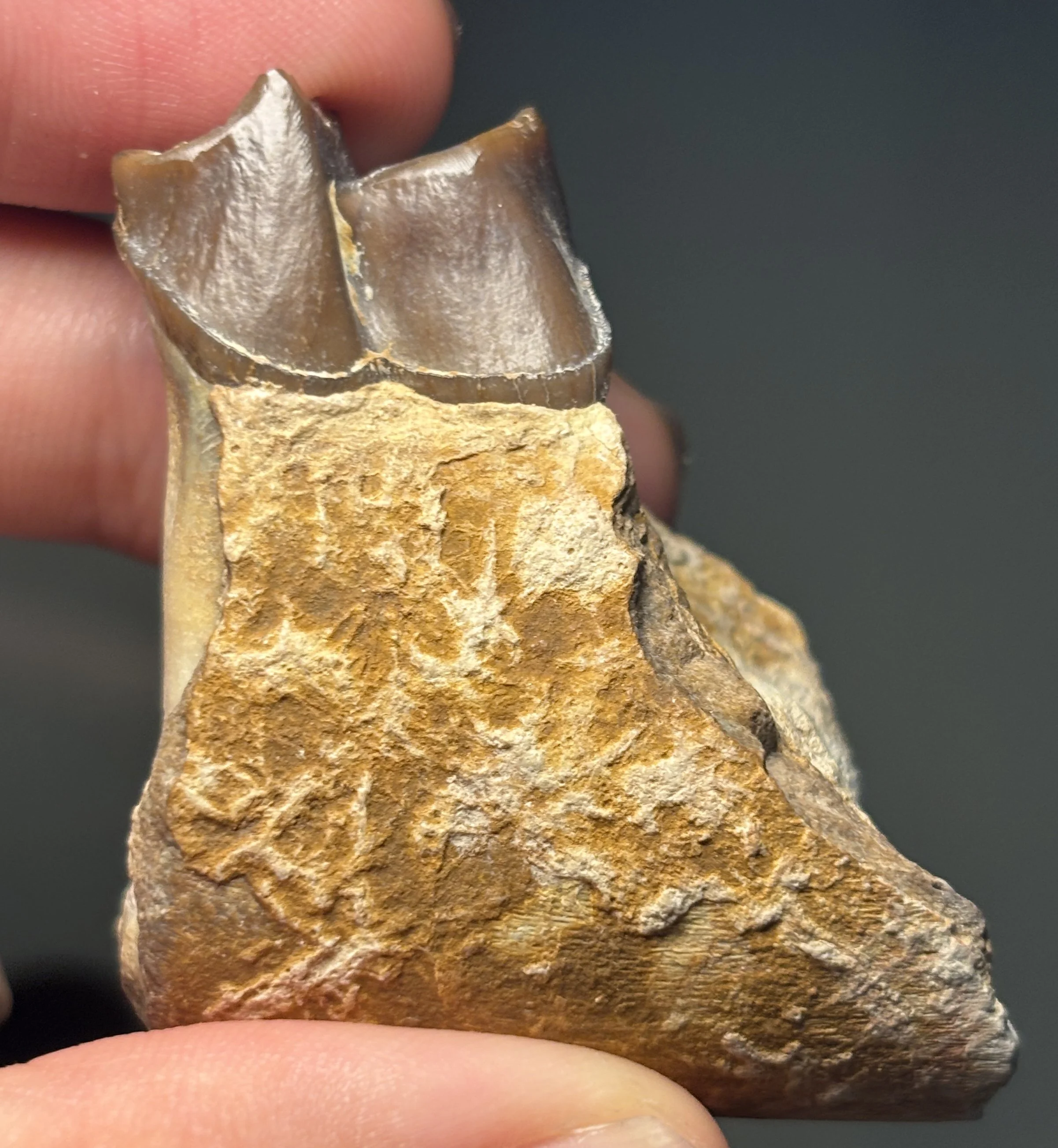
Hyracodon nebrascensis, Oligocene, Brule Formation - White River Badlands Group, Pennington County, South Dakota
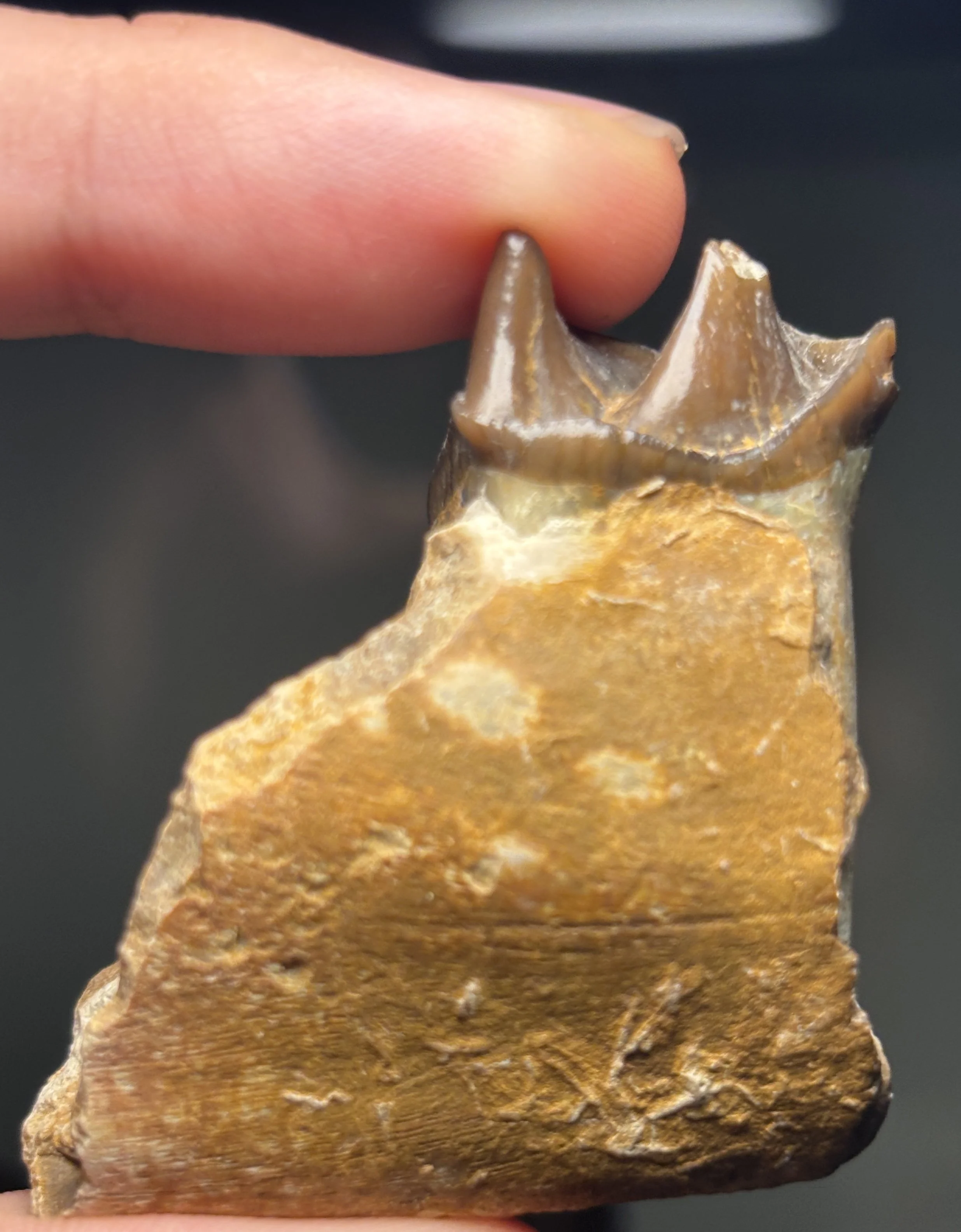
Hyracodon nebrascensis

Otodus auriculatus, Oligocene, unknown location, displays damaged enamel, feeding wear, ancestor of the famed megalodon
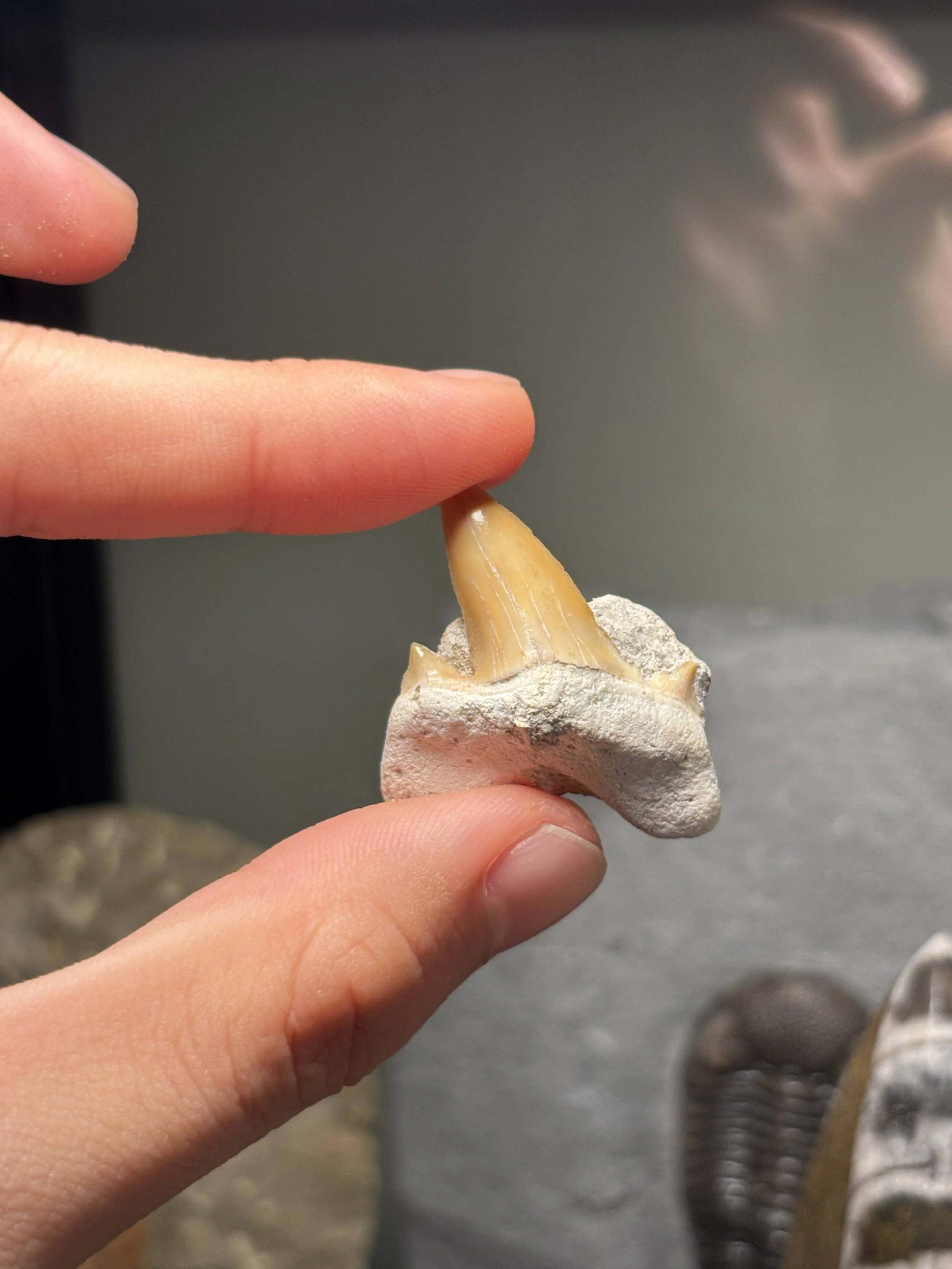
Adult Otodus obliquus, Eocene, Phosphate Mines, Khouribga, Morocco
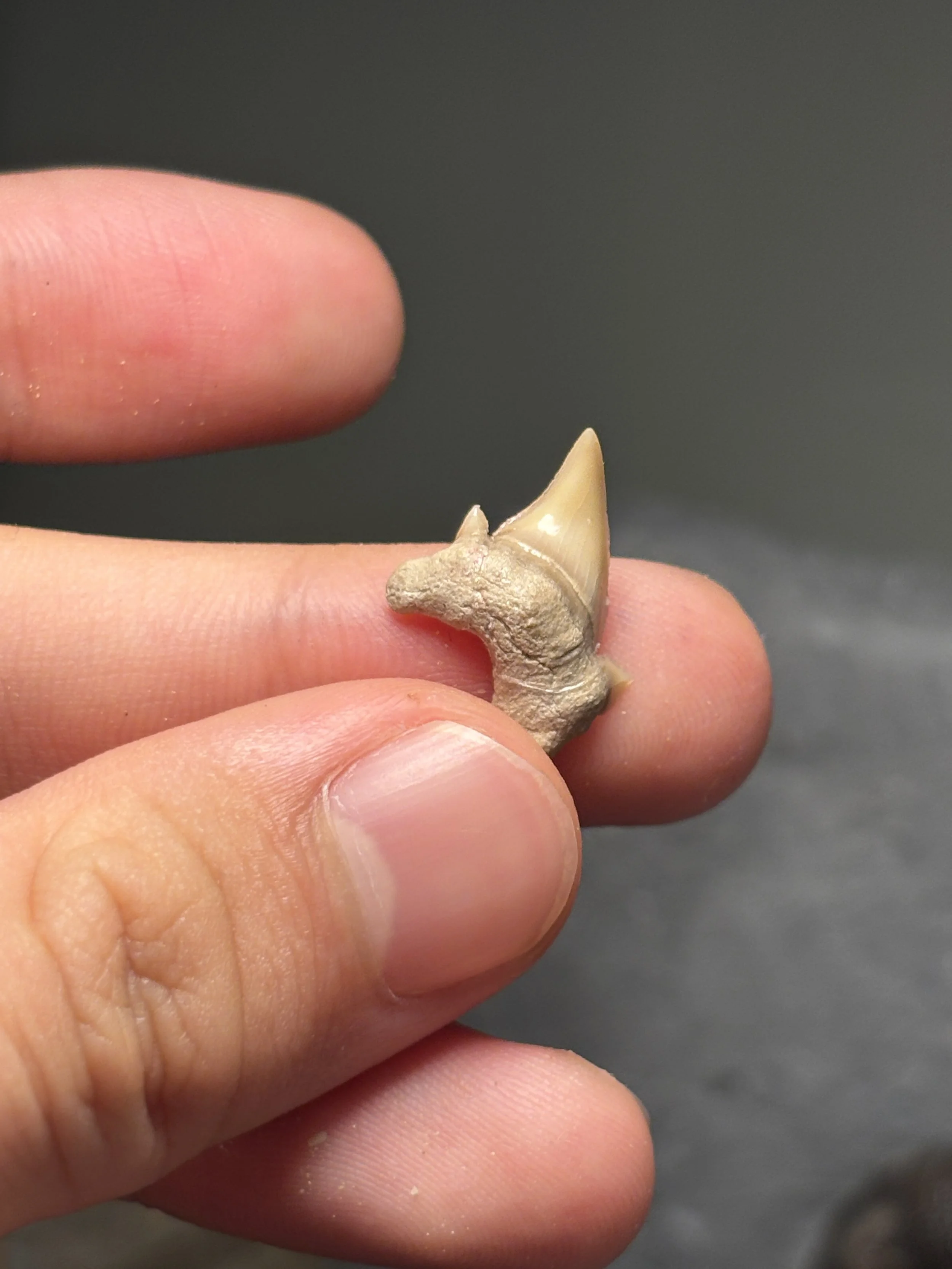
juvenile, pathological Otodus Obliquus, Eocene, Phosphate Mines, Khouribga, Morocco
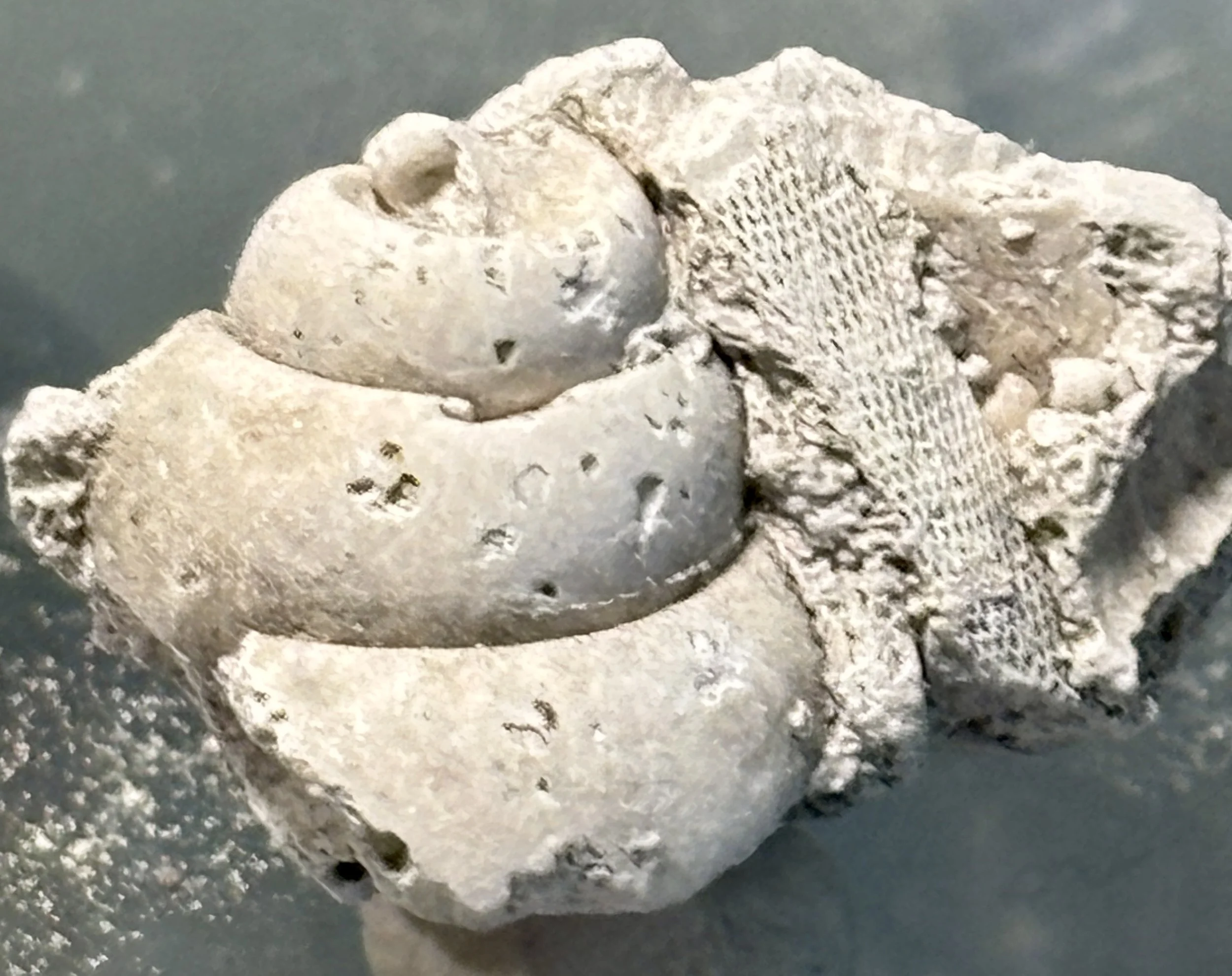
Gastropod Mold and Bryozoan Fossils, Eocene, FL, USA
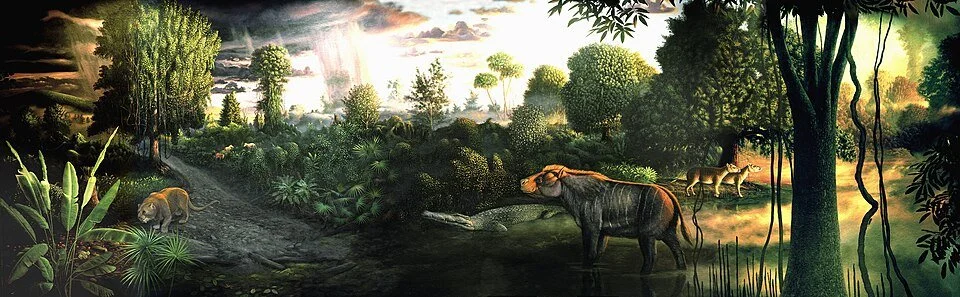
Eocene Forests-Open Access
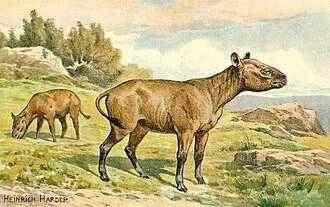
historical Hyracodon illustration
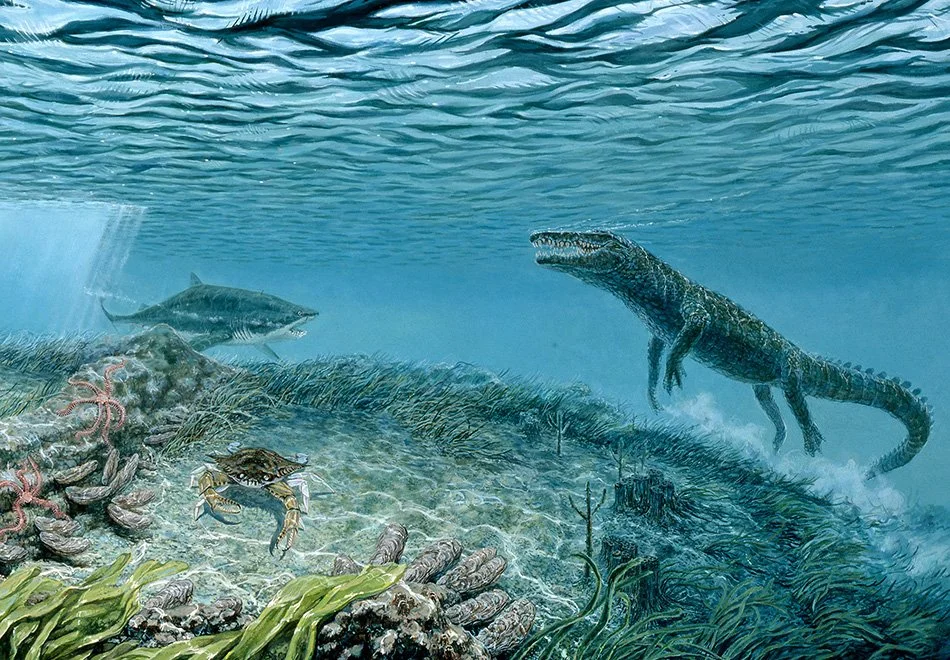
Eocene Seas-https://www.floridamuseum.ufl.edu/exhibits/blog/florida-fossils-eocene-epoch/
Cenozoic: Neogene Period
Miocene Epoch (23.0 to 5.3 million years ago)
Climate: Continued the cooler, drier climate and the expansion grasslands. Large predators emerged in the seas, and sharks started diversifying in the oceans into the ancestral species of the modern sharks that exist today.
Life: Mammalian diversity continued due to the expansion of mass grasslands. Modern forms of the large baleen whales known today appeared, modern horses appeared, and early hominids (our earliest human ancestors) began to evolve from “apes”
Pliocene Epoch (5.3 to 2.58 million years ago)
Climate: This epoch set the stage for the famous Ice Age era during the Pleistocene. The cooling and drying of the period also continued.
Life: The fauna is comparable to those of today. The continued cooling of the oceans and the rise of modern predatory whales, dolphins, and the diminishment in numbers of the large whales that Megalodon preyed on led to its decline and eventual extinction. One notable geological event was that the Isthmus of Panama formed, allowing for the Great American Interchange (like a freeway between continents) where animals like armadillos and llamas were able to migrate between North and South America.
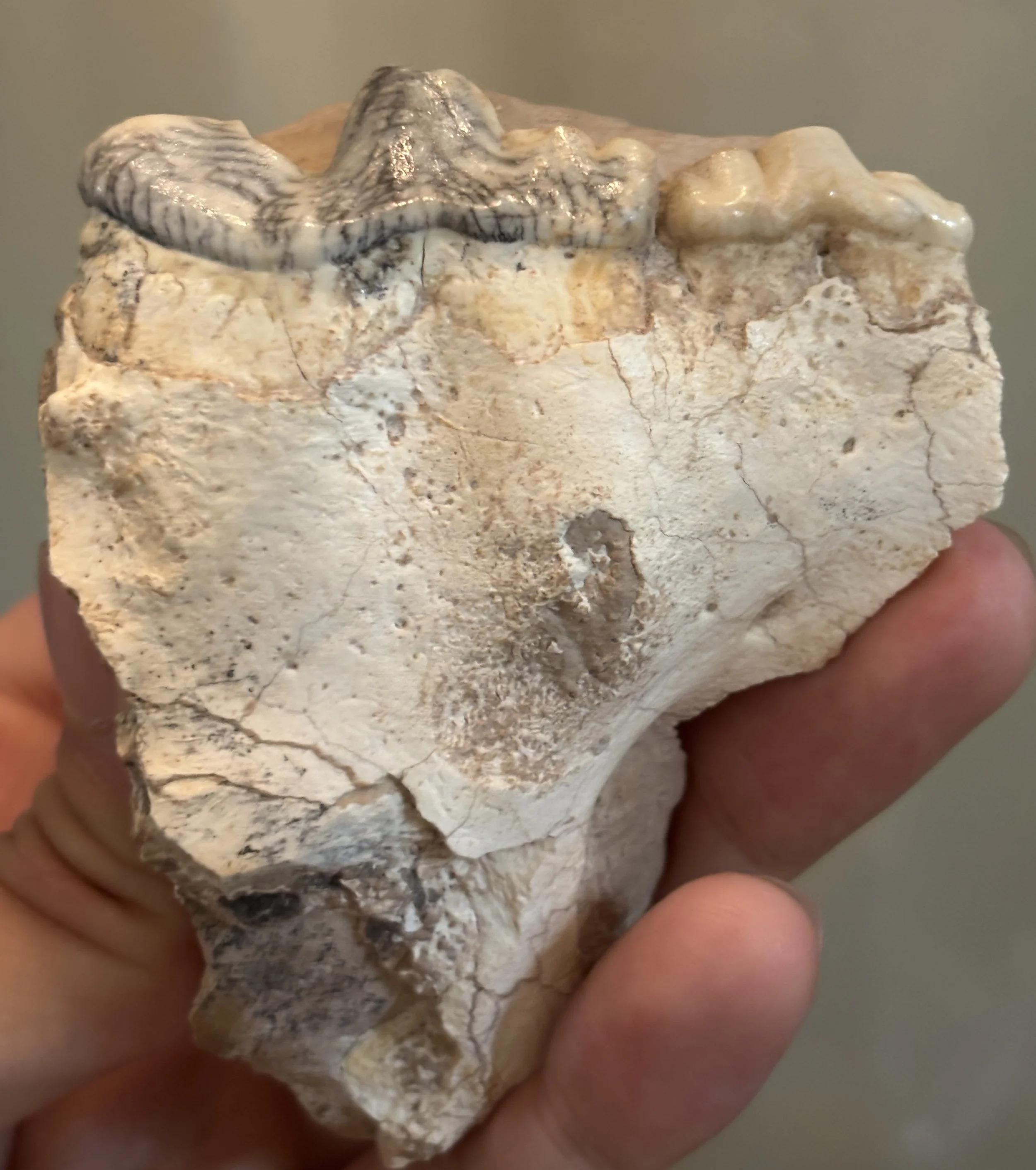
Metailurus major upper molars, Late Miocene, Guanghe Formation , Xihe, Gansu Province
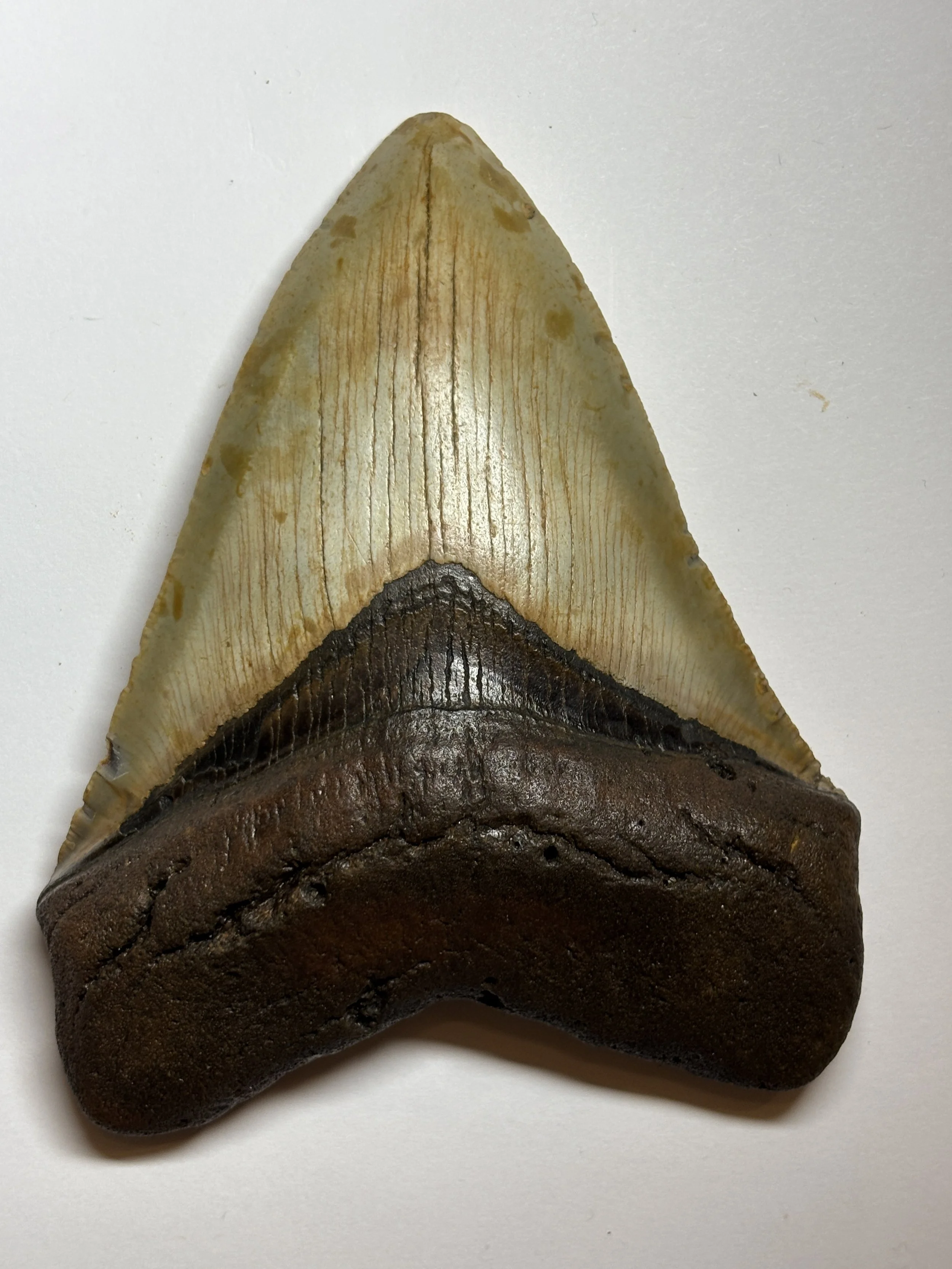
Megalodon
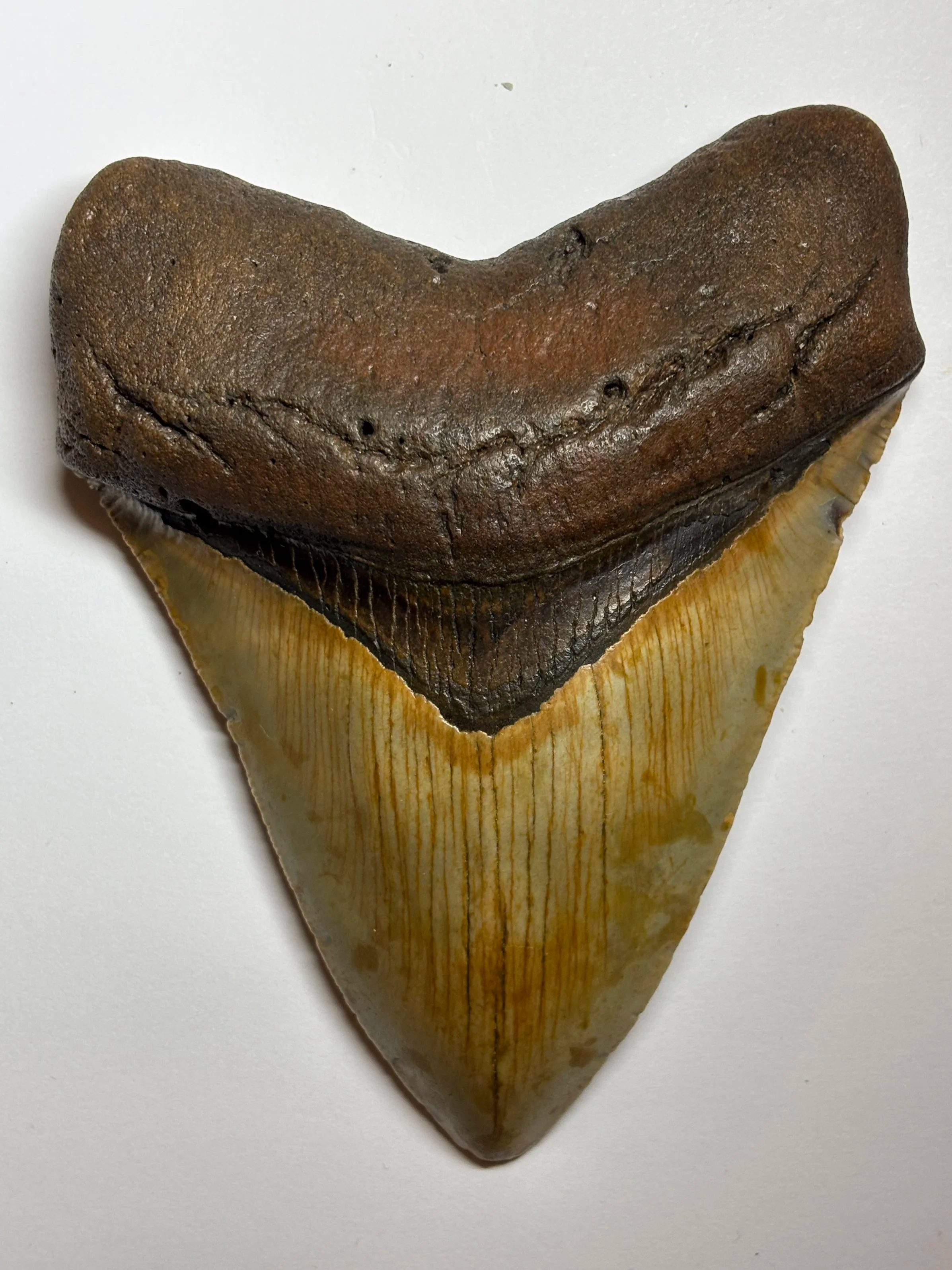
Otodus megalodon, Middle Miocene, found on dive off SE Coast of United States, 4.617 inches, 117mm
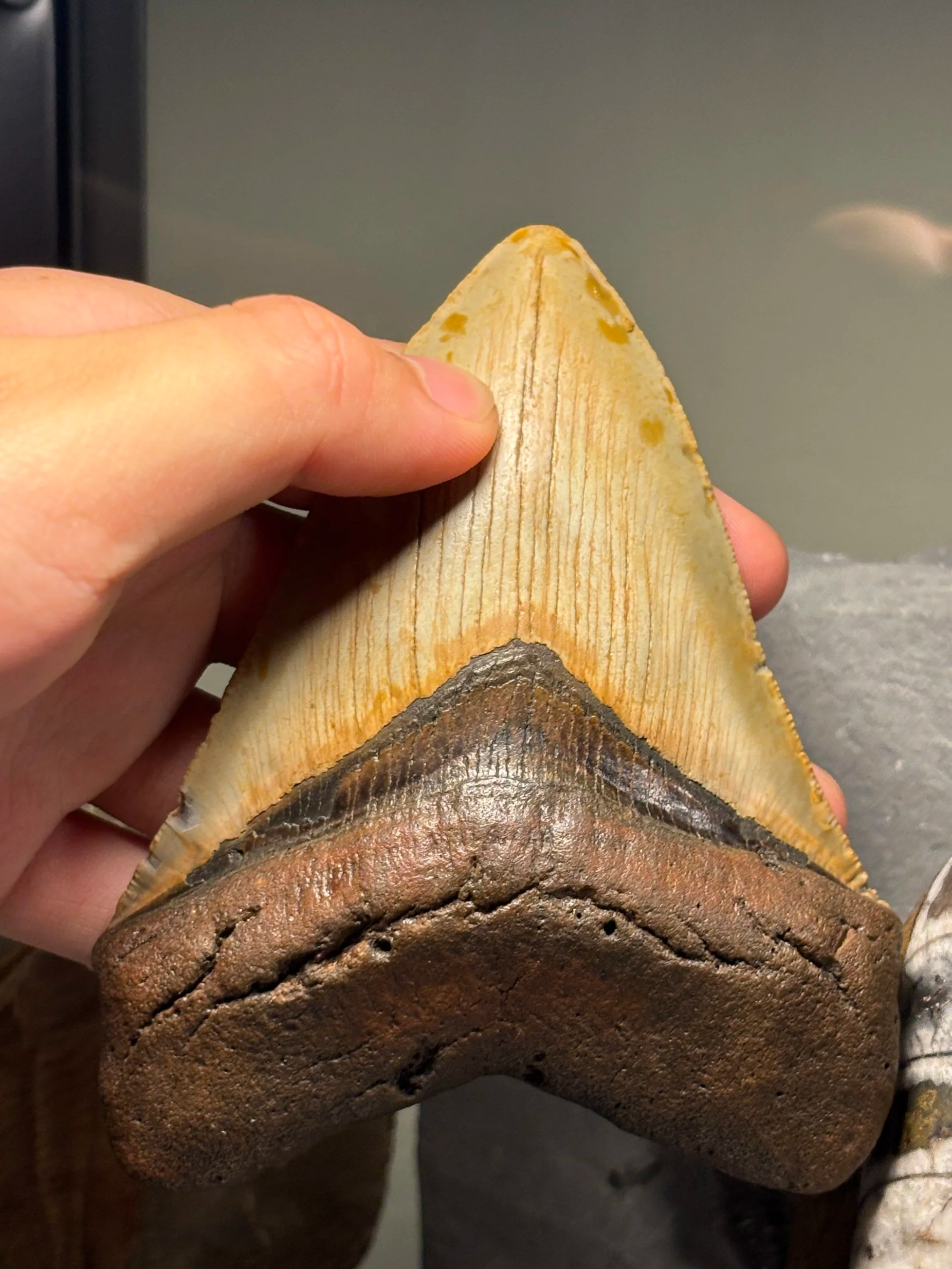
Megalodon
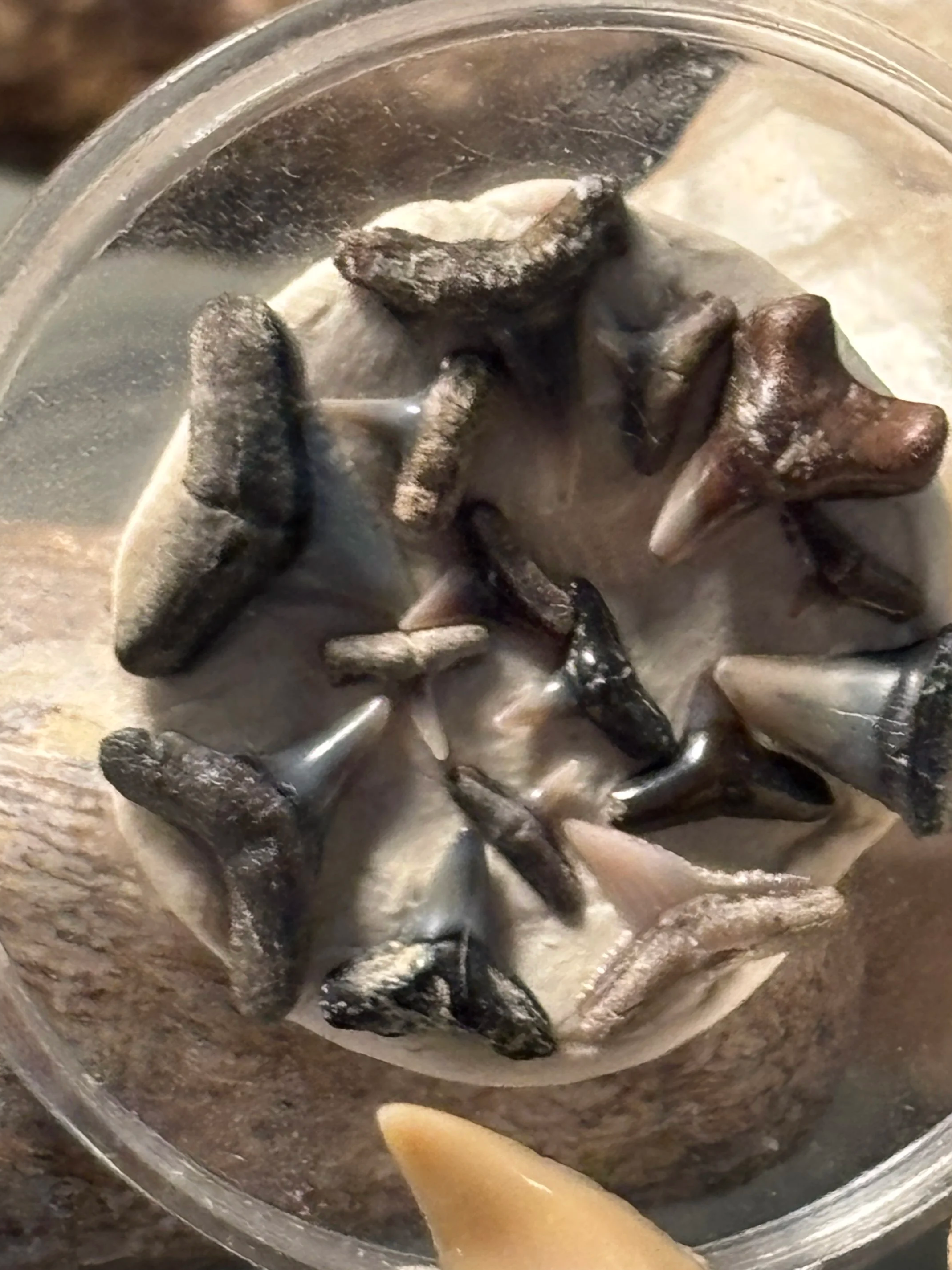
Assortment of Bull Shark, Sand Shark, and extinct genera from Lee Creek, Aurora NC, USA
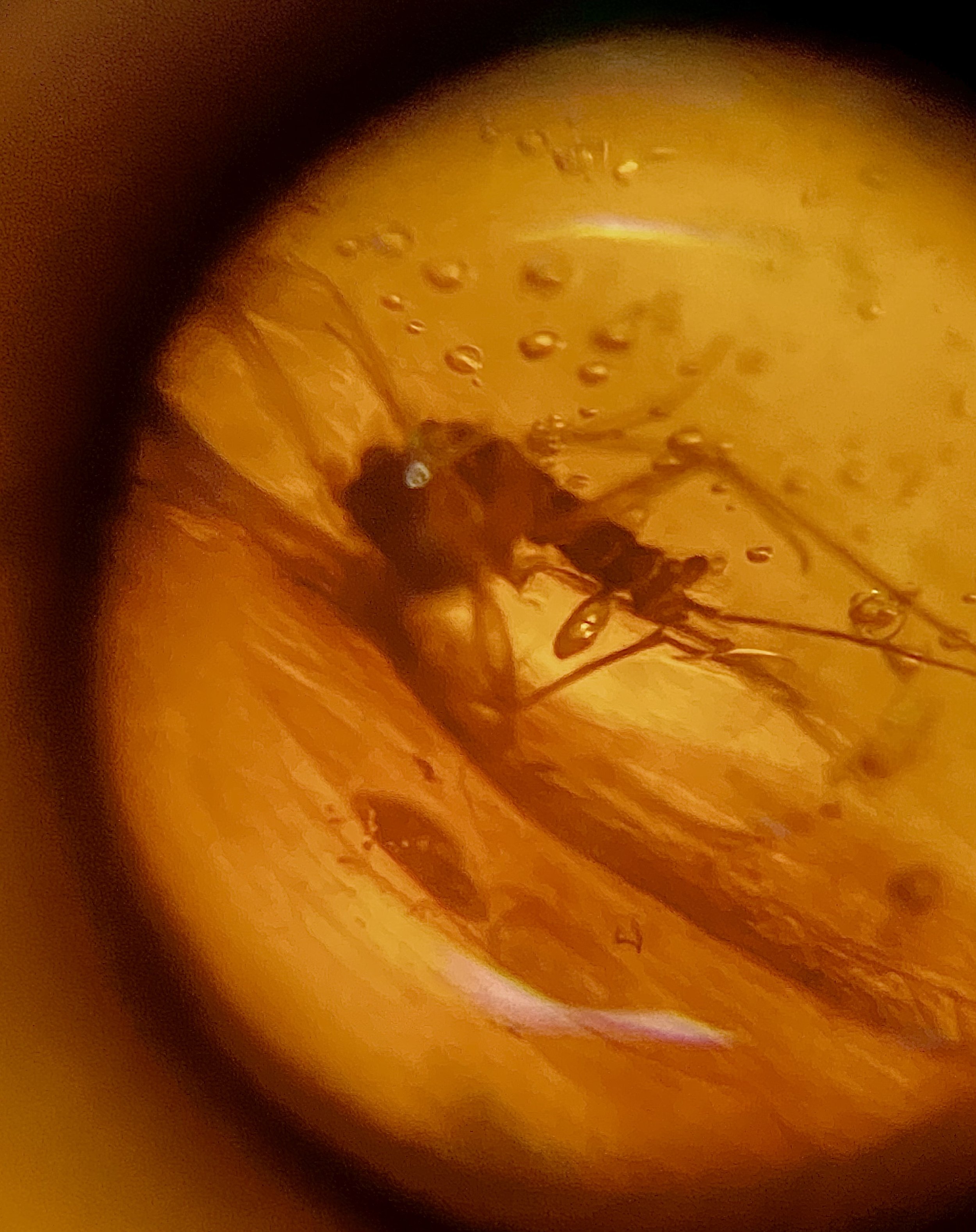
Insect Inclusions viewed under a macrolens, Early Miocene, Chiapas Amber, Mexico
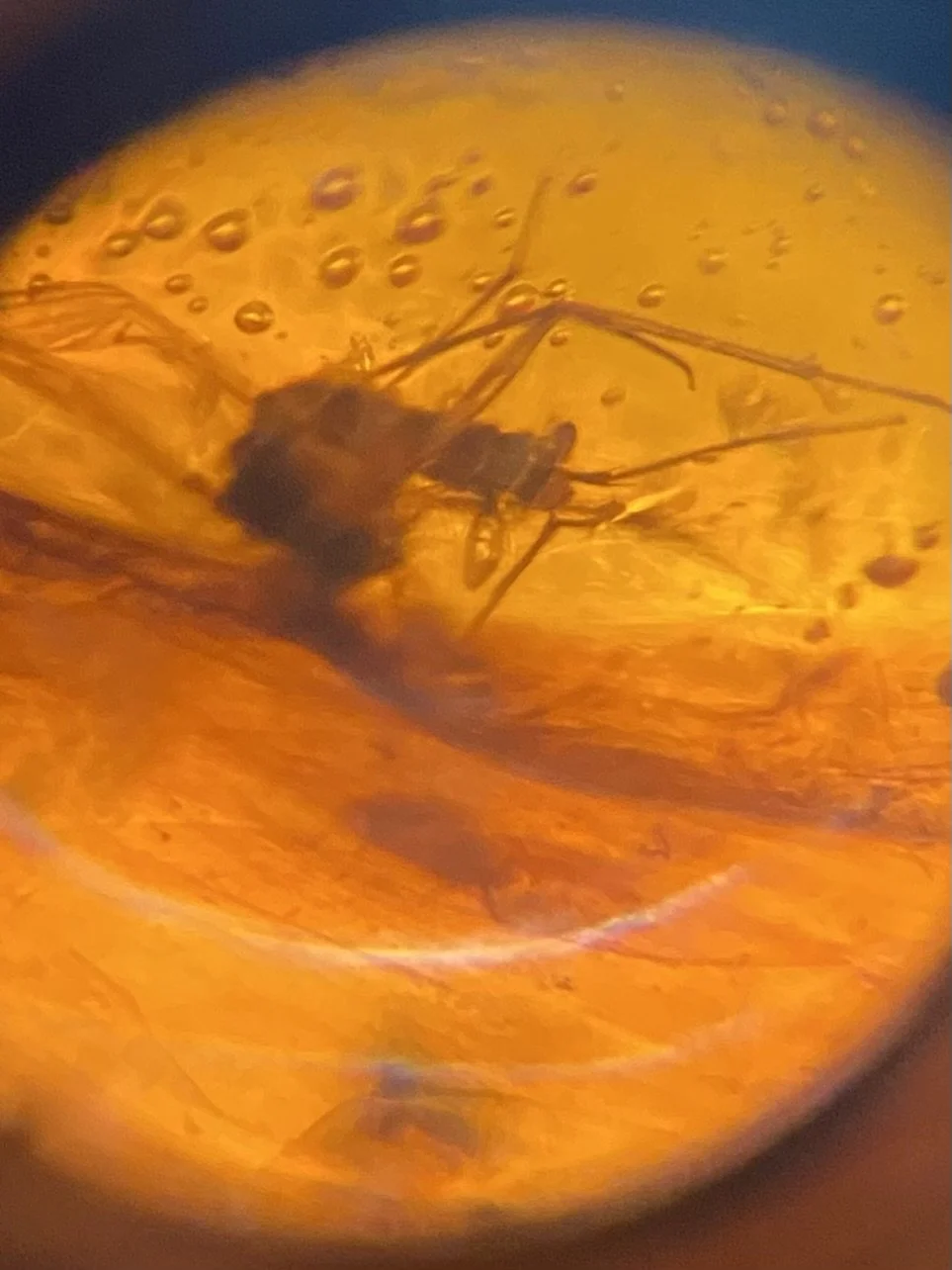
Insect Inclusions viewed under a macrolens: Chiapas Amber, Early Miocene
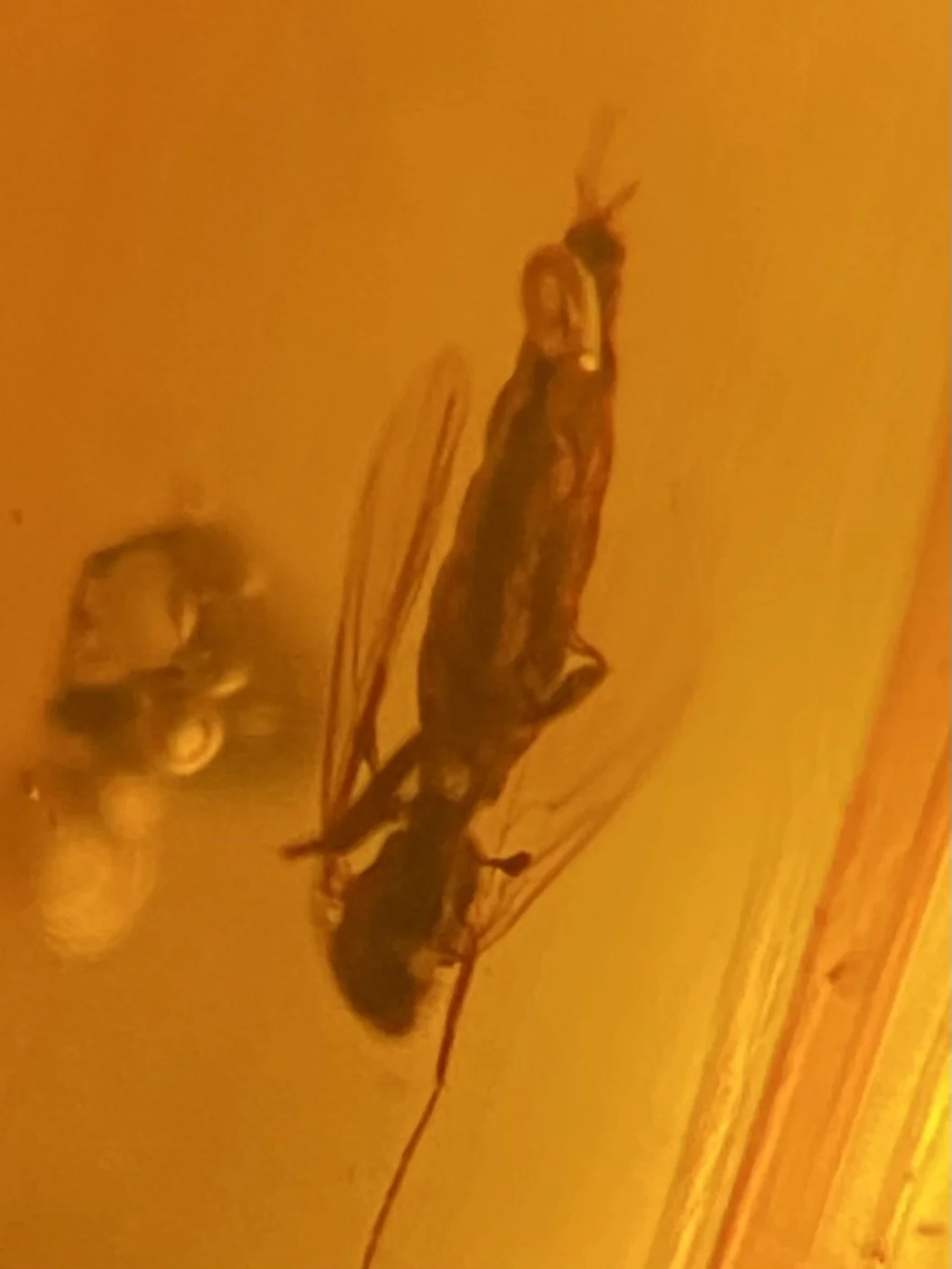
Winged Insect Inclusion
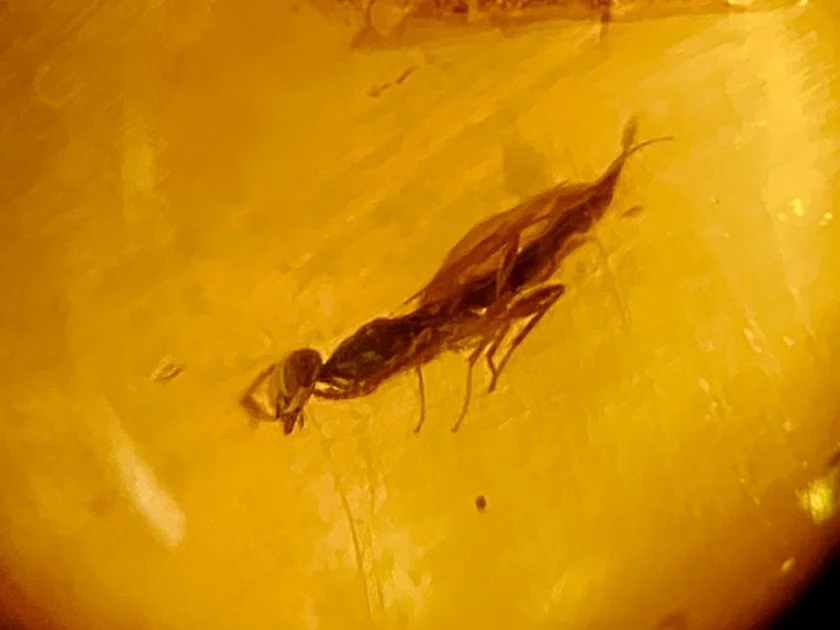
Winged Insect Inclusion: Early Wasp?
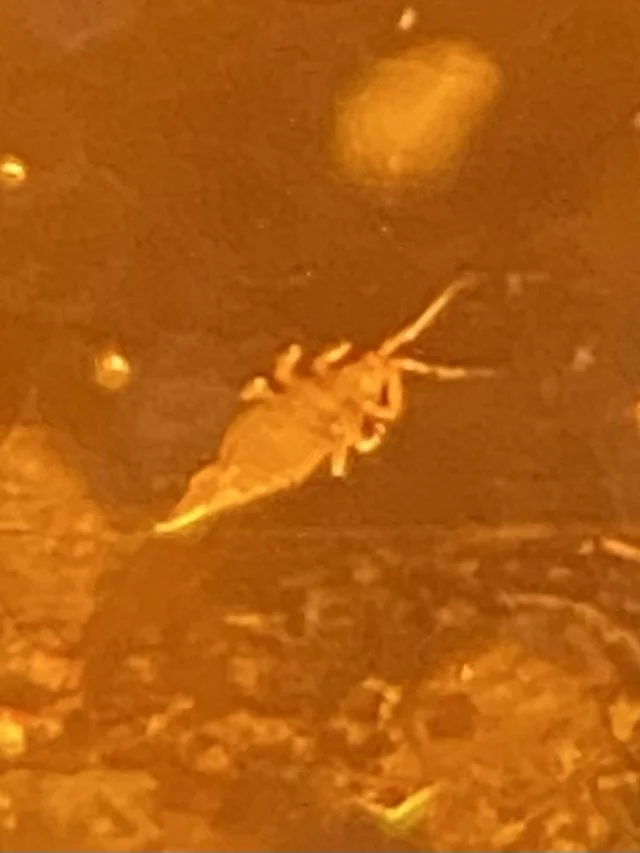
Early Insect Amber Inclusion
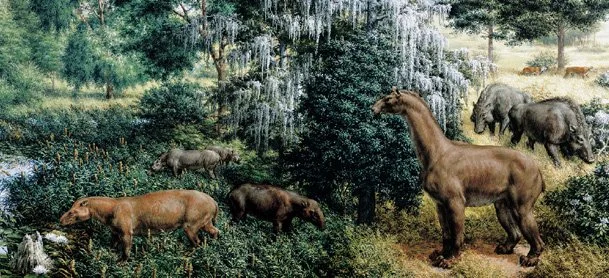
Miocene Forest: AMNH https://research.amnh.org/paleontology/perissodactyl/concepts/deep-time/miocene
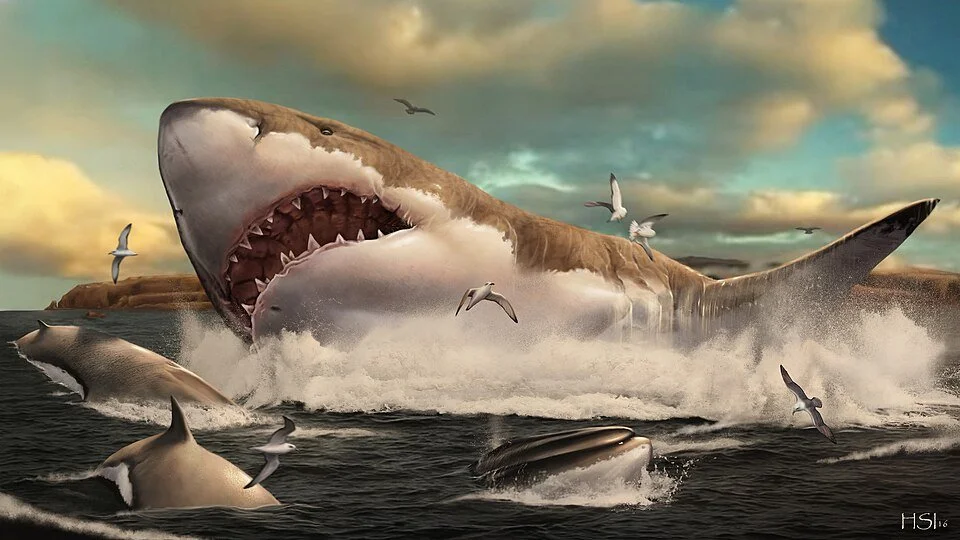
Otodus Megalodon- Hugo Saláis, CC BY 4.0