Living Fossils: Overview of Carboniferous Crinoids
Article on Living Fossils, specifically crinoids from the Mississippian of Indiana
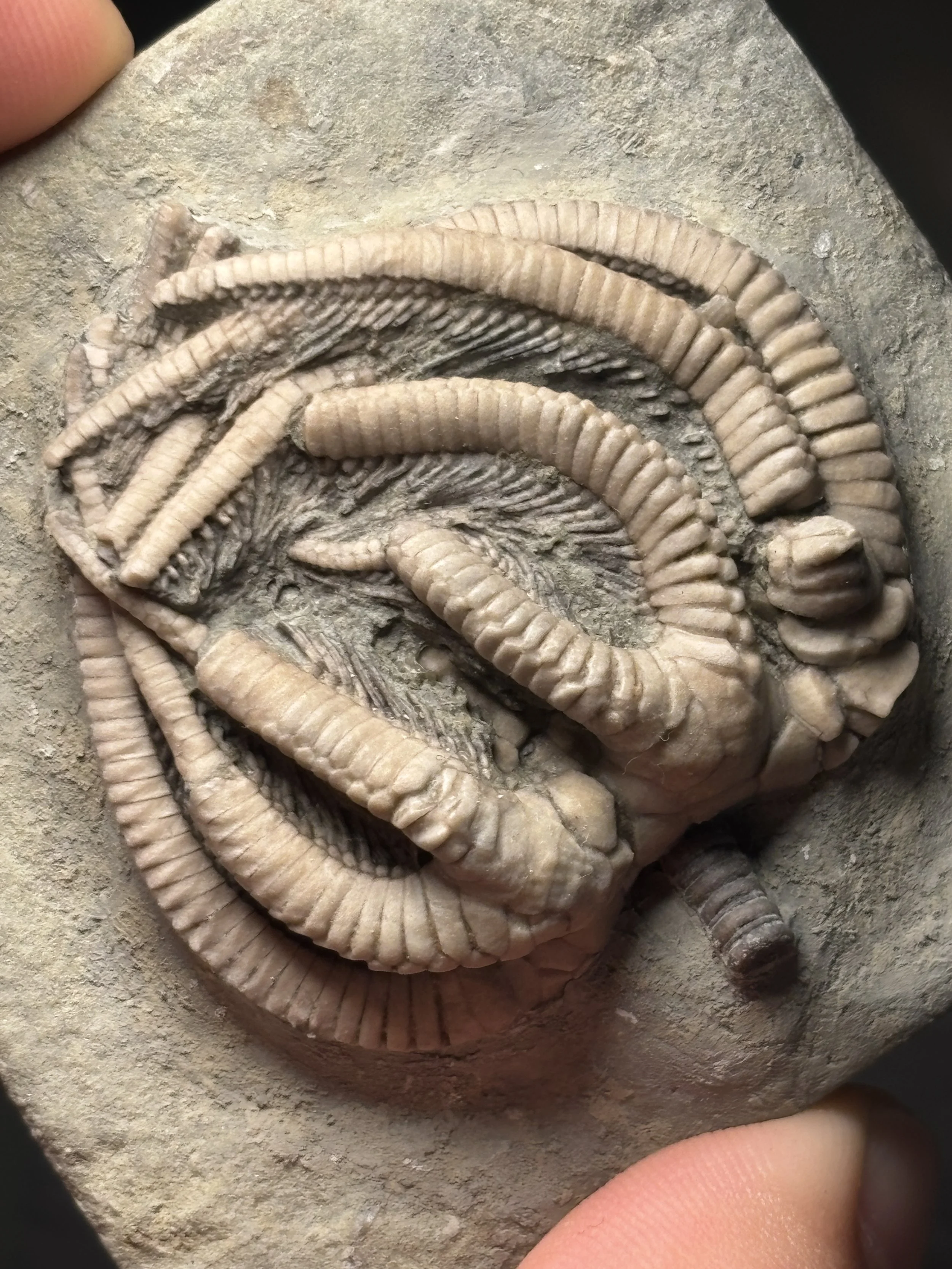
Agariocrinus americanus 46mm, Crawfordsville, Indiana, Edwardsville Formation, Carboniferous, Mississippian (358.9 to 323.2 million years ago)
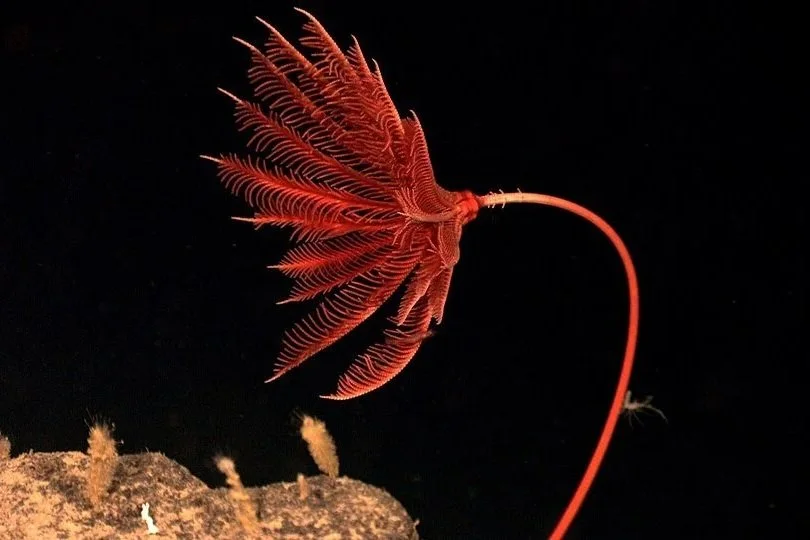
Modern Proisocrinus ruberrimus crinoid, NOAA Photo Library, CC BY 2.0 <https://creativecommons.org/licenses/by/2.0>, via Wikimedia Commons
Commentary on Living Fossils:
As a kid, I read about these mystical “living fossils” or animals that pop culture claimed to have defied the laws of evolution and stayed the same for over millions of years. As I delve deeper into paleontology, living fossils become more and more fascinating not because they actually refused to evolve after millions of years and multiple mass extinction events, but because they represented a distinct lineage of animals that survived extinction after extinction and still emerged looking like something out of a slab of rock. Compared to the most notable examples of “living fossils” like the Coleacanth; a representative of a lobe finned fish (Sarcopterygii) long thought to be extinct, the Tuatara; an example of an ancient order of reptiles that thrived during the dinosuar age, and the Nautilus; a critically endangered example of early shelled cephalopods that emerged around the Jurassic, the Crinoid; a marine invertebrate that emerged from the Early Ordovician 485 million years ago, is a class of animals that remains relatively unknown compared to its other more celebrity “living fossils.”
A Look at Ancient Crinoids from the Carboniferous, Mississippian (358.9 to 323.2 million years ago):
The North American fossil record is incredible in the sense that these incredibly preserved examples of invertebrates are oftentimes commercially available for museums of all sizes to disseminate information to the public and for private collectors to hold in their hands while reading up on the latest research done by prominent paleontologists.
After the events of the Devonian Mass Extinction due to rapid global cooling, the deoxygenation of oceans, and mass volcanic eruptions, 70-82% of all marine life died off. This marked the beginning of the Carboniferous period known for its massive forests and extremely high oxygen levels that produced the majority of the world’s coal deposits and enormous insects that grew from the oxygen deposits. The implications for ocean life are often neglected in documentaries about the Carboniferous, but Crinoids thrived in this newfound environment featuring warm, shallow inland seas and an abundance of microscopic plankton. Additionally, the conditions of the Devonian extinction nearly wiped out the coned cephalopods, early placoderms, and nearly all other predators that reigned freely in the seas of the Devonian. The Crinoids that remained saw a peak in biodiversity during the Mississippian (early Carboniferous) as the forces of evolution forced them to fill in the biological niches that other animals previously occupied.
Agariocrinus americanus, Edwardsville Formation environment:
Agariocrinus americanus, known as the mushroom crinoid or American crinoid, is representative of the rich diversity of well preserved Carboniferous crinoids from Crawfordsville, Indiana’s Edwardsville Formation. The conditions of the Edwardsville formation represented a shallow, fine silt environment that frequently overfilled from the nearby delta. In addition to being a haven for the advanced crinoids during this time period, the frequent, rapid burials meant that soft body parts were oftentimes preserved. The Edwardsville formation is famous for its complete examples of crinoids that showed all parts of a crinoid’s body structure, looking remarkably similar to its modern counterparts.
Diagram of Crinoid Body Structure and Reconstruction of Carboniferous Crinoid Habitats:
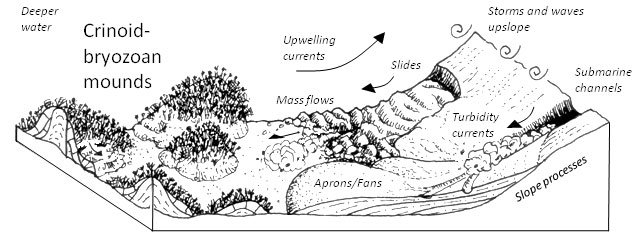
Greb, S.F., Potter, P.E., Meyer, D.L., and Ausich, W.I., 2008, Mud mounds, paleoslumps, crinoids, and more; the geology of the Fort Payne Formation at Lake Cumberland, south-central Kentucky: Field trip for the Kentucky Chapter of the American Institute of Professional Geologists, May 17-18, 2008: 45 p.
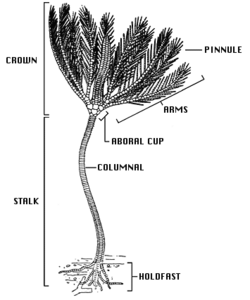
Crinoid Body Structure, William I. Ausich, CC BY 3.0 <https://creativecommons.org/licenses/by/3.0>, via Wikimedia Commons
Spiriferidae Brachiopod Shell Structures Inducive for Filter Feeding
An article that delves into the construction of an ancient brachiopod from the Middle Devonian Silica Formation: Paraspirifer bownockeri
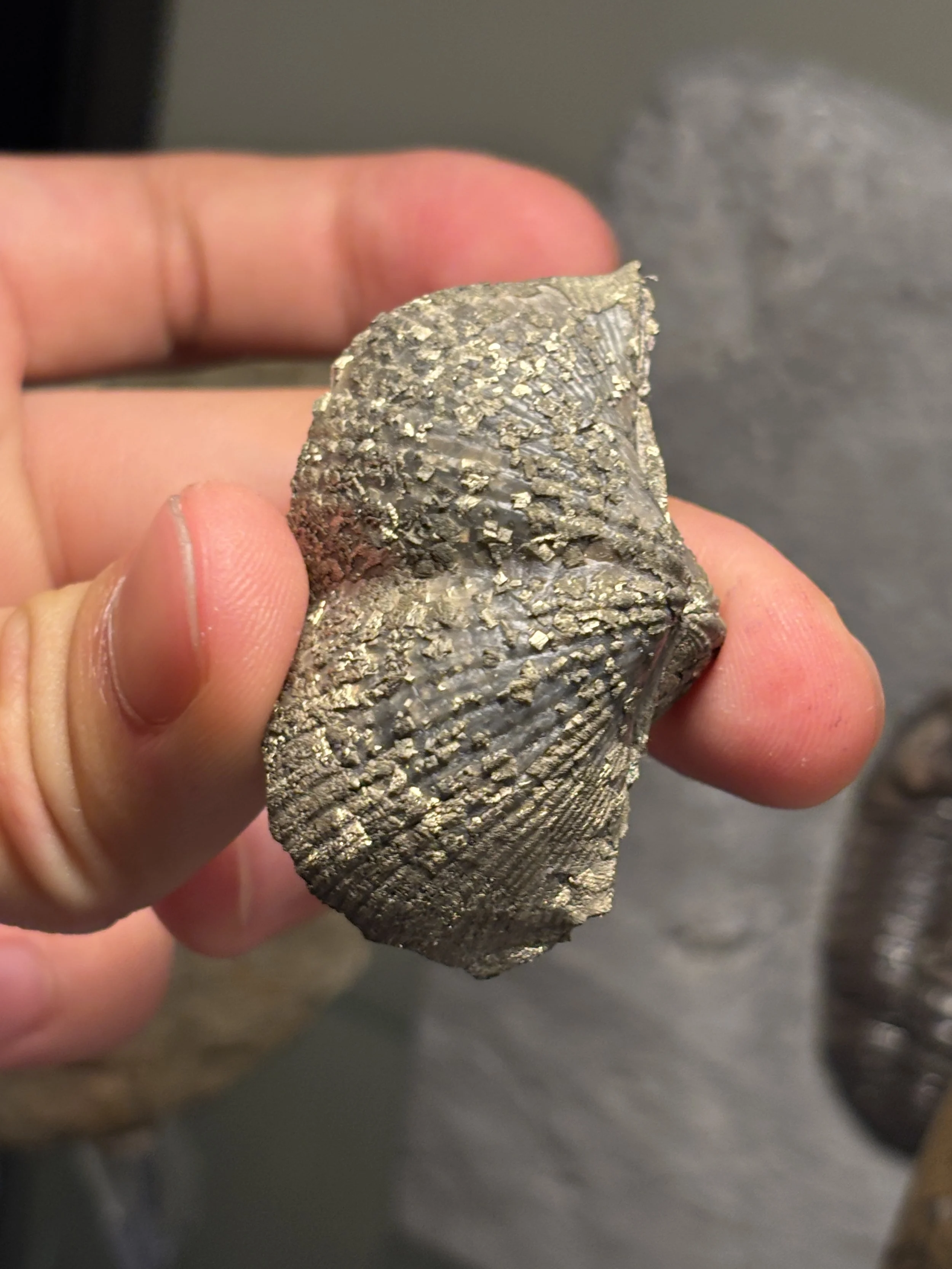
The fossil shows distinct pyritization in addition to the calcite preservation. The family Spiriferidae is known for its prominent ridges with the middle recession called the sulcus that divides the symmetrical sides of the shell.
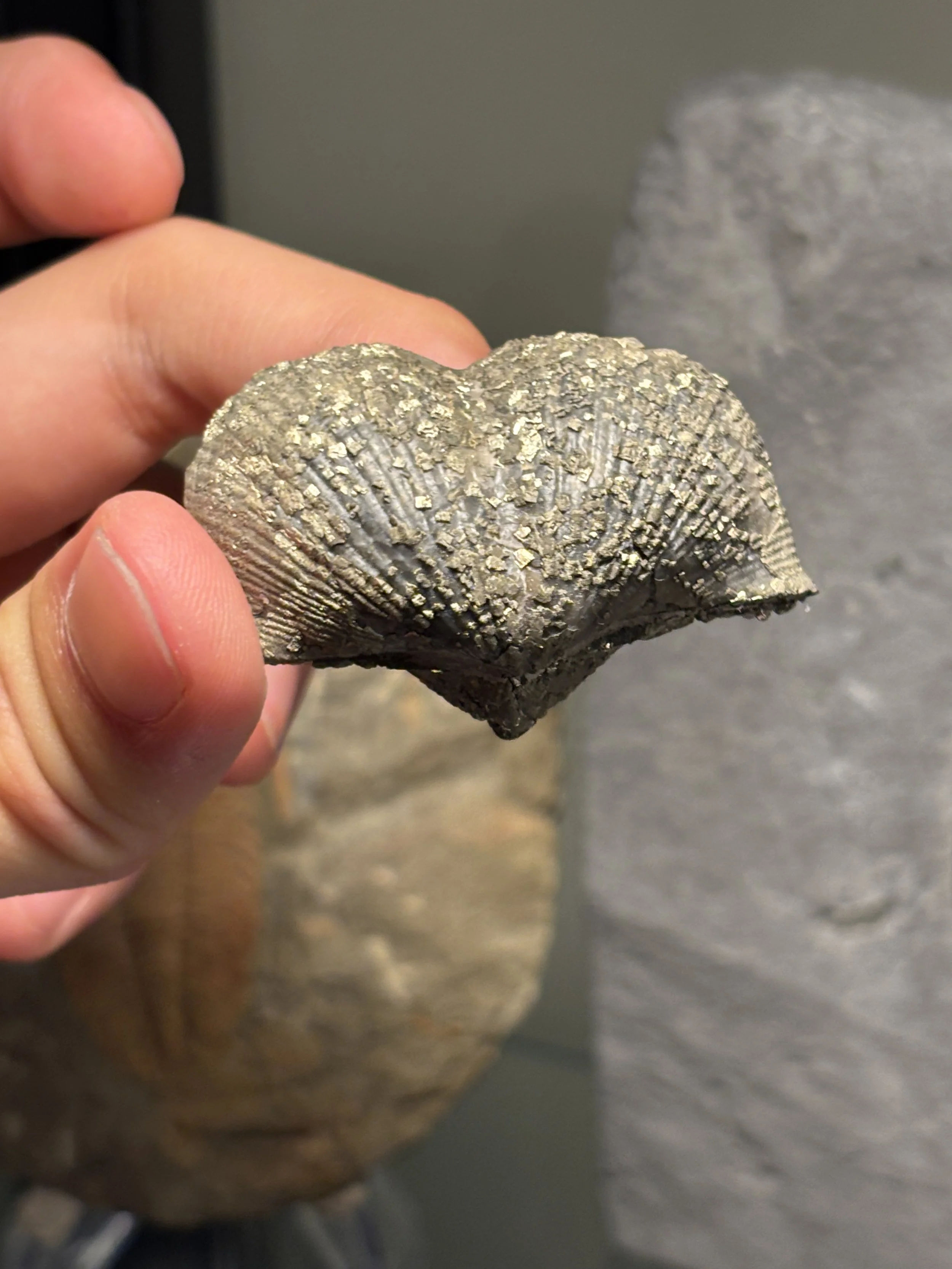
Paraspirifer bownockeri brachiopod fossil (52mm), Paulding, Ohio, Silica Formation, Middle Devonian (393 to 383 million years ago)
Paraspirifer bownockeri Features and Habitat:
Paraspirifer bownockeri is a large species of brachiopod that lived during the Middle Devonian time period in a warm shallow seabed that displayed extraordinary biodiversity in the fauna found in the Silica Formation. Trilobites (Eldredgeops sp. among the most prominent), Brachiopods, Bryozoans, Horn Corals, and others made up most of the early reef bed. Brachiopods are another example of living fossils with nearly 300-400 living species that live in the depths of todays ocean’s. Unlike most other examples of living fossils, brachiopods have remained physiologically unchanged. The fossil displayed above represents the Spiriferidae family of brachiopods which were studied for the distinct, large sulcus (recession within one halve of the shell) and large fold (protusion on the other halve of the shell).
Summary of Study Done into the Shell Morphology that induced Filter Feeding:
In a fluid dynamics simulation in which Shiino, Kuwazaru, and Yoshikawa scanned a well preserved specimen of Paraspirifer bownockeri, the researchers put the model into several different flow-current simulations to see how the design of the shell’s sulcus and fold would react to different flow conditions (Shiino et al.). The conclusion was that the shell’s sulcus would create a high pressurized region of water flow in which the animal would be able to draw in the nutrient-rich water of its surroundings to feed (Shiino et. al.). Likely instead of any muscle movement, the shell’s construction itself helped passively draw in nutrients.
Works Cited:
Shiino Y, Kuwazuru O, Yoshikawa N. Computational fluid dynamics simulations on a Devonian spiriferid Paraspirifer bownockeri (Brachiopoda): generating mechanism of passive feeding flows. J Theor Biol. 2009 Jul 7;259(1):132-41. doi: 10.1016/j.jtbi.2009.02.018. Epub 2009 Mar 6. PMID: 19269296.
Review of Struveaspis sp.
A literature review and analysis into the description of Struveapsis sp, a type of trilobite from the Middle Devonian, Jorf, Morocco
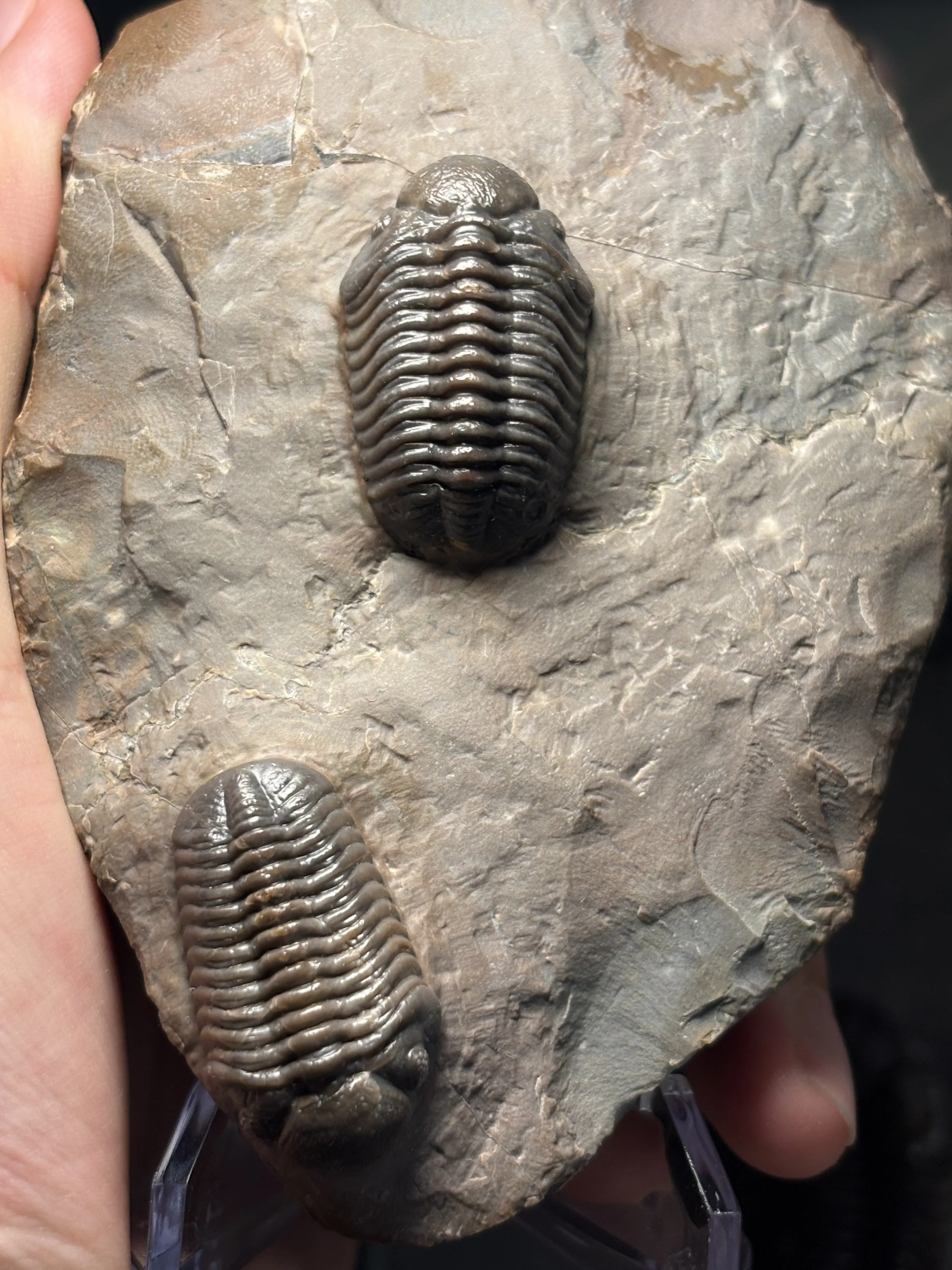
double trilobites (31mm, 34mm) in hard, quartzite matrix: a signature of the Jorf, Morocco Tafilalt region
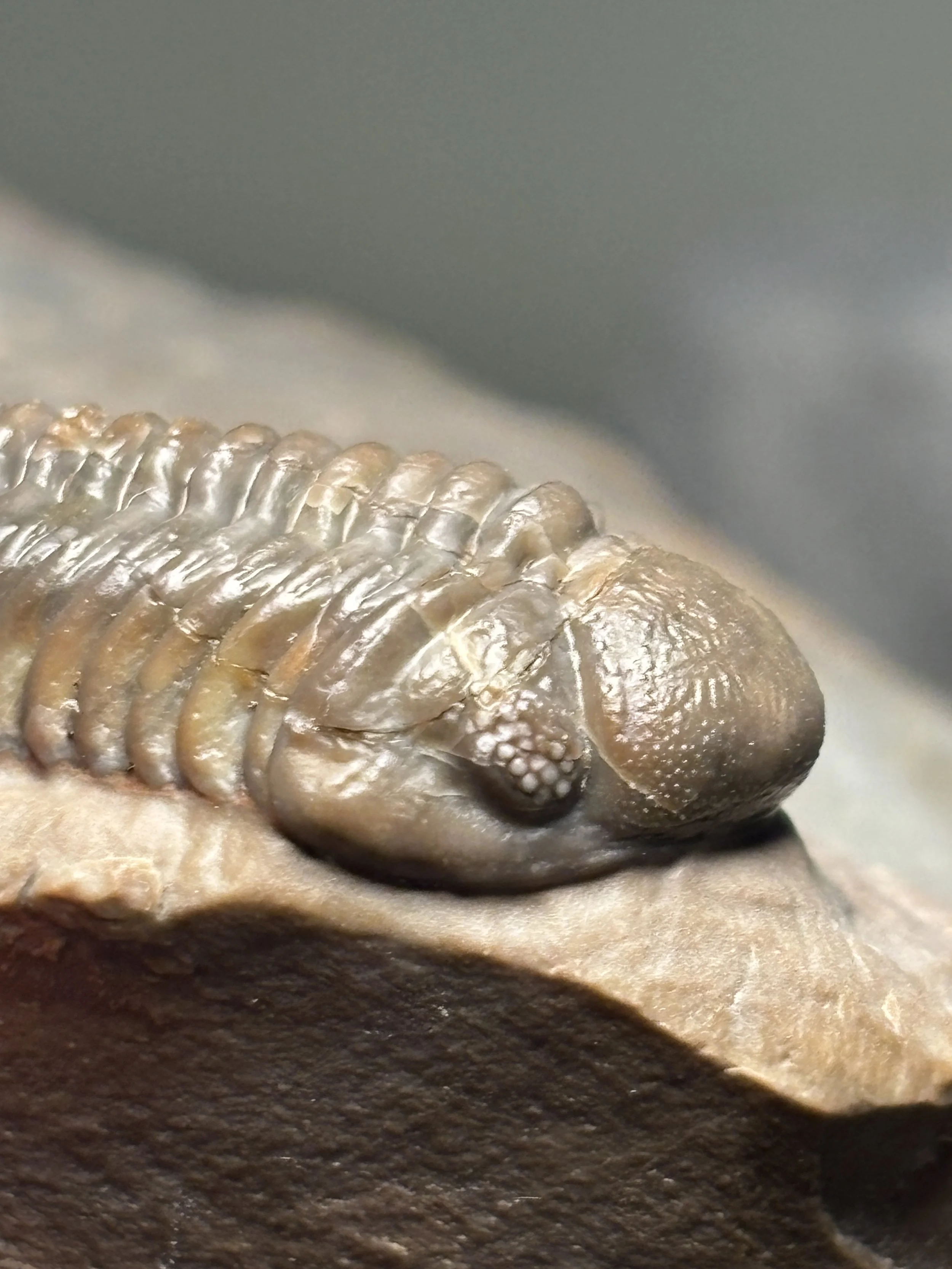
angle highlighting the pustules of the large glabella, oftentimes not preserved from this locale
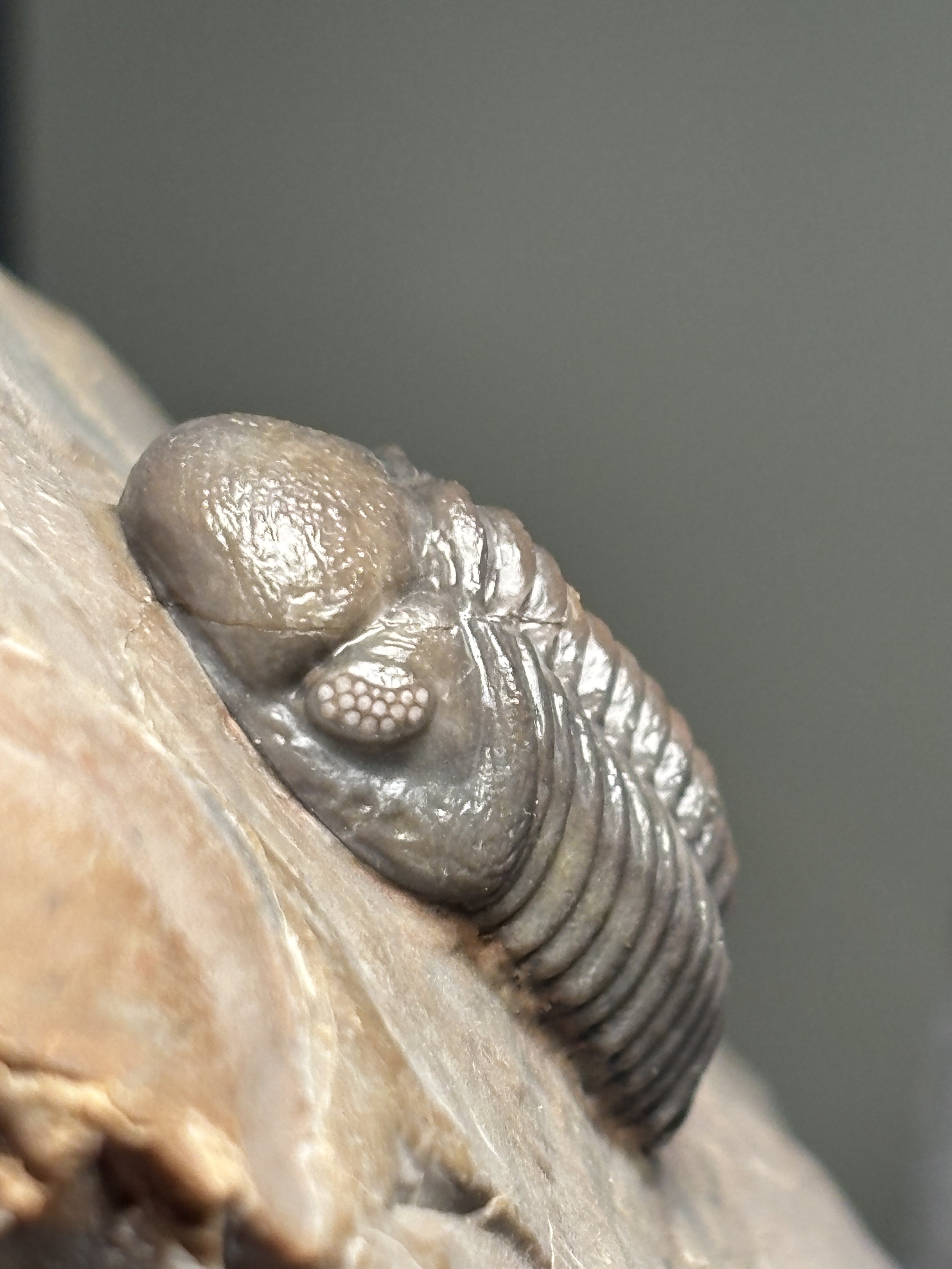
Struveaspis sp. are known for their dimunitive lens count in comparision to other phacopids
Stuveaspis’ Distinct Eyes:
The genus Struveaspis is a type of trilobite within Phacopidae found throughout the middle Devonian time period 393 to 382 million years ago. These phacopids are known for their pronounced glabella containing the feeding organs of the trilobite (hypostome), and their dimunitive Schizochroal eyes found exclusively within Phacopidae. Schizochroal eyes are distinct in certain trilobites. Compared to Holochroal eyes in most trilobites and modern arthropods that sport a single corneal lens cover and thousands of tiny individual lenses, Schizochroal eyes contain fewer, much larger lenses. Struveaspis, notably, is a genus within Phacopidae that is often highlighted for having an abnormally low count of individual lenses, indicative of the lower light environment it likely habitated.
Description of Geologic Formation:
The specific specimen shown above from my personal collection is likely an undescribed species of the genus from Jorf, Erfoud Morocco, Bou Tchrafine Formation. The 15 meter thick geologic formation is unique compared to other localities in the fossil-rich country of Morocco because it does not possess distinct layers of deposition. Instead, the formation represents metamorphic quartzite rather than sedimentary shale, representative of a volcanic deposit that formed from mudslides. As a result, the fauna found in this formation are extremely difficult to prepare even with the presence of high-quality air scribes (mechanical tools that use pressurized air and microscopic sand-substances to blast away rock). It it likely that most of the pustules, tiny spines, and other details on a trilobite’s exoskeleton are lost in the preparation. Additionally, trilobites that emerge from this locale are colorful as they are comprised of transparent quartz rather than calcite or aragonite, and take up the color from the matrix.
The prevalence of several species from this locale is especially intriguing, and the next section will delve into the recently described species: Struveaspis bignoni to explain whythe specimen in the images is likely undescribed.
Summary and Analysis of Academic Article:
Struveaspis bignoni, described in 2013 and named after the late paleontologist Dr. Arnaud Bignon, represents a scarcer body of research into Devonian trilobites from Morocco in general. As the most commercially successful and most diverse countries for trilobites in general, the general body of research that exists for trilobites from this origin are dated and oftentimes scarce. Species from Morocco are oftentimes undescribed, newly discovered, or constantly updated as paleontologists find distinct morphological differences. Additionally, in most of these papers from the middle 20th century, the literature is French as Morocco was once a French territory. The paper below is written in Spanish which took some of my Spanish skills and online translating to dissect: a fun endeavor.
Joan Corbacho, a paleontologist at the Museo Geológico del Seminario de Barcelona, Spain, details the morphological distinctions of the recently described Struveapsis bignoni found in the same locale as the specimen from my personal collection. The distinction for this new species is the fact that the pygidium (tail part of the trilobite), lacks pleural ribs and lobes (the distinct lines that comprise of a trilobite’s exoskeleton). The pygidium is almost entirely smooth which is an attribute that can best describe the new species in its entirety: smooth and flat (Gorbacho 1). The distinct dimunitive eye-count is also notable for S. bignoni, but is not as prevalent in other already described species like S. maroccanica (Gorbacho 3).
My specimen also has a dimunitive eye count, but it has significantly less lenses compared to most examples of S. bignoni. The thorax possesses a total of 11 segments, which is the same as S. bignoni. However, the most important distinction is the presence of visible segmentation on the pygidium in both specimens which deviates from the literature description of S. bignoni. Therefore, it is reasonable to conclude that the specimen in my collection is likely undescribed or that of another species described in earlier literature.
Works Cited:
Corbacho, Joan. (2014). Struveaspis bignoni: Nueva especie de Phacopidae (Trilobita) de Marruecos; Devónico medio (Eifeliense). 16. 3-12.
Eldredgeops Camouflage
Analysis of Eldredgeops rana camouflage patterns
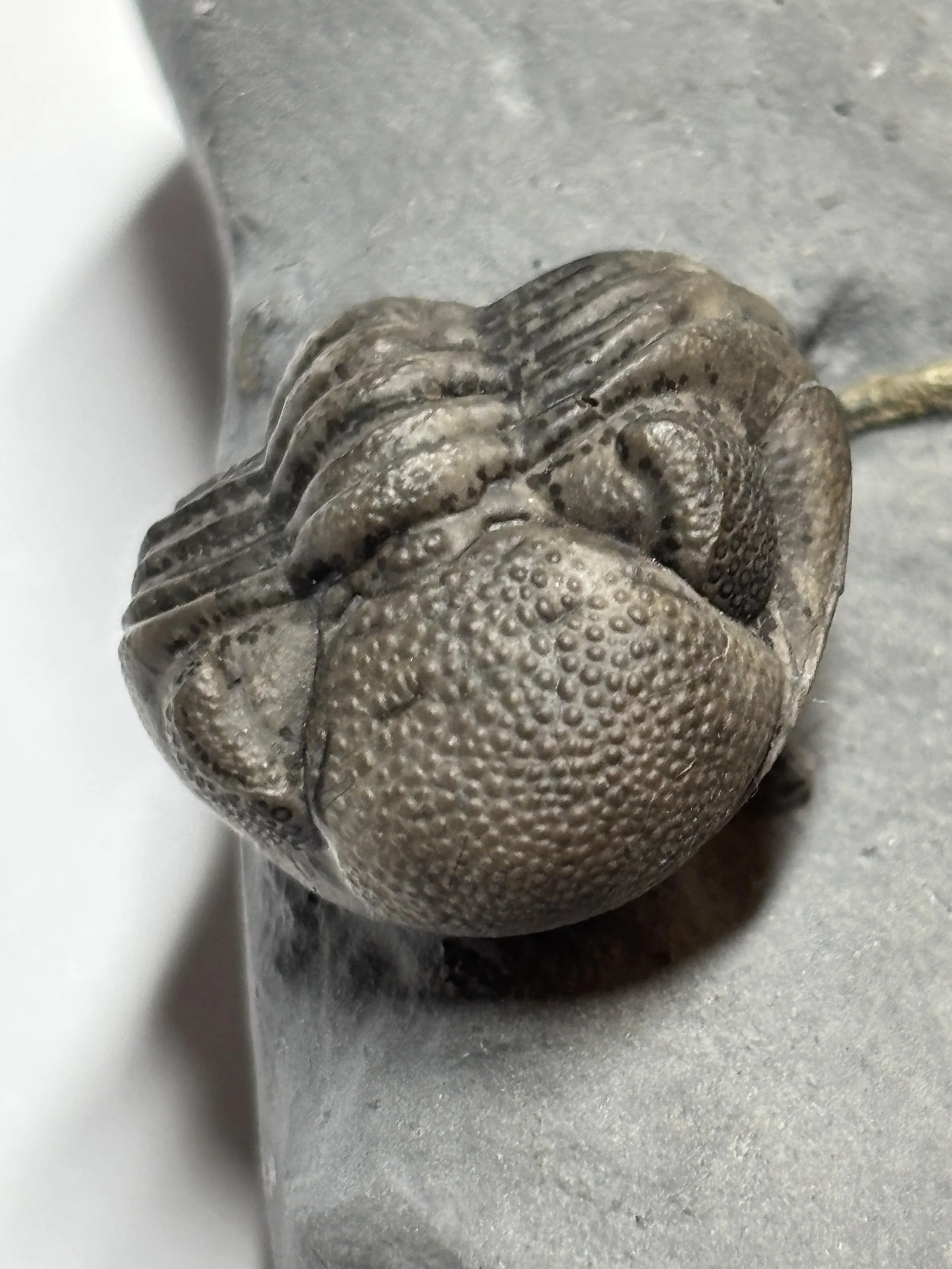
The bulbous glabella of the genus indicated that the trilobite was an active predator in its habitat
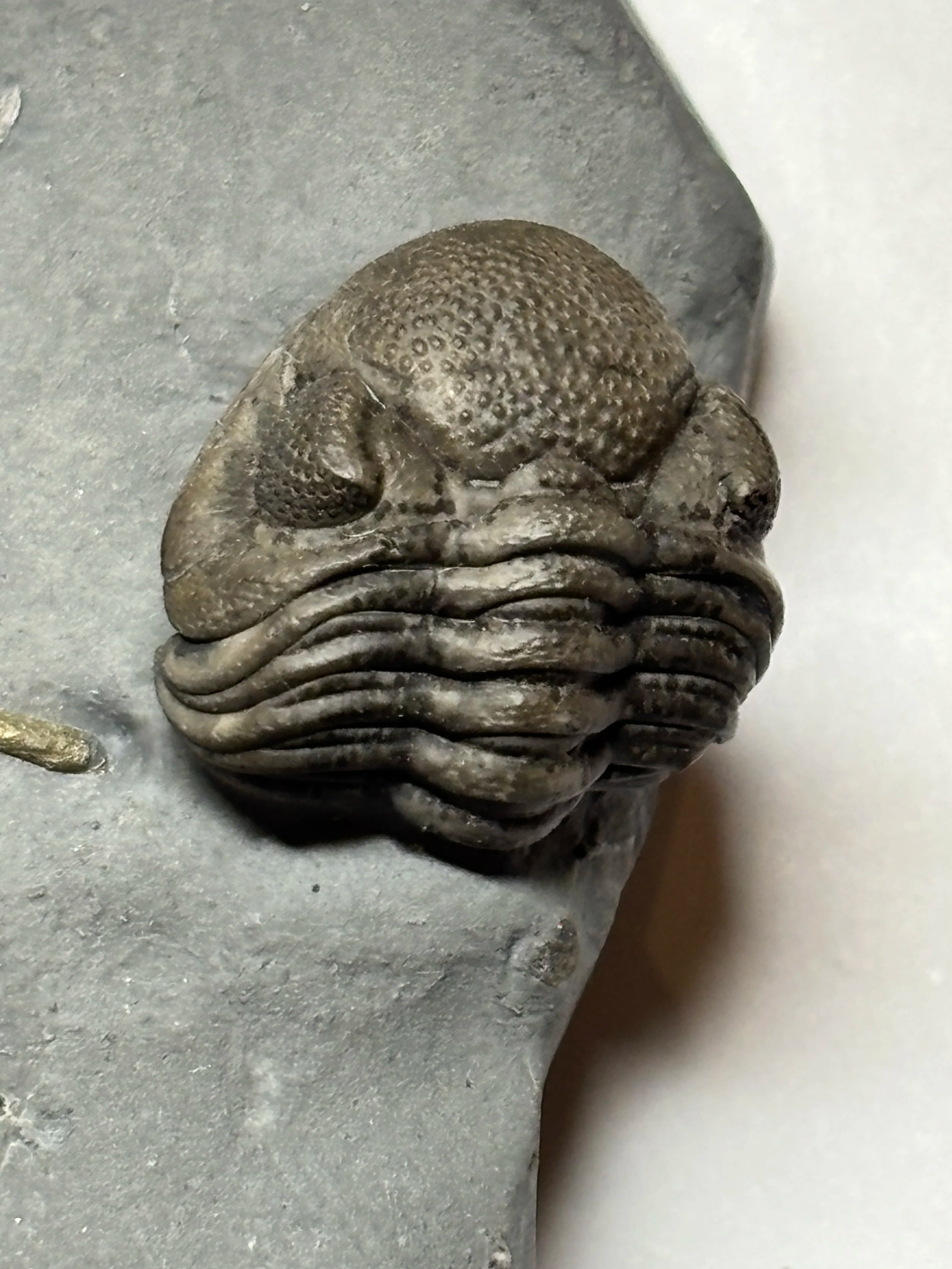
“Camouflage pattern” Eldredgeops rana enrolled (18.4mm), Hamilton Group, Wanakah Shale, New York
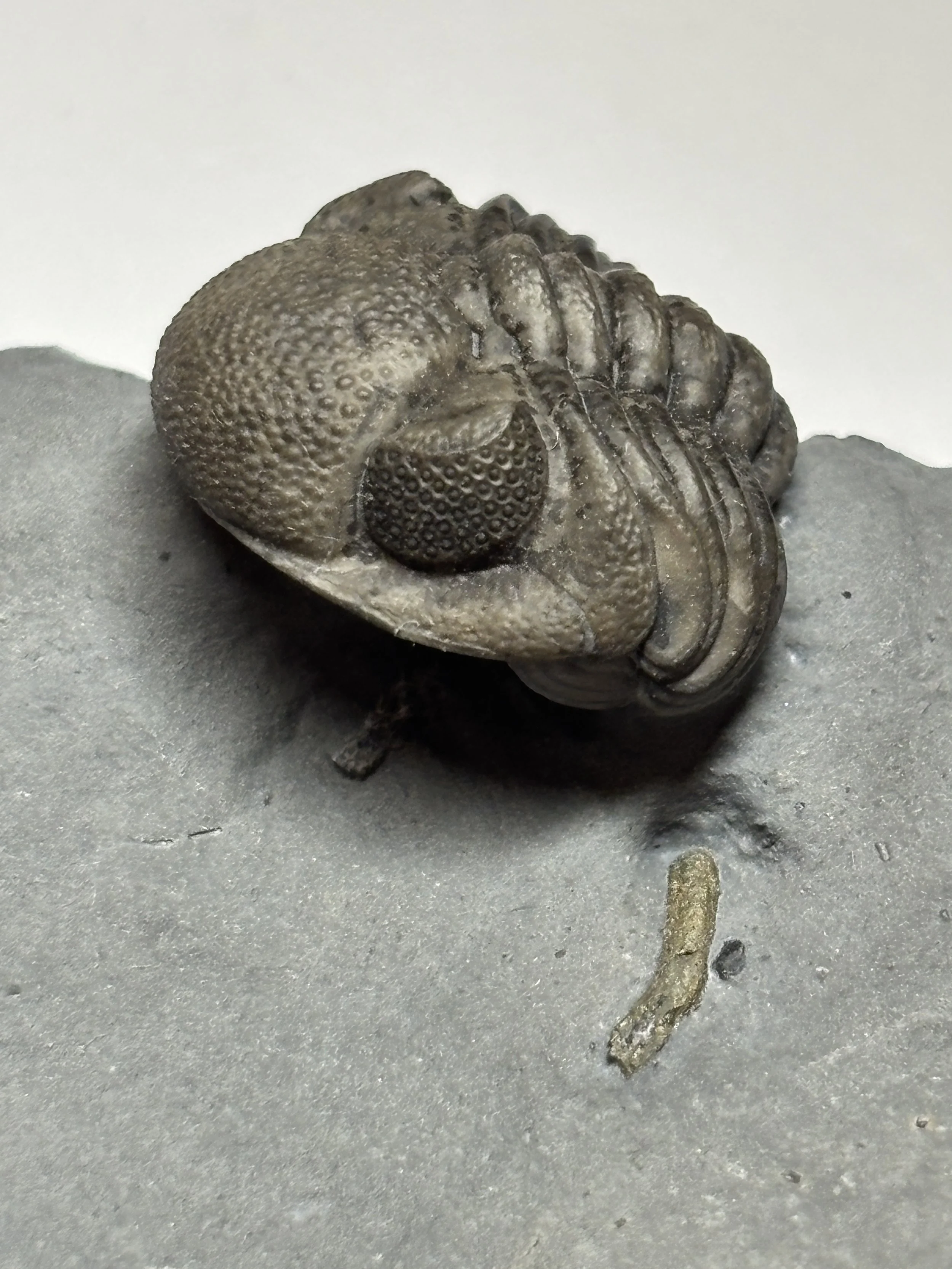
A closer view of the schizochroal eyes found exclusively within the Phacopina suborder
Introduction to Topic:
Eldredgeops rana is representative of the famous class of animals known as trilobites - a type of ancient arthropods. The Phacopina suborder is one of the most commonly represented suborders within the fossil record. The genus Eldredgeops is distinctly North American, represented in the fossil formations found in Canada and America. The specific specimen discussed above is representative of the exceptionally well preserved trilobites that originate from Western and Central New York, specifically the Hamilton Group which contains the Windom and Wanakah Shales. The fauna from these Shales are Middle Devonian spanning from 393 to 382 million years ago. The formation itself is notable for its extremely diverse and bountiful representation of the animals that lived in the habitat. Likely the result of a storm drainage area that buried the animals quickly, the fossils are usually preserved in calcite with occasional deposits of pyrite.
Common fauna represented include a variety of Middle Devonian trilobites, solitary and colonial horn corals, brachiopods, occasional crinoids, and the rare placoderm (early fish). The type of sediment preservation found throughout the shales is described as that of a “thick, blocky, gray carbonate mudstone” (McRoberts et al. 607). The fossil assemblages are rich but rarely preserve soft tissue prevalent in famous Lagerstätten like the Maotianshan Shales from the Early Cambrian. Therefore, the preservation of likely pigmentation patterns found within these formations is especially exciting and adds to the current body of research about how trilobites lived in their respective habitats.
Summary/Commentary of Study:
Certain trilobites found within these localities contain what paleontologists have theorized are camouflage patterns visible within the calcified, hard exoskeleton that is preserved in all trilobites. A study done in 2013 by Christopher McRoberts and colleagues into the dark, concentric dots that are found within the preserved exoskeletons of Eldredgeops using electron microscope imaging, energy-dispersive X-ray spectroscopy and other techniques found that the coloration in the fossils may be indicative of either organic pigments or structural colors with the exoskeleton (McRoberts et al. 607). The study most notably ruled out the possibility that the spots represented sites of muscular attachment due to the prevalence and location of the spots throughout the specimens analyzed (McRoberts et al. 608). The advent of new techniques to analyze the spot patterns found within this genus are evident through this paper and adds onto the body of literature found from the 1960’s-1980’s and negates the former hypothesis of muscle structures.
Works Cited:
McRoberts, Christopher & Hegna, Thomas & Burke, Jeri & Stice, Morgan & Mize, Steven & Martin, Markus. (2013). Original spotted patterns on Middle Devonian phacopid trilobites from western and central New York. Geology. 41. 607-610. 10.1130/G34158.1.
Schizochroal Eyes in Trilobites
An article that delves into the unique Schizochroal eyes that certain trilobites distinctly possess
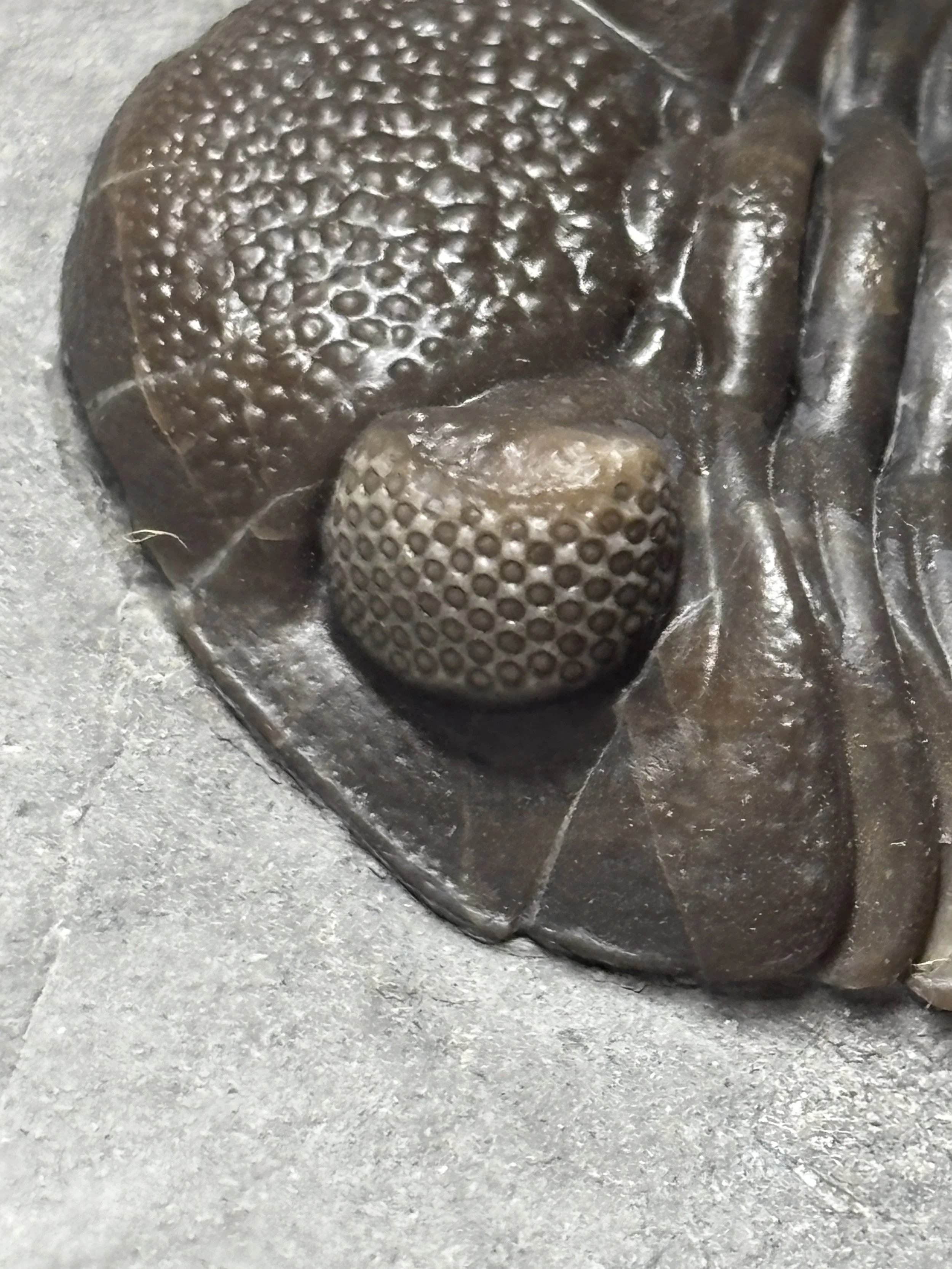
Known as the frog-eyed trilobite, Eldredgeops is known for its large, prominent Schizochroal eyes
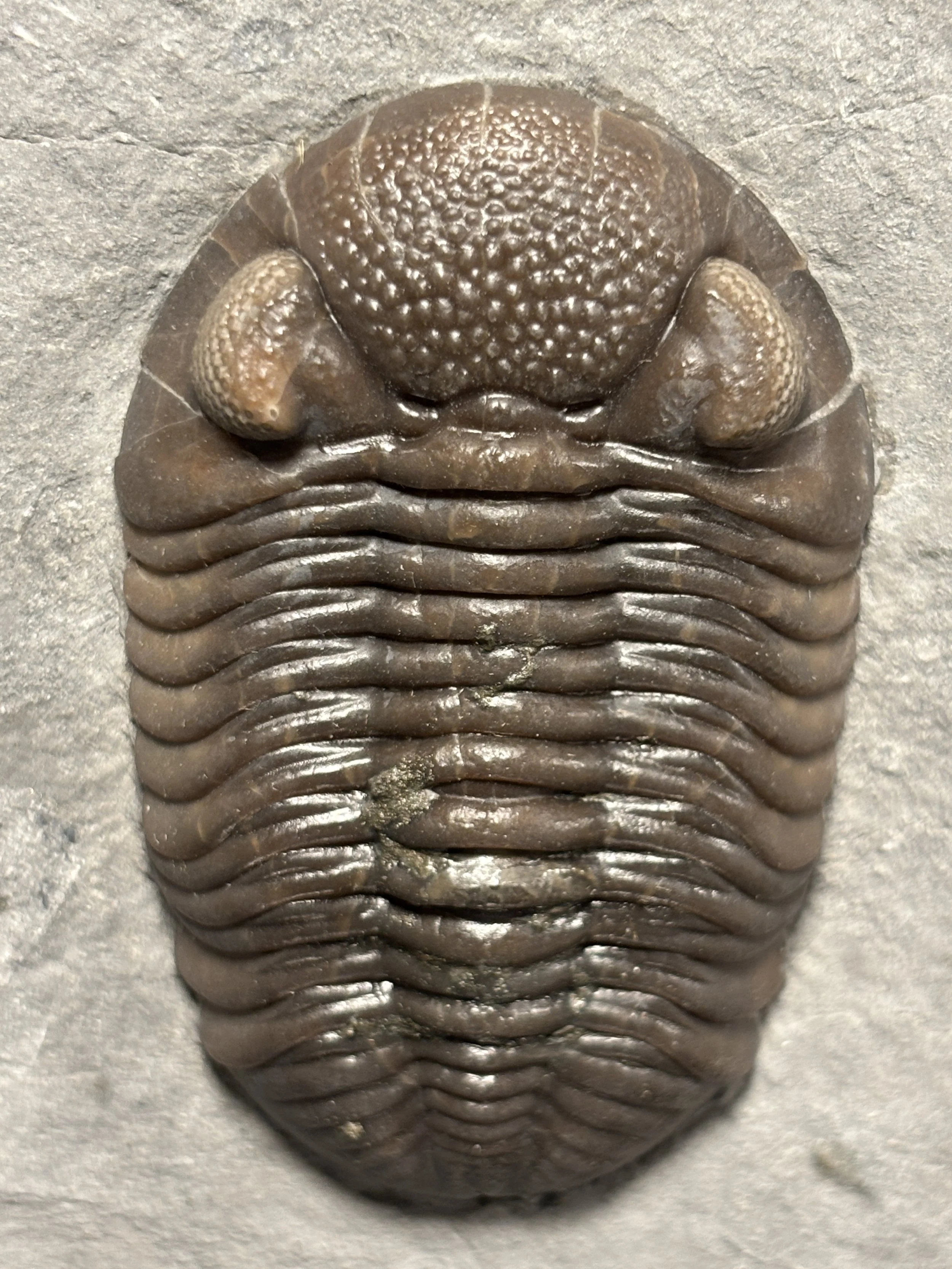
Prone specimen of Eldredgeops rana crassituberculata (61mm), Paulding, Ohio, Silica Formation
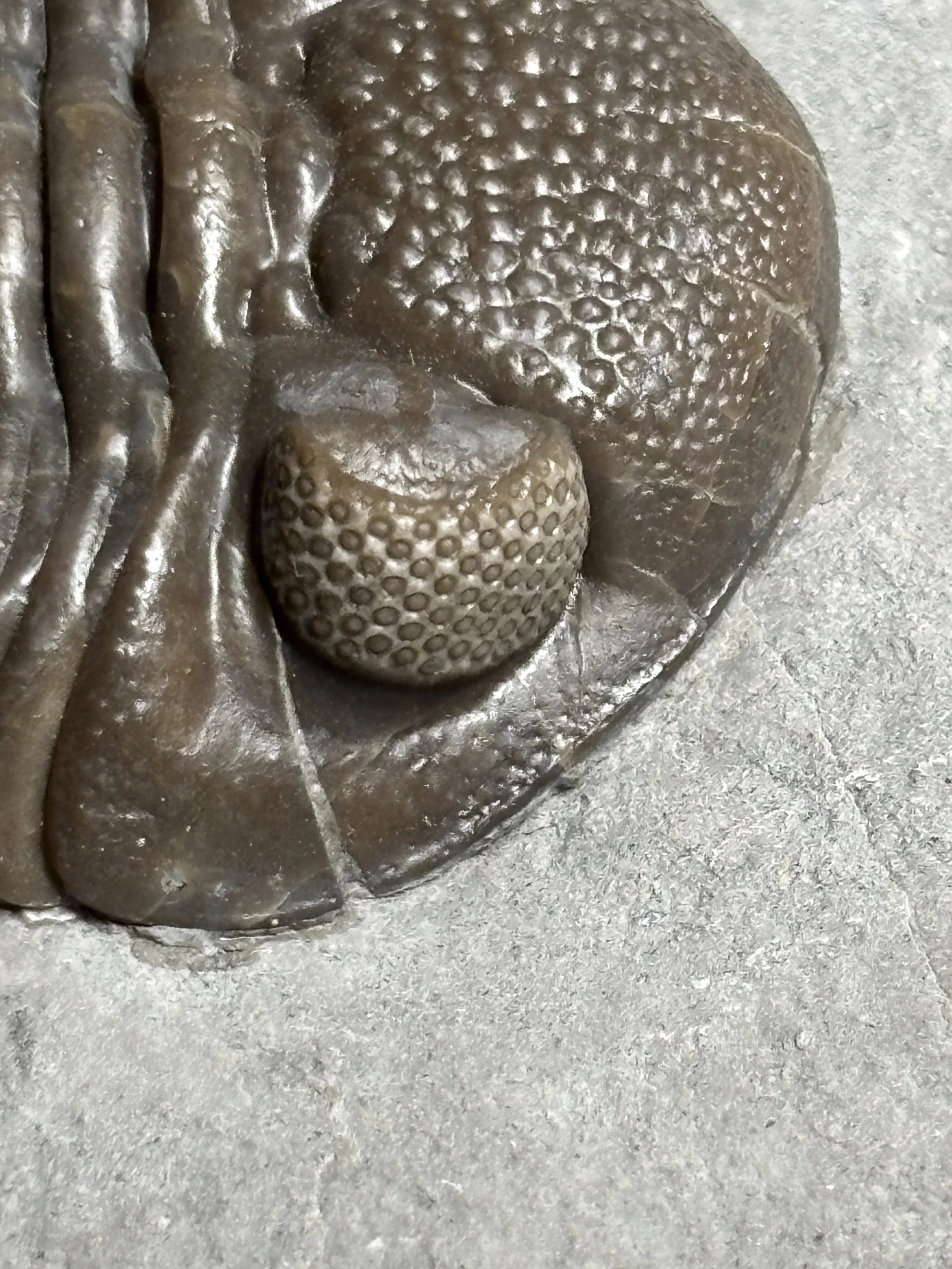
Trilobites had solid, crystalline calcite eyes meaning they possessed the most advanced vision during the Middle Devonian
Introduction to the Trilobite Vision:
Trilobite eyes were crystalline and solid, meaning that unlike human eyes, they cannot expand and contract to adapt to various environmental cues. Humans, like most mammals possess simple eyes with photo receptors concentrated in a single retina. Complex eyes on the other hand had hundreds to thousands of individual eyes each possessing separate photo receptors. The eyes combined into a complex mosaic to form a more complete image in the animal’s head. The trilobites are a notable example of early vision that was accurate to the environment around them. Trilobites had two forms of early complex eyes: Schizochroal and Holochroal eyes
Differences between Schizochroal and Holochroal Complex Vision:
Schizochroal eyes contains fewer, much larger lenses that each possessed their own cornea cover while each individual eye was divided by a thick, solid wall called the sclera. Holochroal eyes were more like those of modern arthropods: they possessed thousands of lenses covered by a single, large cornea.
The Phacopina Suborder and Eldredgeops rana crassituberculata
Only trilobites within the Phacopina suborder possessed Schizochroal eyes. Eldredgeops rana crassituberculata, a member of this suborder, is notable for its prominent Schizochroal eyes and widely studied for them. This subspecies has an especially robust glabella (head portion protecting the trilobite’s feeding organs) and sports large eyes to scan the sea floor for potential predators and prey. Due to the prominence of these features, paleontologists have hypothesized that the subspecies was an active predator that lived in a complex, archaic early coral reef ecosystem inhabited by a variety of early sea creatures.
Unique Attributes of Schizochroal Eyes:
Specifically, Schizochroal eyes possessed two separate calcite lenses within each of their eyes that possessed different refractive qualities (Cowen & Kelley 1). The “aspherical structure meant that the lenses were correct for aspherical aberrations” (Cowen & Kelley 1). This meant that those within the Phacopina suborder were able to see clearly without any visual distortions based on distance. The aspherical structure corrected for any blurriness and meant that the mosaic formed by each eye offered a clear image.
Trilobite Vision in the Context of the Middle Devonian:
The middle Devonian time period, known as the “Age of the Fishes,” was filled with large predators that evolved new ways to hunt. The large shelled cephalopods that were prominent during the Ordovician before still ruled the seas possessing sharp beaks that were able to crush the shelled defenses of trilobites. However, new early armored fishes called Placoderms were the new apex predators of the ecosystem; they possessed early forms of jaws which they used to crush the hard shelled defenses of trilobites and cephalopods alike. Phacopina grew to prominence during this time period with an diverse variety of species sporting Schizochroal eyes to avoid predators. Furthermore, trilobites in other families evolved complex spines and robust shells to fend off against these new predators.

Middle Devonian Coral Reef Diorama, James St. John, CC BY 2.0 <https://creativecommons.org/licenses/by/2.0>, via Wikimedia Commons
Works Cited:
COWEN, R., KELLEY, J. Stereoscopic vision within the schizochroal eye of trilobites. Nature 261, 130–131 (1976). https://doi.org/10.1038/261130a0
Laird, Isabella. “Trilobite Eyes Have Lenses Made of Calcite.” Beaty Biodiversity Museum, The University of British Columbia, 26 Oct. 2017, https://beatymuseum.ubc.ca/2017/10/26/trilobite-eyes-are-hard/.
A look at Orthoceras: Example of Misidentification in the Commercial Fossil Market
An article that looks into the common misidentification of orthocone cephalopod fossils from the Anti-Atlas Mountains of Morocco
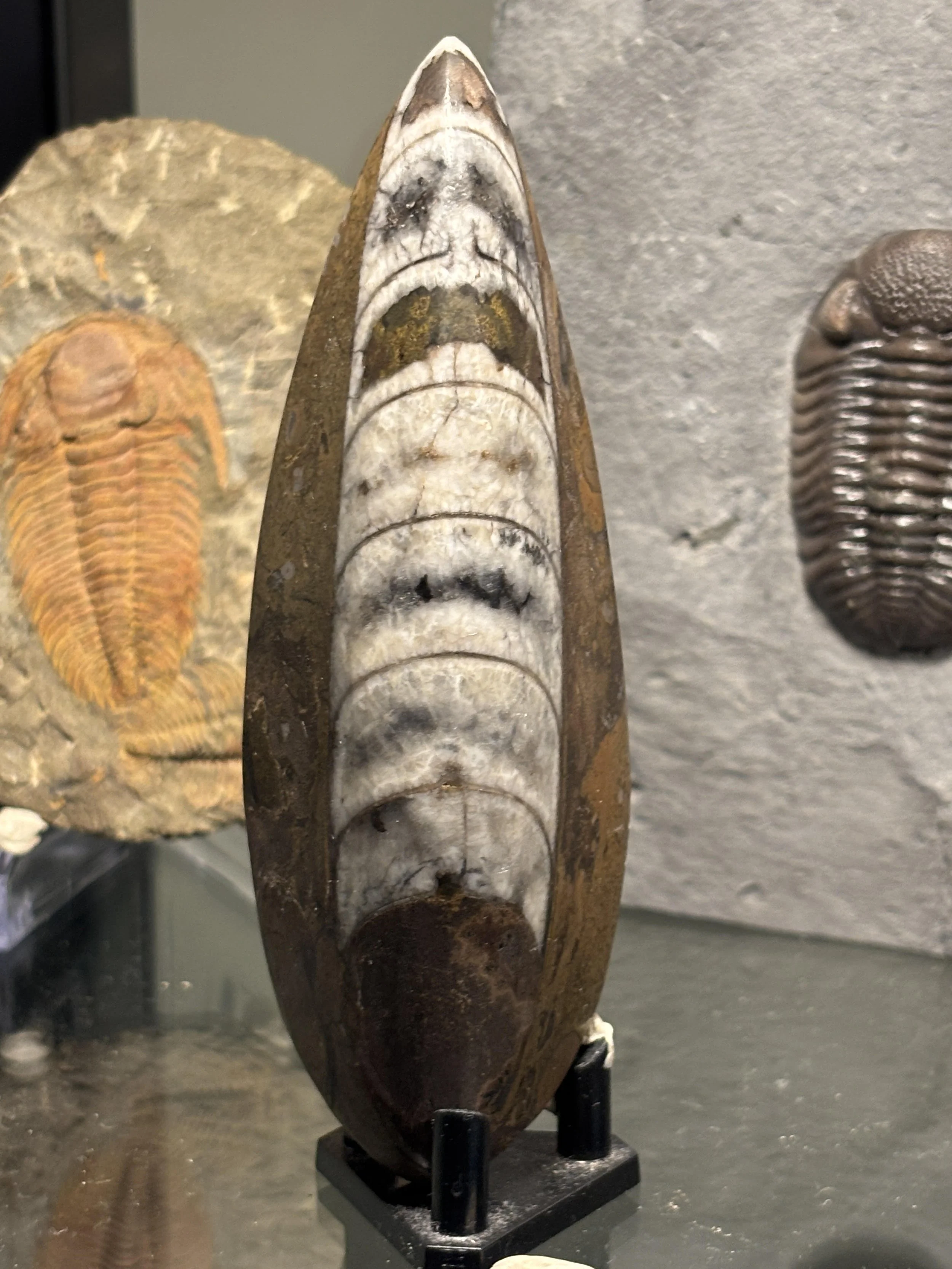
Orthocone Cephalopod, Anti-Atlas Mountains, Morocco
Orthoceras and Orthocone Cephalopods:
Orthocone nautiloids are an extinct type of cephalopod most closely related to today’s Nautilus. They feature a large, long cone that protects the majority of their bodies. The orthocone shape actually evolved numerous times throughout natural history with endocerids and orthoceratoids being examples of those represented within the Paleozoic time of earth. The Paleozoic orthocone nautiloids are well represented from the Ordovician to the Carboniferous, occupying what would be considered as the apex predator of most oceanic food chains. They could oftentimes get up to several feet long and nautiloid to nautiloid predation was common.
The Moroccan “Orthoceras” represent a commercial “fossil commodity” as one of most widespread commercially attainable fossils oftentimes found in Museum gift shops or online. Most are polished to reveal the mineralized chambers of the shells that the creatures inhabited and crafted into plates, sculptures, and more. In fact, on a trip entirely unrelated to fossils, I stumbled upon polished plates in a Florida gas station near Jacksonville.
However, they are all misidentified orthocones from the Anti-Atlas Mountains near Taouz, Morocco. The Berber people who live near the more rural, desert areas rely on the commercial fossil trade and are incredibly knowledgeable about the rock formations that yield different species of cephalopods. However, most commercial dealers continue to label the fossils that come out of the region as Orthoceras which is only valid in the Baltic regions near Sweden. The limestones that yield large quantities of orthocones range from the Ordovician to Devonian time periods with some common taxa including Tempoceras and Deiroceras each from distinctly different time periods.
Reasons for Misdiagnosis:
In addition to complex geological formations that yield fossil deposits from different time periods, even the limestone from the same time period seems to be incredibly biodiverse on its own. Although there is limited literature reclassifying the different orthocone nautiloids that originate from this region are available, they are not widely disseminated. These factors combined with an outdated blanket diagnosis grouping all of these species into “Orthoceras” means that commercial dealers continue to label these incredibly diverse orthocone nautiloids from Morocco as “Orthoceras” rendering the genus as a wastebasket taxon.