A look at Orthoceras: Example of Misidentification in the Commercial Fossil Market
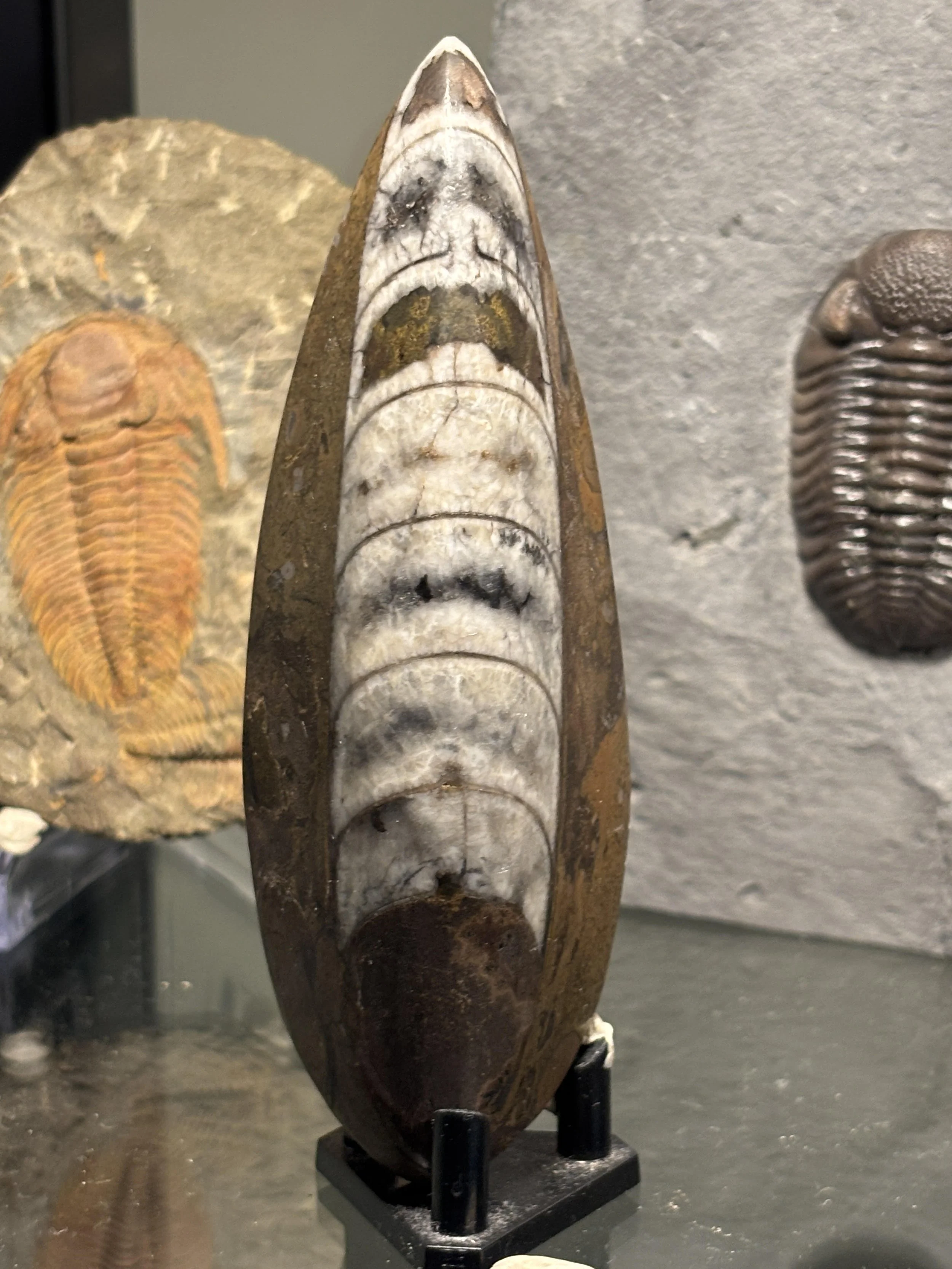
Orthocone Cephalopod, Anti-Atlas Mountains, Morocco
Orthoceras and Orthocone Cephalopods:
Orthocone nautiloids are an extinct type of cephalopod most closely related to today’s Nautilus. They feature a large, long cone that protects the majority of their bodies. The orthocone shape actually evolved numerous times throughout natural history with endocerids and orthoceratoids being examples of those represented within the Paleozoic time of earth. The Paleozoic orthocone nautiloids are well represented from the Ordovician to the Carboniferous, occupying what would be considered as the apex predator of most oceanic food chains. They could oftentimes get up to several feet long and nautiloid to nautiloid predation was common.
The Moroccan “Orthoceras” represent a commercial “fossil commodity” as one of most widespread commercially attainable fossils oftentimes found in Museum gift shops or online. Most are polished to reveal the mineralized chambers of the shells that the creatures inhabited and crafted into plates, sculptures, and more. In fact, on a trip entirely unrelated to fossils, I stumbled upon polished plates in a Florida gas station near Jacksonville.
However, they are all misidentified orthocones from the Anti-Atlas Mountains near Taouz, Morocco. The Berber people who live near the more rural, desert areas rely on the commercial fossil trade and are incredibly knowledgeable about the rock formations that yield different species of cephalopods. However, most commercial dealers continue to label the fossils that come out of the region as Orthoceras which is only valid in the Baltic regions near Sweden. The limestones that yield large quantities of orthocones range from the Ordovician to Devonian time periods with some common taxa including Tempoceras and Deiroceras each from distinctly different time periods.
Reasons for Misdiagnosis:
In addition to complex geological formations that yield fossil deposits from different time periods, even the limestone from the same time period seems to be incredibly biodiverse on its own. Although there is limited literature reclassifying the different orthocone nautiloids that originate from this region are available, they are not widely disseminated. These factors combined with an outdated blanket diagnosis grouping all of these species into “Orthoceras” means that commercial dealers continue to label these incredibly diverse orthocone nautiloids from Morocco as “Orthoceras” rendering the genus as a wastebasket taxon.
